

Gay Man In China Sues Government Over Denial of Right to Marry Partner

Gay Man In China Sues Government Over Denial of Right to Marry Partner

Gay Man In China Sues Government Over Denial of Right to Marry Partner

A gay man in the central Chinese province of Hunan has filed a lawsuit against the government for refusing his application to marry his male partner, in a move that has been hailed as a major test case for LGBT rights in China, his lawyer told RFA on Monday.

Sun Wenlin, 26, filed the complaint against the Furong district civil affairs bureau in Hunan’s provincial capital Changsha earlier this month, challenging the bureau’s refusal to allow the couple to register their marriage.

Sun is arguing that current Chinese marriage law refers to the union of “husband and wife,” but without specifying the gender of either party to the marriage.

The argument rests on the idea that a person can identify as a husband or a wife without reference to their gender.

The complaint was filed at the Furong District People’s Court, which has until Dec. 23 to decide if it will accept the case.

Sun told the Wall Street Journal’s China Real Time blog: “We just hope that we can legally become each other’s family in our own country someday in our lifetime.”

“Our most basic desires and rights have been denied, and this is very difficult to vindicate. I feel very angry,” he said.

A ‘sensitive’ case

Meanwhile, Sun’s lawyer Shi Fulong told RFA that the rights of lesbian, gay, bisexual and transgender (LGBT) people have yet to fully enter public awareness in China.

“We have filed this administrative complaint because the civil affairs bureau failed to carry out its duty to register marriages,” Shi said. “We are appealing to the court to order it to proceed.”

He said the gradual liberalization of gay marriage in Western countries and some U.S. states has paved the way for changing attitudes in China.

“Gay marriage is now legal in a lot of countries, which affects a lot of individual rights including property rights and inheritance, as well as matters relating to children,” Shi said.

“All of these things are inherently tied up with marriage, and homosexuality is also subject to social conventions and questions of cultural tradition,” he said.

Shi said he hopes the case won’t be regarded as “sensitive” by the authorities.

“In my view, there’s no such thing as a sensitive case, because from a lawyer’s point of view, all clients are equal,” he said.

“We won’t treat our clients differently because of their ethnicity, their sexual orientation, or other differences.”

Long way to go

A Guangzhou resident who runs a support group for the friends and relatives of LGBT people said there is still a long way to go for LGBT rights in China, but welcomed Sun’s lawsuit.

“This is the first case to do with gay marriage in this country … and really it’s quite epoch-making,” the man, who gave only a nickname A Qiang, said.

“For gay marriage to become legal, it will have to win broad public support, and at the moment only about 22 percent support it, or thereabouts,” he said.

“There is still a long way to go for gay marriage in China, but the good thing is that there has been huge change [globally] in the past decade or so, and the overall trend is towards legalizing gay marriage,” he said.

Click here to read the entire article.

12.21.2015 by Xin Lin for RFA.org
Second Parent Adoption Process: New York State

The second parent adoption process for New York State: What you need and what you need to know!

The second parent adoption process is the process of a same-sex parent adopting their partner’s biological child, regardless of whether or not they are married or their relationship is legally recognized. While everyone has equal marriage rights now, the laws for New York State adoption are still striving to meet the modern day needs of our families, and it’s advisable for most same-sex couples to petition for a second parent adoption to build that legal relationship between non biological parent and child. Marriage is not necessary for second parent adoption. If the couple is married, they would then petition for a stepparent adoption, although the process is very similar.

adoption new york,new york adoption,new york state adoption, stepparent adoption process,adopting step children,co parent adoption,2nd parent adoption,second parent adoptions,gay adoption new york,gay couple adoption, gay couples adopting


New York State Adoption Process: What you need

In a nutshell, you need a lot of paperwork and a good family lawyer, preferably one that specializes in adoptions for same-sex couples. Here is a rundown of what you will need:

  • The completed intake from your attorney. This is a general questionnaire that includes information for both parents and the child.
  • The original birth certificate for the child. A copy will not suffice. You will, however, get a new original birth certificate after the adoption.
  • A letter from the employer of the petitioning parent, and in some counties the biological parent, stating their position and salary. If you are not currently employed, they will need your last year’s tax returns.
  • A letter from the doctor of both parents stating that they are in general good health.
  • A letter from the child’s pediatrician stating that he or she is in general good health.
  • A completed form 1-D (a more elaborate medical assessment) by the child’s pediatrician
  • In cases of a surrogacy, you will need copies of your carrier and donor agreement.
  • In cases of artificial insemination, in vitro fertilization and surrogacy, a letter verifying insemination.
  • If married, a copy of your marriage license.
  • Previous divorce decrees if either parent has been previously married.
  • If either parent has ever been arrested or convicted of a crime, the details and disposition records for any offense must be submitted.
  • A list of every residence the petitioning parent has lived at for the past 28 years, including months and years associated with every address.
  • Financial information, including the value of your home, any owned real estate, stocks and bonds, life insurance information and any sources of income other than employment.
  • The petitioning parent must be fingerprinted for a criminal background check
  • A home study, which is generally arranged for once your lawyer has been retained.

Keep in mind that this process may vary slightly from state to state and county to county, so it’s important to find an attorney familiar with the legal details in your specific location. While the New York State adoption process may seem harrowing, keep in mind that your adoption attorney is there to help you, advise you and even help keep you organized every step of the way.

Anthony M. Brown, head of Nontraditional Family and Estates division of Albert W. Chianese & Associations, has extensive experience in helping same-sex couples through the adoption process, having gone through the process himself. If you have yet to create a legal relationship with your child or children, call 212-953-6447 or email Anthony at Brown@awclawyer.com.


Contact Time For Families

Contact Form
* indicates required field

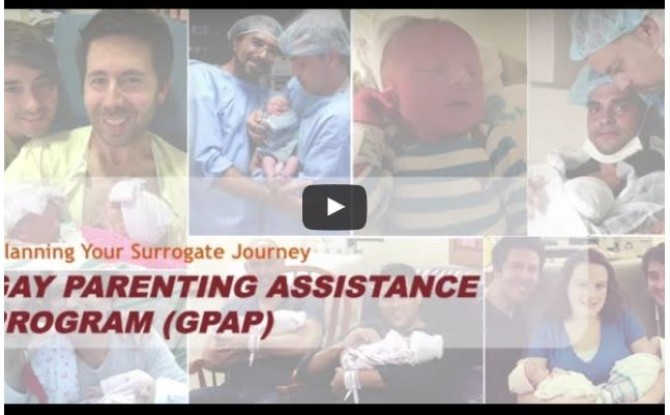
Gay Parenting Assistance Program (GPAP)

The Gay Parenting Assistance Program (GPAP)  From The 2015 NYC Men Having Babies Conference


European Parliament condemns surrogacy

babybump The European Parliament has condemned surrogacy, even as it is being offered in Europe for $37,500.


The Parliament adopted a resolution condemning “the practice of surrogacy, which undermines the human dignity of the woman since her body and its reproductive functions are used as a commodity.” The resolution continues, “The practice of gestational surrogacy which involves reproductive exploitation and use of the human body for financial or other gain, in particular in the case of vulnerable women in developing shall be prohibited.”

Family and Christian groups applauded. The European Federation of Catholic Family Associations “warmly” approved the vote and called on the EU to follow on the statement in principle with instructions to member states to “systematically treat surrogacy as a matter of urgency, fighting human trafficking for reproductive exploitation” and to set up an international agency to “effectively stop this practice.”

Surrogacy is banned in many European countries while legal on a non-commercial basis, where only the mother’s expenses may be paid, in some others. An organization calling itself Fertility International Solutions is offering “surrogacy in Europe from $37,500” from a base in Kiev. Its Ukrainian surrogate mothers are paid “on an income-adjusted basis up 8 year’s salary [sic] for their incredible gift.”

In surrogacy, the surrogate mother either conceives a child from donor sperm and her own egg or accepts an embryo into her womb conceived in vitro using both donated egg and sperm. FIS charges “as low as” $37,500 for surrogacy involving a “shipped embryo” and at least $42,000 when only sperm is donated.

Dr. Joseph Meaney, director of international coordination for Human Life International, told LifeSiteNews that  surrogacy is wrong for many reasons, not least of which is that “it completely dissociates pregnancy from parenthood.”

“Children are treated as commodities that can be ‘made to order’ and bought,” a violation of “their human rights and dignity,” said Dr. Meaney. As well, “there is a clear exploitation of poor women who … let others use their eggs and/or their wombs.”

Dr. Meaney also warned of health problems associated with the drugs used to harvest women’s eggs and of the psychological harm to children. He told of one child of surrogacy saying, “My daddy’s name is ‘donor.'”

“This is just heartbreaking.”

Click here to read the entire article.


Decembers 18, 2015 by Steve Weatherbe, Lifesitenews.com

BRUSSELS, December 18, 2015 (LifeSiteNews.com)

New York State Adoption Process

The second parent New York State adoption process: What you need, and need to know

Second parent adoption is when a same-sex parent adopts their partner’s biological child, regardless of whether or not their relationship is legally recognized. While everyone has equal marriage rights now, the laws for New York State adoption are still muddled, and it’s advisable for most same-sex couples to petition for a second parent adoption to build that legal relationship between non biological parent and child. Marriage is not necessary for second parent adoption. If the couple is married, they would then petition for a stepparent adoption, although the process is very similar.


New York State Adoption Process: What you need

In a nutshell, you need a lot of paperwork and a good family lawyer, preferably one that specializes in adoptions for same-sex couples. Here is a rundown of what you will need:

  • The completed intake from your attorney. This is a general questionnaire that includes information for both parents and the child.
  • The original birth certificate for the child. A copy will not suffice. You will, however, get a new original birth certificate after the adoption.
  • A letter from the employer of the petitioning parent, and in some counties the biological parent, stating their position and salary. If not currently employed, you will need your last year’s tax returns.
  • A letter from the doctor of both parents stating that they are in general good health.
  • A letter from the child’s pediatrician stating that he or she is in general good health.
  • A completed form 1-D (a more elaborate medical assessment) by the child’s pediatrician
  • In cases of a surrogacy, you will need copies of your carrier and donor agreement.
  • In cases of artificial insemination, in vitro fertilization and surrogacy, a letter verifying insemination.
  • If married, a copy of your marriage license.
  • Previous divorce decrees if either parent has been previously married.
  • If either parent has ever been arrested or convicted of a crime, the details and disposition records for any offense must be submitted.
  • A list of every residence the petitioning parent has lived at for the past 28 years, including months and years associated with every address.
  • Financial information, including the value of your home, any owned real estate, stocks and bonds, life insurance information and any sources of income other than employment.
  • The petitioning parent must be fingerprinted for a criminal background check
  • A home study, which is generally arranged for once your lawyer has been retained.


Keep in mind that this process may vary slightly from state to state and county to county, so it’s important to find an attorney familiar with the legal details in your specific location. While the New York State adoption process may seem harrowing, keep in mind that your adoption attorney is there to help you, advise you and even help keep you organized every step of the way.

Anthony M. Brown, head of Nontraditional Family and Estates division of Albert W. Chianese & Associations, has extensive experience in helping same-sex couples through the adoption process, having gone through the process himself. If you have yet to create a legal relationship with your child or children, call 212-953-6447 or email Anthony at Brown@awclawyer.com.


Surrogacy: Mexican state votes on ban

Mexican state votes to ban surrogacy for gay men and foreign people

Tabasco, currently the only state in Mexico allowing surrogacy, has drawn many foreign and gay couples seeking to become parents.surrogacy, mexican surrogacy

A Mexican state legislature has voted to close the door to foreign couples and gay men looking to have a child by
surrogate. The Gulf coast state of Tabasco is currently the only Mexican state that allows surrogacy, supposedly on a non-commercial basis. It has attracted many foreign and gay couples looking to have children.

But the Tabasco state legislature voted 21-9 on Monday to restrict the option to Mexicans. It also says that couples looking for a child must include a mother aged 25 to 40 who can present proof that she is medically unable to bear a child.

Click here to read the entire article.


Theguardian.com via Associated Press December 15, 2015

Get gay adoption statistics & facts

Familiarize yourselves with gay adoption statistics and facts before starting your family

While marriage equality is now the national standard, the laws concerning families of same-sex couples are just as muddled as ever, if not more so. Before beginning your family, it’s important to do a little research beforehand on gay adoption statistics and facts.


Gay Adoption Statistics

As many as 6 million children have gay parents, and that number is growing. According to 2010 US Census data, about 20% of same-sex couples are raising children. What does this mean? It means you and your child, current or future, are not alone.


Children of same-sex parents, even high-risk children, fare just as well as children of opposite-sex parents. While this seems like common sense, having scientific evidence confirming that gay parents are indeed just as good as non-gay parents (or also, a lack of scientific evidence that same-sex parents cause harm to children) means that while family laws are lagging behind, they should eventually catch up in giving all families equal rights in adoption. This doesn’t, however, mean you should or need to wait to start your family! Gay adoption statistics aside, here are a few facts and considerations to keep in mind before beginning the family planning or adoption process.


Get gay adoption statistics & facts before family planning

  • If you’re planning on adopting, filing a joint petition for adoption is generally the better option, as it automatically recognizes both partners as legal parents. In the state of New York, you need not be married to do this, however this may vary state to state.
  • Marriage does not automatically create legal parentage. If you are considering artificial insemination or surrogacy, it’s important that the non biological parent establishes a legal relationship with the child through the co adoption process, even if that parent is named on the birth certificate.
  • If your partner already has a child, you will need to petition for a stepparent adoption. In order to do this, the child’s other biological parent has to surrender their legal parental rights to that child.
  • It’s important to investigate adoption laws of the state in which you reside, as many states give preference to married couples over unmarried couples when adopting or fostering a child. Adoption laws also vary by county.
  • Once a legal relationship has been established between parent and child, this legal relationship will be recognized nationally.
  • It is vital that both parents have established a legal relationship with their child in the event that the biological or adopted parent becomes incapacitated or in the event the relationship dissolves. In the event of either of those situations, the non biological or adopted parent risks losing custody rights of the child.


Regardless of how you intend to grow your family (through adoption, foster parenting, surrogacy or artificial insemination), it’s important to hire a family attorney experienced in adoption laws in your state and county to help you navigate the intricacies of the law and to make sure you make it through the process with no complications. For a well-vetted family attorney in New York, call Anthony M. Brown, head of Nontraditional Family and Estates division of Albert W. Chianese & Associations, at 212-953-6447 or email questions to Brown@awclawyer.com.

Surrogate NYC: 71% of Americans Approve

71% of Americans Approve of Using Surrogates, Surrogate NYC or Anywhere Help Couples!

People tend to say that it is better to adopt than to use surrogacy, but most Americans say it is personally important to have biological, not adopted, children. This calls for the use a surrogate or in New York City, a surrogate nyc when searching google!

What is a Surrogate NYC? Definition Surrogate/Surrogacy: the practice by which a woman helps a couple have a child by carrying an embryo conceived by the couple, and commercial surrogacy is when a surrogate nyc or wherever you live, mothers the baby for money. Surrogacy, though still rare, is increasingly common and laws in many states are having to catch up to the reality of thousands of surrogate births each year. Pennsylvania just ruled that television star Sherri Shepherd is liable for child support payments for a child conceived by a surrogate that she later decided she did not want. In New York, which is one of the states which still completely prohibits commercial surrogacy, is considering legalizing the practice at the urging of gay rights activists.

A large majority of Americans (71%) approve of the practice of surrogacy, and most (57%) also agree with allowing surrogate mothers to charge money for carrying the child. Americans who say that religion is ‘very important’ to them are the only group without majority support for commercial surrogacy, but even they back it 48% to 31%.

Definition Surrogate NYC: Surrogacy is the practice by which a woman helps a couple have a child by carrying an embryo conceived by the couple.

In general, however, Americans tend to say that couples who cannot conceive a child on their own should adopt a child (50%) instead of using a surrogate (15%). Large margins among every group, except black Americans (29% to 34%), say that it is better to adopt than use a surrogate.

When it comes to them personally, however, most Americans say that it would be important for them to have a biological child rather than an adopted one. 27% say that it is ‘very important’ for them to have a biological child, while 31% say that it is ‘somewhat important’. Only 30% say that it is either ‘not very’ or ‘not at all’ important to not have an adopted child.

Click here to read the entire article.


Today.Yougov.com – December 14, 2015

Gay parents sue after IRS denies tax deduction for in-vitro fertilization, surrogate

irsTBO.com by Elaine Silvestrini, December 14, 2015

Is being gay, in a long-term committed relationship, the same as being biologically infertile?

That’s the argument being made by a Stetson law professor in a lawsuit against the federal government.

Joseph F. Morrissey, who teaches constitutional and business law at Stetson, is seeking to overturn a ruling by the Internal Revenue Service that denied him and his partner a tax deduction. The deduction would have been for costs associated with their use of in-vitro fertilization and a surrogate who gave birth to their twin sons.


An IRS revenue agent who denied the claim said Morrissey’s sexual orientation was a “choice,” according to the lawsuit filed in U.S. District Court in Tampa.

An IRS spokesman said the agency would have no comment on the lawsuit and wouldn’t discuss, even in general, the tax deductions involved.

Morrissey has been in a “monogamous, loving and committed relationship with his partner for 15 years,” the lawsuit says. Morrissey and his lawyers declined to discuss the case.

The partner, whose name is not given, became a Pinellas County middle school mathematics teacher after the couple moved to Florida in 2004 when Morrissey took a job at Stetson, according to the lawsuit.

The pair are now engaged to be married, after the U.S. Supreme Court struck down laws against same-sex marriage.

They have been trying since 2010 to have children, according to the suit. They initially considered adopting a child, but at the time it was still illegal in Florida for gays to adopt.

As the lawsuit notes, the adoption ban was ruled unconstitutional in late 2010, and officially repealed by the Legislature earlier this year.

The couple’s twin sons — biologically Morrissey’s — were born last year after several previous attempts failed.

“In the end, bringing twin boys into the world took nearly four years, seven IVF procedures (including those scrubbed at the last minute for failed medical exams), three surrogates, three egg donors, two clinics and more than $100,000,” the lawsuit says.

When the babies were born, Morrisey’s partner quit his job to become a stay-at-home father.

As a general rule, medical expenses are deductible only after they exceed 10 percent of the filer’s adjusted, gross income, according to Kris Siolka, spokeswoman for the National Association of Tax Professionals.

Morrissey filed for $36,538 in medical deductions on his amended federal tax return for the 2011 tax year.

While the amendment to his return was being reviewed, Morrissey wrote the IRS in 2014 arguing that the agency had allowed heterosexual couples’ deductions for fertility treatments, including the use of an egg donor.

But the IRS rejected the deductions for the costs associated with the egg donor and surrogate, writing that the medical services must be provided to the taxpayer, his spouse or dependent.

In December 2014, the IRS denied Morrissey’s appeal, the lawsuit states.

Click here to read the entire article.

Adoption New York Home Study

What is a “home study” for adoption New York and what can we expect?

With both heterosexual and gay adoption New York, the family will need to participate in a home study as part of the adoption process. A home study is required in all adoption cases, whether you as a couple are adopting a new child or whether one partner is adopting the legal or biological child of their partner. It may seem daunting inviting people into your home to judge whether you are fit to be a parent, the process is not intended to trick you or catch you off guard. A person or family that is disqualified from the adoption process is usually done so during the background check portion of the adoption, before a home study is conducted.


What we need to prepare for in a home study for adoption New York?

The first step in a home study involves a lot of paperwork. In addition to submitting a long list of documentation, including things like background checks, a child abuse clearance, etc, a social worker will come to inspect your home to make sure you are providing a fit environment to raise a child. While your home does need to pass safety requirements (like making sure your smoke alarms are all in working order), if any issues do come up these are most likely pretty quick fixes.

The social worker will also interview the parent or parents adopting, as well as any other adults living in the home. They are looking to make sure the prospective parents display characteristics that qualify them to be a fit and loving parent. Such qualities the social worker is looking for may include:

  • Being able to provide for the child’s needs on a physical and emotional level
  • Being able to financially provide for a child
  • Be in good health to care for a child
  • Have the emotional capacity to accept and care for an adopted child and address any emotional implications this may mean for that child with realistic expectations
  • The ability to handle stress
  • A connection with the community.


Once the home study is complete, the caseworker will prepare a written summary about the family to be referenced during the rest of the adoption process. Typically, parents looking to adopt will find a home study provider through their attorney, depending on the county in which they live, and will be responsible to pay for the home study out of pocket.


If you have any questions about the process for adoption New York or the home study process, contact Anthony M. Brown at 212-953-6447 or Brown@awclawyer.com. As the head of Nontraditional Family and Estates division of Albert W. Chianese & Associations, Brown provides expertise in bringing families together and establishing a legal child-parent relationship.