The Story Behind America’s Youngest Gay Dad

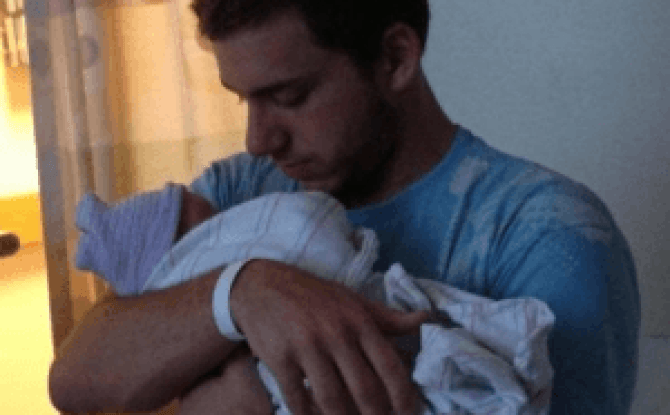
Twenty-year-old Brian Mariano finds the normal life overrated as he explores being a gay dad with his 2-year-old son Aison.

Mariano became a father with then-girlfriend Kelly when he was still in high school, and the two are negotiating all the struggles of young parenthood – plus a few extra. As a father, Brian Mariano feels lucky to have close family and friends who support him. But the gay dad (the youngest American gay dad we know of) from Newton, Massachusetts, admits that sometimes some people just don’t get him.

“Everybody in my life is really supportive of me,” he said. “If it’s someone new and a friend mentions I’m a dad, they will stop. ‘Wait, what? How are you a dad? You’re gay.’ It’s like that ‘Mean Girls’ quote sometimes. You know – ‘if you’re from Africa, why are you white?’”Gay dad

Still, Mariano knows that from the outside looking in, his story is anything but typical. The young man was a junior in high school when his girlfriend, Kelly, became pregnant. They had been dating for a year.

“I like to refer to myself as a ‘Kellysexual,’ which may sound really weird,” he said. “I’m gay, but there’s Kelly. Everybody kind of knew that I was gay. I didn’t really have to say it. People will come along and ask if our relationship was a cover-up. And I say, well, I got her pregnant, so I don’t think that’s the case.”

Kelly gave birth to Aison Mariano-Nichols, who will be turning 3 years old in March. The two stayed together for the first two years of Aison’s life before they eventually split.

Click here to read the entire story


gayswithkids.com – December 12, 2015 by Michael Lambert

Gay Adoption New York

Gay Adoption New York: is adoption necessary in the case of a sperm donor?

For same-sex couples, the fight for marriage equality is over and done with. As they start to building families, however, the struggle remains as the intricacies of family law in New York and across the U.S. haven’t quite caught up to this landmark change. This has led to much confusion on the part of same-sex, particularly lesbian, couples. One question is frequently asked: if two married women conceive a child through artificial insemination, does the non biological parent need to go through the process of gay adoption New York?


Gay Adoption New York is still necessary for married women using a sperm donor

Unfortunate case law in the State of New York, entitled Paczkowski v. Paczkowski, held that when married women have a child through artificial insemination, the marital presumption of parentage does not apply to them. This was the case in New York before gay marriage was nationally legalized and it still applies.

Marriage means parentage then?

Marriage does not convey legal parentage for same-sex couples. If your spouse had your child before you were married, gay adoption in New York is still necessary, particularly when you were not listed as a parent on the birth certificate. Despite marriage equality, adoption laws still vary from state to state so it’s important to check the state laws if you plan on adopting your child outside of New York.

What about the sperm donor?

In the case of an anonymous donor, typically the donor has given up all parental rights through the donation process. For this reason, using an anonymous donor is beneficial in New York because a married lesbian couple using an anonymous donor can have both parents’ names on the birth certificate. However, that alone does not create parentage, only second parent adoption does this.  Many couples opt for a known sperm donor for various reasons. In this case, the child and the donor will likely come into contact at some point. It’s vital to establish before conception the role the donor will play in the child’s life, and execute any legal documentation outlining anything pertaining to parenting or visitation rights of the donor. Any lesbian couple using a known sperm donor, regardless of whether they identify him as the father on the birth certificate, must undergo the second parent adoption process to secure the non biological mother’s rights to the child.


If you need help determining your parental rights or adopting the child (either biological or adopted) of your spouse, call Anthony M. Brown, head of Nontraditional Family and Estates division of Albert W. Chianese & Associations. Anthony is available to answer all questions concerning non traditional family law and adoption for GLBT families. Call 212-953-6447 or email Anthony with any questions or concerns.


2nd parent adoption of a stepchild?

2nd parent adoption of a stepchild in same sex couples: is it the right choice?

2nd parent adoption is the process of adopting the biological or adopted child of one’s spouse. While laws vary to some degree state to state, now that same-sex couples can legally marry they go through a very similar process as heterosexual couples do when adopting a spouse’s child.

Why go through 2nd parent adoption?

There are many reasons people choose to go through the process of adopting a stepchild; those reason could vary from wanting to create a strong cohesion in the family unit, to wanting the child to be able to receive an inheritance or even wanting legal rights as a parent to help make decisions on the child’s education, health and welfare.


When is 2nd parent adoption is not the best option?

Adopting a stepchild is a lifelong commitment and should not, under any circumstance, be taken lightly. While adopting a stepchild can strengthen a family’s cohesiveness, it’s not going to strengthen a marriage on the fritz and should not be used as a tool to try and “save” a relationship. It’s important to make sure you’re completing the adoption for the right reasons. If the parental relationship is going through bumpy times, the adoption process can add further stress and it’s probably best to wait until the parental relationship is on solid ground before beginning the adoption process. This goes for any stressful situation; if the family at large is going through a particularly stressful time, it might be best to wait.


My stepchild’s other biological parent is still out there. Can I adopt?

If your stepchild’s biological parent still retains their legal rights as their parent (regardless of the extent to which they participate in the child’s life), you must get them to sign an “adoption surrender” or “consent to adoption” form in order for you to begin the 2nd parent adoption process. This will relinquish their parental rights to that child. If they refuse to sign an adoption surrender, you will likely have a much harder time adopting your stepchild. In that situation, a termination of parental rights action would need to be brought against the other biological parent. Furthermore, if the child is older than 12 years of age, they will also need to consent to the adoption.


What else can I do?

A great way to prepare for the adoption process is with counseling. 2nd parent adoption can, and often does, yield a shift in the family harmony. Often this change is positive, but not always. It’s incredibly helpful to discuss everybody’s feelings, the ramifications of adoption, biological parents, etc. as you’re going through the legal process.

Regardless of the situation, 2nd parent adoption can be overwhelming to navigate on your own. As the head of Nontraditional Family and Estates division of Albert W. Chianese & Associations, Anthony M. Brown provides experience and expertise in 2nd parent adoption and legal proceedings with same-sex couples and families. If you’re interested in adopting your stepchild and have any questions, call 212-953-6447 or feel free email any questions or concerns.  

Same Sex Partners on Birth Certificates Halted

same sex partnersArkansas Supreme Court Halts Birth Certificates For Same Sex Partners

The Arkansas Supreme Court on Thursday temporarily blocked a lower court order that allowed same sex partners throughout the state to be listed as parents on the birth certificates of their children. It let stand the birth certificates obtained by three lesbian couples who had challenged the Arkansas Health Department Vital Statistics Bureau’s refusal to identify the three couples as the adoptive or biological parents of their respective children.

Same sex partners had a previous victory with Little Rock Circuit Judge

They won approval for their listing as parents in a narrow decision by Little Rock Circuit Judge Tim Fox. The same judge then issued another decision extending that recognition statewide. The state appealed the decision that allowed same-sex partners statewide to be listed, saying it conflicted with Arkansas statutes and left birth registrars in legal limbo.

The state Supreme Court agreed and said that “the best course of action is to preserve the status quo with regard to the statutory provisions while we consider the circuit court’s ruling.”

On Dec. 1, Judge Fox held that a state law restricting parentage identification to heterosexual couples was unconstitutional in light of the U.S. Supreme Court’s decision this year legalizing same-sex marriage nationwide.

“(The) decision affords the plaintiffs, as same sex partners, the same constitutional rights with respect to the issuance of birth certificates and amended birth certificates as opposite-sex couples,” Fox wrote at the time.

Click here to read the entire article.


Hufingtonpost.com, December 11, 2015 – by Steve Barnes

Gay adoption facts for protecting your family

Gay adoption facts for protecting your family

As the laws in New York struggle to keep up with marriage equality, many families are left feeling vulnerable and confused about making sure their family and parental rights are as legally protected as their marriage. Here are a few gay adoption facts and common concerns and what you need to know.

We are ready to adopt a child and looking for gay adoption facts. Can adopt as a couple?

Yes. Same sex couples in New York can jointly petition for adoption, and they need not be married. This may, however, vary by state. If planning to adopt outside of New York, you will need to check the specific state laws.

We are married and having a child through surrogacy or artificial insemination. Is the non biological parent required to adopt our child separately?

In short, yes. Even though the names of both parents may be on the birth certificate, this does not automatically give the non biological parent a legal connection to their child. It’s important to create that legal bond through a stepparent adoption in the event that the relationship dissolves or the biological parent becomes deceased or incapacitated so that the non biological parent can legally maintain a relationship with the child.

How do I know which type of adoption to petition for?gay couple adoption, gay couples adopting, gay adoption facts, gay adoption statistics, lgbt adoption rights, adoption rights, gay adoption rights, gay adoptions

If you’re adopting a child together, a joint adoption will create a legal bond between the child and both parents and is in most cases the best option. If you plan on adopting the biological or adopted child of your partner, whether you are using a surrogate, sperm donor, or your partner already had a biological or adopted child, the specific type of adoption generally depends on whether there is another legal parent already established. If you and your partner are married, generally you would go through the stepparent adoption process. If you are unmarried, you would petition under the co parent or 2nd parent adoption process.

Do I need to track down the other biological parent to consent?

If you had a child through a joint adoption, then typically both parents of the child have already given up their parental rights. In the case of either artificial insemination or surrogacy, legal parentage may be addressed and established prior to the child’s birth and is much simpler if the other biological parent has already given up their legal parental rights. An “adoption surrender” may be needed if the other biological parent has never legally given up their parental rights, or if the child had another adoptive parent in the past.

Will the adoption be valid across state lines?

Yes. Once legal parentage is established through adoption, that child-parent relationship will be recognized nationally.


The main point to remember about gay adoption facts for families is to make sure that both parents have established a legal relationship with their children. Anthony M. Brown, the head of Nontraditional Family and Estates division of Albert W. Chianese & Associations, is here to help you make sure that the legal bond of your family reflects your emotional and parental bond. He can help you decide the best course of action to protect your parental rights. Call 212-953-6447 or email me to answer any questions you may have about protecting your family!

Same sex marriage is a constitutional right?

same sex marriage

Federal lawsuit challenges anti-gay North Carolina law allowing magistrates to opt out of same sex marriage

A North Carolina law allowing magistrates with religious objections to stop performing all marriages in order to avoid performing a same sex marriage is unconstitutional, according to a federal lawsuit filed today.

The suit, brought by two same-sex couples and an interracial couple, alleges that Senate Bill 2, passed earlier this year, violates the establishment clause of the First Amendment, and the equal protection and due process clauses of the 14th Amendment.

At least 32 court magistrates in North Carolina have stopped performing marriages under the law, including all four in McDowell County, forcing the state to bring in officials from other areas to serve residents.

“This law distorts the true meaning of religious freedom,” the Rev. Jasmine Beach-Ferrara, executive director of the Campaign for Southern Equality, said in a release announcing the lawsuit. “From the day it was proposed, it is clear that SB2 is about one thing and one thing only — finding a new way to discriminate against same sex marriage.”

The plaintiffs include Carol Ann Person and Thomas Person (above), who were denied the ability to marry in 1976 by magistrates who said it would violate their religious beliefs against interracial marriage. A federal judge later ordered the magistrates to comply with the U.S. Supreme Court’s ruling in Loving v. Virginia, but the lawsuit alleges that Senate Bill 2 could allow magistrates to opt out of performing interracial marriages.

Lawmaker approved SB 2, part of a wave of anti-LGBT “religious freedom” legislation across the country, by overriding the veto of Gov. Pat McRory in June. The lawsuit was filed in the same court that struck down North Carolina’s same-sex marriage ban in 2014.

Click here to read the entire article.


by John Wright at towleroad.com, December 9, 2015

Arkansas’ Cautionary Birth Certificate Tale

Birth Certificate

Arkansas’ Cautionary Birth Certificate Tale

It’s been a bumpy week for same-sex parents in Arkansas trying to both get on a child’s birth certificate —but there’s an important lesson in the case for same-sex parents in all states.

A week ago, a Pulaski County circuit judge ruled that the U.S. Supreme Court decision that legalized marriage for same-sex couples means that same-sex parents in Arkansas may have both their names put on the birth certificates of children born during their marriages. The state Department of Health, however, initially refused to do so, unsure if the ruling applied beyond the three plaintiffs, and slowed by Attorney General Leslie Rutledge’s advice not to issue amended birth certificates because she planned to appeal. The Department of Health, to their credit, seems to be issuing them anyway.

One important takeaway from all this, though, is found in Judge Tim Fox’s ruling, where he says, “Today’s decision affords the plaintiffs, as same-sex couples, the same constitutional rights with respect to the issuance of birth certificates and amended birth certificates as opposite-sex couples. That is the sum total of the legal effect of this decision.”

Those “same constitutional rights,” however, may be more limited than one might think. Fox notes that the plaintiffs list eight examples of how the lack of both same-sex parents on a birth certificate may impact their legal relationship to their children, including identification procedures for Social Security numbers and passports; denial of rights related to medical care, school-related activities, governmental- or employment-related benefits, survivor benefits, and inheritance; as well as disruption of the parent-child relationship and the award of child support in the event of parental divorce. But, he warns (my bold):

The court’s declaration today does not conclusively resolve any of those legal issues. It may create equitable and legal arguments for resolution of issues that involve only the two spouses of the same sex-marriage, such as child support or child custody. It does not in any manner resolve the multitude of legal issues that may arise involving third parties. Biological parents, mother or father, whose statutory and/or common law rights may not have been properly terminated, whether through an adoption proceeding or by the signature of surrogacy documents, are not bound by the listing of two names on a birth certificate. Other heirs claiming against a same-sex spouse estate, or attempting to disallow a minor child’s interest in the estate of one of the same-sex spouses, are not bound by an amended birth certificate. Insurance companies—life, health, or casualty—may decide in order to prevent potential duplication of claims, or liabilities not actuarially considered in premium calculations, to change their contract language to exclude birth certificates as indicia of acceptable legal relationship, and may require other documentation such as adoption decrees. In the future, government benefits, both state and federal, may key off of legal documentation other than a birth certificate. Today’s decision does not legally resolve any of those potential issues.

Click here to read the entire article.

by Mombian.com, December 8, 2015

Co parent adoption post-marriage equality

What does Co parent adoption in a post-marriage equality world look like?

Same-sex couples now have the right to marriage in the United States, however, there are still some legal implications that require consideration when it comes to family law and children. It’s important to remember in any union that just because a couple is married, parental rights of biological or adoptive children of one parent do not automatically transfer to that parent’s spouse. In order for both parents to have and practice their legal rights to make decisions for that child’s education, health and welfare, the family, in most cases, must complete a co parent adoption.

What is co parent adoption?

Co parent adoption is a legal procedure that allows a same-sex parent to adopt their partner’s biological or adopted child. This is similar to the stepparent adoption process. This gives the non biological or non adoptive parent parental rights towards the child.


Is going through all that paperwork really necessary?co parent adoption, co parent adoptions, second parent adoption new york, second parent adoption, second parent adoptions

In short, yes. While couples intend to stay together forever, break ups happen. In the event of a break up, if one parent hasn’t gone through the adoption process they may lose their rights to custody in the ensuing proceedings. The same goes in instances of death. If something should happen to the only legal parent of the couple’s children, making decisions thereafter for the child or children could be difficult if adoption proceedings have not been completed.


Why do we need co parent adoption if we are married and started our family together?

The only way in which a same-sex couple doesn’t need to go through a co parent adoption procedure is if they petitioned jointly to adopt their child or children. Until the Supreme Court decision of June 2015, the option of joint adoption by same-sex couples varied state to state. If the child is one parent’s biological child, as in the case of a surrogate or sperm donation, the other parent will still need to go through the co parent adoption process.


The adoption process can be an overwhelming endeavor. Whether you have already started the great adventure of parenting or are just beginning the process of starting your family, it’s important for same-sex parents to make sure all the legalities are both understood and taken care of. As the head of Nontraditional Family and Estates division of Albert W. Chianese & Associations, Anthony M. Brown specialises in co parent adoption and is here to help you navigate the ins and outs of same-sex legal issues and adoption. If you have any questions, don’t hesitate to call 212-953-6447 or drop me an email.

Are Second Parent Adoptions Necessary With a Surrogate?

Are second parent adoptions necessary when using a surrogate?

Establishing parental rights when someone has their family with the help of a surrogate (typically gay men looking to start a family or women who cannot carry for medical reasons) is a tricky area of the law and varies greatly state to state. Prior to the Supreme Court’s June decision in Obergefell vs. Hodges granting marriage equality to same-sex couples, second parent adoptions on the part of the non biological parent were almost always required once a couple started a family via surrogacy. Post-Obergefell, second parent adoptions are still the only method for securing unassailable rights between your child and the nonbiological parent. Click here for a video on the ABCs of surrogacy.surrogacy

Types of Surrogacy

There are two types of surrogacy: traditional and gestational. Traditional surrogacy is when the surrogate mother is also the egg donor and the child is biologically related to her. With a gestational surrogacy, a fertilized egg is implanted into the womb of the surrogate and she is not biologically related to the child. Most surrogates today are gestational surrogates. The establishment of parental rights may be executed, in some cases, by a pre or post birth order in the state where the surrogate lives, but more often by second or step parent adoption in the intended parents’ home state.

Second Parent Adoptions

If your partner had a child with a surrogate before you were married or in a relationship, second parent adoptions are required to obtain legal parental status of that child. If the surrogate is named on the birth certificate of the child, they may need to sign a “consent to adoption” form. If you are just beginning the surrogacy process as a couple, throughout the proceedings, the nonbiological parent may be able to obtain either a pre-birth or post-birth parentage order. Some states do not allow for parentage orders, in which case a second parent adoption would be necessary in the intended parents’ home state to legally obtain those parental rights.

Variations State to State

Keep in mind that laws surrounding surrogacy vary greatly state to state, and surrogacy is even illegal in 5 states, including New York. If you’re a New York resident with your heart set on surrogacy, you will need to find a surrogate mother in a state in which it is legal.

Canadian Surrogacy

Many couples are now looking to our neighbors to the north for surrogacy services.  The main difference in the laws regarding surrogacy in Canada is that surrogacy is NOT compensated.  Surrogates are reimbursed for their costs, which include such items as lost wages, bed rest, family care, health costs, maternity clothing and other pregnancy related costs.  All provinces except Quebec allow for enforcement of these altruistic surrogacy agreements.Canada

The critical consideration is parental establishment after the child is born.  In some provinces there is an administrative method of securing parental rights for the non-genetically related parent.  While this may be appropriate in Canada, it does not establish legally recognized rights in the U.S.  Most provinces will also offer a court declaration of parentage.  This is the very least in protection for the non-genetically related parent.

Intended parents should also consider a step or second parent adoption back in the U.S in their home state to secure parental rights for the non-genetically related parent.  Adoption orders receive full faith and credit automatically in the U.S. and around the world.  Parentage orders may or may not be recognized in countries which have not legalized surrogacy.  Also, in the States, with an adoption order, there is no questions as to the rights of a parent created through adoption.  Not all states have parental declaration orders and enforcing them may prove extremely costly.

If you and your partner are considering getting an out of state/country surrogate, it’s vital to get professional legal assistance to make sure your parental rights are recognized across all state and international borders.

Anthony M. Brown, head of Family and Estates division of Albert W. Chianese & Associations, is here to help you and your family grow and to make sure all of your parental rights are legally protected. If you have any questions pertaining to legal issues of your parentage, call 212-953-6447 or email and I will do my best to help your family!

Contact Time For Families

Contact Form
* indicates required field

Same Sex Couples on Birth Certificates in Arkansas

Same Sex Couples on Birth Certificates Statewide in Arkansas

A state judge ruled on Tuesday that Arkansas must list both members of same sex couples as parents on official birth certificates issued across the state, broadening his earlier finding on behalf of three married lesbian couples with children.

Little Rock Circuit Judge Tim Fox held that a state law restricting parentage identification to heterosexual couples was unconstitutional in light of the U.S. Supreme Court’s decision this year legalizing same-sex marriage nationwide. “(The) decision affords the plaintiffs, as same-sex couples, the same constitutional rights with respect to the issuance of birth certificates and amended birth certificates as opposite-sex couples,” Fox wrote in his decision.

Same sex couples, gay parents, lesbian parents

A spokesman for Arkansas Attorney General Leslie Rutledge said she would review Fox’s order before commenting.

“It was a wonderful decision,” said Cheryl Maples, attorney for the plaintiffs. “It was exactly what we wanted.”

The state had resisted identifying same-sex couples as parents on Arkansas birth certificates largely on technical grounds, arguing the protocol was established by the Legislature and the state Health Board and could not be changed without action by either, or both.

Click here to read the entire post


New York Times vis Reuters, December 1, 2015