Step Parent Adoption; Married still need one?

Step Parent Adoption; Marriage means I don’t need one?

Step Parent adoption is still a must to secure your family, even after marriage equality.  Marriage equality was a long fought battle and a much celebrated victory for gay and lesbian couples across the country. Now that it is the law of the land, many people mistakenly believe that their marriage alone will secure their family. Unfortunately family law has not caught up to the realities of how we create our modern families.

For both gay and lesbian couples, securing the legal rights of a non-biological parent is crucial to create the kind of emotional, and legal, security that most other families take for granted. The legality of both parents relationship to their child is often assumed. Parents are parents, regardless of the biological connection to your child. In New York State, the law doesn’t agree.

Married lesbian couples in many states, New York included, can list a non-biological mother name as a parent on a child’s birth certificate if they are married at the time of the birth of the child and they use an anonymous sperm donor. While a name on a birth certificate is an important goal, it in itself does not create a legal relationship, only through step parent adoption can they be acheived.

Step Parent adoption is still a must to secure your family, even after marriage equality.

In New York County, Surrogate Judge Kristin Booth Glen, in a case entitled In the Matter of Sebastian, discusses the issue of establishing parental rights for a non-biological parent specifically.  The case involves married lesbian couple who used an anonymous sperm donor to have a child. Glen concludes, when discussing the non-biological mother’s relationship with the child that, “the only remedy available here that would accord the parties full and unassailable protection is a second-parent adoption pursuant to New York Domestic Relations Law (“DRL”) § 111 et seq.”  Glen further states, “that a judicial order of adoption in one state must be afforded full faith and credit in every state, and that there can be no “public Policy” exception to that mandatory recognition…”.

While it is true that many states have what is called a “martial presumption of parentage,” the truth about this is that it is applied differently in different states.  For instance, in New York State, where I practice, there is specific case law that holds that the marital presumption of parentage does not apply to same-sex couples.  That case is called “Matter of Paczkowski v. Paczkowski.”  In that case, the appellate division of the Second Department of New York, the state’s intermediate appellate court, held that the “presumption of legitimacy… is one of a biological relationship, not a legal status.”

In essence, the court says that a marriage does not create a legal right between a non-biological parent and a child.  While it may be an indication of intent to be a parent, as would a non-biological parent’s name on a birth certificate, the only way to actually create the legal relationship that guarantees the security that all same-sex families need, is through an adoption order, and in some states, a parentage order.  Unfortunately, New York currently does not have the capacity to issue a parentage order but there is legislation in committee in Albany that may change that. 

Surrogate Options & Known Donors Complicate the Legalities of Chosen Families

One further compounding variable is that many lesbian couples are now choosing known sperm donors. While the desire for a child to know their biological heritage and have a father figure makes sense to many couples, adding another potential parent into the mix can create problems if an adoption does not take place to terminate the donor’s rights to the child and create the intended, non-biological parent’s rights to their child.

For male couples who want to have biologically related children, surrogacy is the only real option. Surrogacy is an emotionally, and financially, exhausting process.  It is a true leap of faith.  Couples considering surrogacy must juggle a myriad of concerns, the least of which being the cost.  With gestational surrogacy tabs running as high as $180,000.00, budgeting is a must.  Lawyer’s fees are often lumped together in surrogacy accounting statements, and some agencies do not include the cost of a second or step parent adoption in order to keep the numbers low.  Often, the cost of a pre-birth order is less than a second parent adoption.

step parents adoption, step parent adoption, adoption step parent, adoption for step parents

In some cases, depending on where your surrogate mother gives birth, her name may be removed from the child’s original birth certificate by a proceeding called a pre-birth order.  Some states do not provide for pre-birth orders.  Those that do may or may not replace the surrogate’s name with that of the non-biological intended parent.  California, for instance, does offer the ability to include the non-biological parent’s name on the child’s original birth certificate, and that very significant step is often mistakenly viewed as a replacement for a second parent adoption, which is the only definitive way to establish parental rights between a non-biological parent and a child born through surrogacy.

In order to understand why a second parent adoption is vital if you have a pre or post-birth (or parentage) order, you must understand what that order is, and what protections it provides.  Pre and post-birth orders are court orders that are obtained by filing a petition in the appropriate court in the state in which the child will be born.  Often, these petitions are not filed in the county where the carrier lives, but in a county which has a judge who understands the importance of these orders and grants them upon the motion of an attorney representing the intended parents.  This in itself may create a problem.

Some states may not recognize the relationship created by the pre-birth order because of the lack of a full judicial process attendant to a parentage order.  For an issue to be precluded from challenge, for instance the issue of a non-biological parent’s relationship to a child born through surrogacy, the court looks at the process by which that issue has been established.  The reason why adoption orders from one state are valid in every state, regardless of the gender of the parents, is because the judicial process of the adoption.  The state, for all intents and purposes, becomes and “adversary” to the adoptive parents in the adoption process.  The state performs background checks, it orders that fingerprints be taken, mandates that a home study is performed by a licensed social worker to ensure that the child’s prospective residence is safe and clean and essentially verifies all adoption requirements submitted by the petitioning parent, or parents.  The adoption order is the product of a fully litigated judicial process.  Because this rigorous process is not part of a parentage order proceeding, states which do not offer such orders may not recognize a relationship created in one.

Furthermore, some courts, through a parentage order, will add the name of the non-biological parent to the original birth certificate if that person is married to the biological parent.  For same-sex couples, this can present an issue, particularly if the non-biological parent’s relationship to the child is being challenged in a state that resists same-sex marriage.  These situations usually arise upon the dissolution of a relationship and during the custody/visitation/support aspect of that process.

Protecting our families may seem like navigating a ship through a sea of legal, financial and emotional waters.  But what is more important than the security of knowing that every child has a legal relationship with their parents that cannot be challenged for whatever reason. Every parent deserves that security as well.

by Anthony M. Brown – September 16, 2015

Anthony M. Brown, Esq. currently is an associate with the law firm of Albert W. Chianese & Associates heading their Nontraditional Family and Estates Law division serving unmarried individuals, couples and families in Manhattan and on Long Island.  Anthony is the Executive Director of The Wedding Party and has been a Board member since its inception in 1999.   The Wedding Party is a non-profit educational organization that educates the public about marriage and its importance to all citizens through outreach programs and strategic media placement. Anthony is the founder of TimeForFamilies.com, a web environment dedicated to assisting gay and lesbian couples create their own families. Anthony is the Board Chairman of Men Having Babies, a non-profit organization created to assist gay men looking create families through surrogate options and is a legal consultant for Family By Design, a co-parenting information and matching website.



Adopted Kids: From Guatemala,Complicated Legacy!

Adopted Kids: For US adoptees from Guatemala,

It’s A Complicated Legacy!


Scattered across the United States are more than 29,000 adopted kids born in Guatemala and adopted by U.S. families before that troubled Central American nation shut down international adoption in 2008 amid allegations of rampant corruption and baby-selling.

Today, as adopted kids come of age, many want to know about their birth mother and why she gave them up and wonder about the murky circumstances of adoption. Some have traveled to Guatemala to investigate.

“Guatemala was all I could think about,” said Gemma Givens, a 25-year-old adoptee in California, who has made two trips to the country to learn what she could.

“I was just a mess,” she said, “the questions, the wondering, the pain, the desire to heal and to figure it out.”

International adoptions from Guatemala began to surge after a 36-year-civil war ended in 1996. Tens of thousands of civilians disappeared or were killed during the conflict, leaving legions of children without care. Orphanages overflowed, and American families seeking to adopt soon learned there was a vast supply of infants being made available.

By 2006, more than 4,000 Guatemalan children annually — about 1 of every 100 babies — were being adopted by American families, and the small country became the second-largest source of adoptees after China. Huge sums were at stake — American families routinely paid $30,000 or more to Guatemalan lawyers to arrange an adoption.

Then, as evidence of corruption mounted, the pipeline closed. Adoptions to the U.S. dropped to 27 last year.

Roughly half of all the adoptions by Americans entailed some type of impropriety — from outright abduction of infants by Guatemalan racketeers to baby-selling to various types of coercion and deception that induced mothers to relinquish their children, according to Carmen Monico of Elon University. The professor of human service studies has conducted extensive research on adoption in Guatemala.

Monico expressed empathy with adopting families, saying, “They had their hearts in the right place.” But she also has documented the experiences of Guatemalan mothers who believe their children were abducted to meet the demand.

“Some of these women have been searching for their children for years,” Monico said. Uncertainty also has weighed heavily on adoptive parents.

“After we brought our son home, I became more and more concerned,” said Laura Hernon of Seattle, who with her husband adopted a boy from Guatemala in 2008, just before the shutdown. She wondered, “Is there a mom who was duped out of her baby?”

The couple investigated, and determined anew that the adoption was legitimate.

Click here to read the entire article.


September 6, 2015 – by David Crary – TheNewsTribune.com

NEW YORK

Gay Parent Adoption: Their Perfect Family!

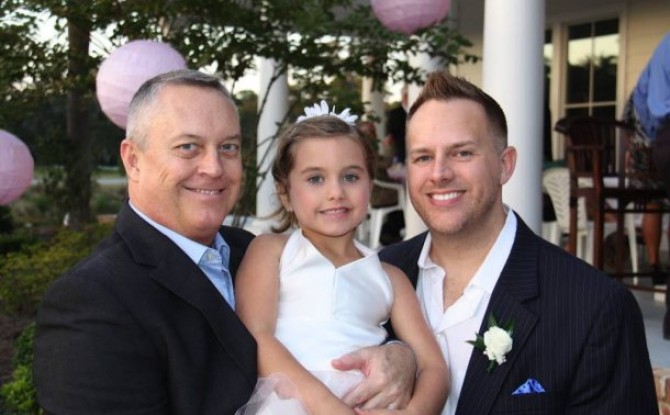
Here’s How These Two Dads Created Their Perfect Family, a Story of Gay Parent Adoption

I guess you could consider it just another average slice of American life when Ted, a screenwriter and game developer (gamers take note, Ted was a senior developer for the seminal “Elder Scrolls” series) from Ohio, and his husband, Ian, a merchandiser from England, attended a recent potluck lunch celebrating cultural diversity at kindergarten with their adopted, multiracial child, Mikey.

What was their contribution? Well, how exactly does one best represent Ohio/England/African American ancestry? Why, casserole, of course, says Ted. A blend of noodles, chicken and vegetables seems an appropriate choice for this potpourri of a family. You could make the argument that such families are appropriately representative of new wave multiculturalism in America — a country once famous for its open doors.

Food is somewhat central to this story. Ian and Ted met at a friend’s dinner party in Venice Beach in October of 2005. They had their commitment ceremony with about a hundred friends at their place in April of 2007, and they were married just last year.

They talked about being parents very early on and investigated ways to make that happen — including gay parents adoption, gay parents adopting, gay parent adoption, adoption for gay parents, surrogacy. Ultimately, they felt that the process was overly expensive and that their own DNA was not that precious when there were kids in foster care that needed parents.



Additionally, Ian and his sister were adopted and Ian was very comfortable with not needing “blood” relations. They met Robyn Harrod and Sylvia Fogelman at the Southern California Foster Family & Adoption Agency (SCFFAA) and started to take all of the required classes. Those initial classes, Ted explained, were somewhat therapeutic for Ian. Going through the thoughts and planning that his adopting parents went through gave him a fuller understanding of the love and commitment given to both him and his sister.

Click here to read the entire article.


By JAmesMichael Nichols – HuffPostGay via @raiseachild – September 11, 2015

There are all kinds of kids in the foster system. This Huffington Post Gay Voices RaiseAChild.US “Let Love Define Family®” series installment presents one child whose sweet nature and quick wit adds a lot of spice and laughter to the lives of his two dads. RaiseAChild.US contributing writer David Humiston shares the story.

The Great Lesbian Couples Sperm Crisis

The Great Lesbian Couples Sperm Crisis

Semen is one of the most abundant resources on the planet. So why are lesbian couples facing a donor shortage?

Like most Canadian lesbians, Paula and Nicole sought out foreign semen when they wanted to have a child. They settled on a donor who looked like their favorite ’80s television star and, through some Internet sleuthing, found another local family on Facebook who had used the same donor. Then, when they were pregnant, they bumped into another queer couple at their prenatal class.“[W]e were just talking and realized that we used the same sperm donor and…their friends were actually the other couple we connected to [on Facebook],” Paula said, in a recent study by feminist legal theorist Stu Marvel in the Canadian Journal of Women and the Law.Now, Paula and Nicole—whose names Marvel changed for the study—know at least nine families in the province of Ontario who have used the same telegenic donor.

What are the odds? Not bad, it turns out. In her study, Marvel estimates in the study that children born through donor insemination in Canada could have anywhere from 100 to 615 half-siblings worldwide in an extreme case. In 2011, the National Post also reported that a single donor at ReproMed, Canada’s only national sperm bank, could potentially have up to 75 offspring in a city the size of Toronto.

Semen is one of the most abundant resources on the planet, with men producing an estimated 1,500 sperm cells every second. But in places like Canada and the U.K. where sperm donation is limited, family building is a unique logistical challenge, especially for lesbians.

Click here to read the entire article.


By Samantha Allen, TheDailyBeast.com September 7, 2015

Legal Surrogate: One Gay Couple’s Journey

legal surrogate, legal surrogacy, surrogate nyc, surrogate lawyers, surrogate lawyer

Legal Surrogate: Inside One Gay Couple’s Journey to Fatherhood

“Obviously, if you grow up with a great family that is supportive and shows unconditional love,” says Gonzalez. “That’s something that most people feel passionate about passing on themselves.”

The bigger question for the would-be dads was how they would go about having a baby.

Gonzalez, 37, is CEO of Barry’s Bootcamp, an international fitness boutique concept with locations throughout the United States and Europe. Rollo, also 37, is a chef, owner and founder of Greenleaf Gourmet Chopshop, a chain of organic restaurants in California. With 14 nieces and nephews between them, “we both have always wanted kids,” says Rollo of the couple, who split time between N.Y. and L.A.

Their desire launched them last year on an emotional journey through intense, complicated discussions focused on finding an egg donor and then a surrogate – discussions that put them at the front of two emerging trends.

From 2000 to 2010, the number of same-sex couples raising children more than doubled from 8 percent to 19 percent, according to the U.S. Census Bureau. And for those couples – as well as straight couples and single people both straight and gay – surrogacy is on the rise, says Stuart Bell, co-owner of Growing Generations, a California-based agency that assisted the couple.

And Why Their Legal Surrogate Wants to Fulfill Their Dream of Parenthood

“Twenty years ago, infertility was such a cross to bear,” says Bell. “There was kind of this shame around ‘I can’t have a baby.’ ” Although it’s still a topic of legal and political debate in parts of the country, surrogate contracts are now recognized in at least 17 states. And as surrogacy is discussed via social media, “Women now realize, ‘I’m not alone,’ ” he says.

Celebrity attention hasn’t hurt. Sarah Jessica Parker and her husband, Matthew Broderick, welcomed twins by surrogate, as did Neil Patrick Harris and his husband, David Burtka. “Mitt Romney’s son used a surrogate,” says Bell. “When we first started 20 years ago, we only worked in California. Now we work in 30 other states. Every year we see four or five new states come onboard. They are starting to understand that it’s not harming anyone involved. This is something that’s building families in a positive way.”

“As there’s more of us and we’re talking about this,” says Bell, himself a gay dad with a 7-year-old son via surrogate. “People are accepting it more.”

Researching Their Options

For those who want to be a surrogate, there are medical tests, psychological evaluations and background checks. Growing Generations – which doesn’t advertise but accepts online applications – says just 10 percent meet initial qualifications. From there only 1 or 2 percent proceed through review that looks for, among other qualities, empathy, stability and “women who like to be pregnant,” Bell says. “They know what it’s like to have children and how much it’s meant in their life, and getting to share that for another person is important for them.”

People.com

LGBT Families: Parenting & Second-Parent Adoption

LGBT Families: Parenting and Flaming Hoops of Second-Parent Adoption

LGBT Families and their personal stories are both moving and informative when planning your own family as a gay couple. At 30 weeks pregnant, my favorite time of each day is the moment when I lie down in bed and watch my stomach curiously shift as my daughter turns and rolls beneath the surface. “Look! Look!” I tell my wife when I can feel a movement is imminent, and she will place her hand on my belly, eager to make some early connection with the little creature that will be the center of our lives in ten short weeks. Each day we talk about how excited we are to meet our daughter — to see her, to feel her, to learn about her personality and if you’re my wife you will talk elatedly about teaching her how to throw a football.

In the midst of this excitement about our new family, we are beginning another new process — a second-parent adoption, so that my wife can also be recognized as our daughter’s legal parent. Although my wife’s name will be listed on our daughter’s birth certificate, and although we are legally married in New York State, and although we carefully chose our sperm donor together and although she will change a thousand poopie diapers and fall asleep reading Dr. Seuss books to our daughter one day — she will not have legal status as a parent to our child until we complete an extensive and expensive adoption process. Straight couples sometimes also choose to do second-parent adoptions, but this typically only occurs among unmarried straight couples when one is not the biological parent of the child. However, for the thousands of married same-sex couples like ourselves who have chosen to start a family and have children together, marriage or parental names on the birth certificate are not enough to secure our families.

LGBT Families of all kinds have second parent adoptions

We began researching second-parent adoptions for same-sex couples once we found out I was pregnant. We weren’t entirely convinced it was necessary; we live in and mostly travel to states with marriage equality laws in place and it seemed far-fetched that we would find ourselves in an unfriendly hospital where my wife would be barred from visiting me or making decisions on behalf of our daughter. And yet, all of our LGBT parent friends have gone through the adoption process, and even our LGBT friends without kids — including lawyers, nurses, activists and policymakers have encouraged us to do it. Only my moms, two lesbians who raised me and my siblings in New England years before any state recognized gay marriage, questioned the necessity of a second-parent adoption. “Listen honey, if you are ever in an emergency — you will find a way. Nothing will keep you guys from your child,” was my mother’s trusting advice. Yet LGBT families have faced these types of challenges for years and will continue to face them as long as there aren’t federal protections in place.

Despite last year’s momentous Supreme Court decision finding the Defense of Marriage Act’s (DOMA) ban on same-sex marriage unconstitutional, LGBT families still face what is often referred to as a “patchwork” of laws and regulations across the United States, including those that can prohibit a “non-recognized” same-sex parents from covering their child on their health insurance plan, visiting a sick child in a hospital, or from consenting to necessary medical care. In the worst of cases, a child could be removed from the family home if the legal parent dies and there’s no second-parent adoption in place.

In states that do allow LGBT parents to petition for second-parent adoptions (and at the time of this writing only 14 states and D.C. allow this), the adoption process can vary regionally, and even from judge to judge. This type of arbitrary consideration for a child’s “best interest” is likely to happen more with the passage of any federal legislation such as the recently introduced bill which would allow adoption and foster care service providers to “refuse to work with families with whom they have personal, religious, or moral objections.” As the attorney who is working on our adoption told us, “Less than half the states currently recognize same-sex marriages. If you were to leave NY for any purpose, there could be issues. Although you and your wife are in concert on this, if you were in another state and became disabled or died, she might have to deal with interfering relatives or an unfriendly Child Protective Services, medical or court system. A birth certificate is not proof of parentage and not entitled to full faith and credit in all states. A court order is your best protection.”

Click here to read the entire article.


by Allison Auldridge, huffingtonpost.com, August 15, 2015

Surrogacy Services Suspension: Nepal’s Top Court Orders

Nepal’s top court orders suspension of surrogacy services

Nepal’s top court has ordered a halt to commercial surrogacy services in the Himalayan nation until it rules on the legality of the practice, an official said Wednesday. Nepal has become a destination for foreigners, including many Israelis, seeking to have children through surrogate mothers. The practice is controversial, with critics saying it exploits the poverty of women.

Although Nepal has no laws on its books covering surrogacy, the government last year allowed foreign women to serve as surrogates in Nepal but barred local women.

“There are no laws regarding surrogacy… it raises many constitutional and legal questions,” said Nahakul Subedi, spokesman for the Supreme Court.

“So the court issued a stay order on surrogacy services yesterday … until the case is settled,” Subedi told AFP.

Advocate Prabin Pandak, who filed the original lawsuit against the practice, told AFP the court’s order would put a stop to the registration of new cases.

“Women should not be a subject of trade, neither should a child,” Pandak said.

“Nepali women are not allowed to be surrogate mothers but they are misrepresented as Indian and used for surrogacy,” she said.

Nepal has become an attractive destination for couples who find its services cheaper than those offered by surrogacy agencies in the West.

Israel in April airlifted 25 infants born to Indian surrogate mothers in Kathmandu after Nepal was hit by a devastating quake that killed nearly 9,000 people.

In Israel, only heterosexual couples are legally able to use surrogacy, and there are many restrictions on who can serve as a surrogate. While straight couples must go through an onerous committee process in order to qualify for surrogacy, homosexual couples are left completely out of the system. Consequently, they must look to foreign surrogacy as a means of producing a child biologically related to one member of the couple.

Click here to read the entire article.


AFP and Times of Israel Staff – August 26, 2015

Same sex couples face more obstacles to infertility treatment

Study suggests same sex couples face more obstacles to infertility treatment

Same sex couples encounter more obstacles to treatment for infertility than opposite-sex couples, suggests a new study that will be presented at the 110th Annual Meeting of the American Sociological Association (ASA).

“For example, same sex couples often must undergo psychological evaluations before being treated for infertility — a process that is not normally required for opposite-sex couples,” said study author Ann V. Bell, an assistant professor of sociology at the University of Delaware, who noted that the U.S. medical system is standardized to work with heterosexual couples.

Bell’s study is based on interviews with 95 people — 41 heterosexual women of low socioeconomic status, 30 heterosexual men, and 24 women in same-sex relationships. “These people are on the margins of our understandings of infertility, as it is generally viewed as a white, wealthy, heterosexual woman’s issue,” Bell said.

The new study builds on her 2014 book Misconception, which focused on the 41 women of low socioeconomic status, as well as 17 women of high socioeconomic status, to explore social class and infertility. Through her interviews with the 41-women for the book, Bell found that their experiences related to infertility were shaped by inaccurate stereotypes and that doctors often assumed infertility was not a problem for them.

Bell has extended her earlier research beyond social class to include the effects of infertility on men and same-sex couples. The “medicalization” of infertility — studying and treating it as a medical condition — is a process that has increasingly led to disparities and inequalities, she said.

“Most of the research out there is about women, even though just as many men are affected by infertility,” Bell said. “It’s still viewed as a woman’s issue.”

Click here to read the entire article.


EurekaAlert.org, August 26, 2015

CHICAGO —

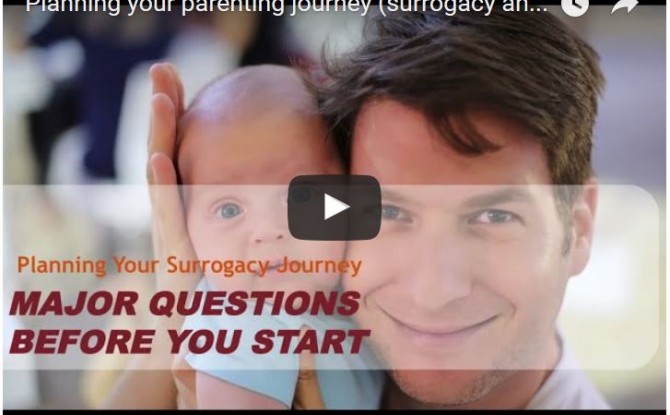
Planning your parenting journey / 2015 Brussels MHB

Becoming A Surrogate: The Quest For Pregnancy

Becoming A Surrogate: The Quest For Pregnancy

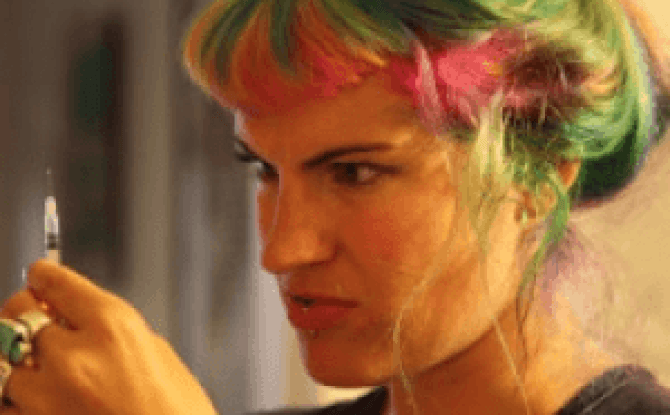
Mardi Palan is a hair dresser. She has a partner and a one-year-old son Forest. As a surrogate, she hopes to get $30,000 for a down payment on a home. But first, she has to get pregnant.

Back in July, a huge box arrived in the mail, filled with medications, hormones and syringes.

“I was kind  overwhelmed.”

The box came with a calendar and a list of all the medications she needs to take to help her synchronize her cycle with an egg donor.

“So each day, prenatal vitamin, aspirin, antibiotic and then a shot,” she said. “And then they send you a video of how to inject the shots. And each shot has a different needle, too. So the one that I’m doing right now is just a baby needle. And then later on the progesterone is inter-muscular. So it’s a huge needle. So it’s kind of scary to look at. I’m like, ‘Oh!’”

The first shot is Lupron and it’s used to decrease Palan’s natural hormones. Essentially, it stops her from ovulating.surrogate, surrogate attorney, legal surrogate, legal surrogacy, surrogate nyc, surrogate lawyers, surrogate lawyer

Palan also takes aspirin, to thin her blood. Clots can be a problem when taking hormones.

And she was taking birth control pills to make sure she doesn’t get pregnant before the eggs are transferred, but she stopped taking those last month.

Finally, both Palan and her partner, Caleb Weidenbach, have to take an antibiotic.

Although he agreed to take the pill, Weidenbach said he questions the requirement.

“I understand that if there is some kind of infection, they probably don’t want that to be shared with the egg,” he said.  “But I feel like maybe they should do a test, to see if there’s an infection, instead of just kind of handing out the antibiotics.”

The medicine is used to treat bacterial diseases like pneumonia and urinary tract infections.

Palan is working with Oregon Reproductive Medicine in Portland. It’s one of the area’s biggest in vitro fertilization clinics and has clients across the globe.

Click here to read the entire article.


by OPB | Aug. 19, 2015