Gay Rights: Couple’s Legal Battle in Thailand

Gay Rights: Couple’s Legal Battle in Thailand Highlights Commercial Surrogacy Issues

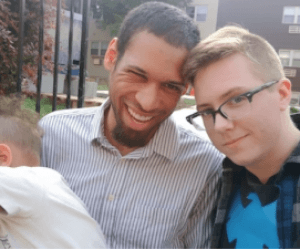
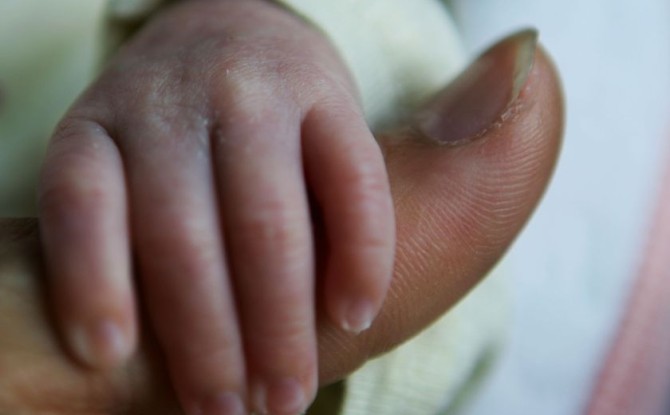
Gay rights amid Thailand’s commercial surrogacy industry has been complicated and controversial this past year. It’s been half a year since Baby Carmen was born in Thailand, but aside from the pictures, everything else remains fuzzy. For biological father Gordon Lake and his partner, Manuel Santos, what started as a legal agreement to have a surrogate baby has evolved into a custody battle.

But one thing remains clear to the American-born Lake. “Carmen is a U.S. citizen,” he said. “She’s biologically my daughter. That’s been proven with a DNA test. The embassy has issued a CRBA, a consular report birth abroad, which certifies her as a U.S. citizen.”

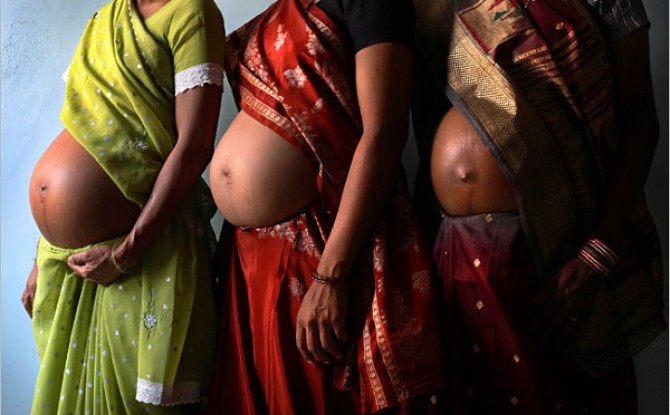
Thailand’s commercial surrogacy industry made headlines last year when a newborn with Down syndrome was left behind by an Australian couple, while they took his healthy twin sister.

Following the negative exposure, the government banned commercial surrogacy. The law came into effect in July.

But the surrogate mother said she wasn’t aware of one fact about the couple.

“If they were a mother and father like a normal parents under Thai culture, I would have no problem being a surrogate for them,” said the surrogate, Patida Kusongsang. “If I had known they were a gay couple, I would not have done this for them, because in Thai culture we don’t have this kind of status.”

Click here to read the entire article.

by Steve Sanford, August 14, 2015 – VOANews.com

Adoption Rights: The next frontier for Alabama

Adoption rights: The next frontier for gay Alabama couples two months after marriage ruling

For a handful of Alabama’s family-minded gay couples, first came love, then came marriage, then came bureaucratic headaches, legal bills and months of waiting. Adoption rights are the next frontier for gay Alabama couples two months after marriage ruling.

They’re not looking to become the state’s first gay divorcees, though that milestone is likely not far off if it has not already been reached. These couples are instead looking to take the traditional next step of expanding their families now that their weddings and honeymoons are in the rear-view, and they are specifically interested in adopting a child.

Even a year ago, the idea of gay Alabamian couples embarking on the path toward married parenthood would have been inconceivable for many Alabamians.

But the Supreme Court cleared the path for achieving that goal with its landmark gay marriage ruling less than two months ago, and a number of gay Alabama couples are facing the myriad challenges that all couples seeking to adopt must overcome, in addition to some that are specific to would-be adoptive parents of the same gender.

Newlyweds Clay Jones and Joe Babin are at the vanguard of the small but growing list of gay Alabama married couples seeking to adopt an infant. As of last month the Irondale residents have passed the background checks, screenings, physical examinations, financial assessments and other evaluations required of all couples of any sexuality hoping to adopt, and now they are “just waiting on a baby,” according to Babin.

Jones, 41, and Babin, 39, say that they are at a stage in their lives mentally, emotionally and financially where they are ready to have a child, and that the timing just seems to be right given their circumstances, their age and the political developments of the past year.

“We’re ready to go. We kind of made the decision that we were ready and we knew we financially and mentally had some stability to offer, that we were going to try to do it. So then we were at the point where we can now, and then we got married. So I mean I feel good that it’s going to happen,” Jones said. “[With] what’s happening in the south of the United States and what’s happening in Alabama, it’s time. I feel like it’s time that it will happen.”

Click here to read the entire article.


by Connor Sheets, AL.com, August 16, 2015

The Transgender Dad: Paths to Gay Fatherhood

The Transgender Dad: Paths to Gay Fatherhood

Transgender dads obviously come to parenthood in the same way as many lesbian, gay, and bisexual individuals, via adoption, foster care and surrogacy. But as we detailed in a Gays With Kids article this past February, some trans men also choose to have their own biological children by carrying them themselves.
“Trans men who are considering fatherhood potentially face an extra layer of discrimination in various levels of the family planning process,” Sion told me, who is a trans dad featured in that article. “Fertility clinics, prenatal health providers and adoption agencies may all discriminate against a person for being transgender.”

Stephen Stratton, another trans man featured in that article, also bemoaned the lack of education and support in the medical and fertility fields when it comes to transmasculine pregnancy. “There is never any guarantee that the people you need to work with are going to be sensitive, understanding or knowledgeable,” he wrote to me via email. “The hospital we birthed at was so welcoming and the nursing staff respected our birth plan and made us feel at ease and at home.” But, he said, not everyone has a “rainbows and transgendersunshine” experience with their health care providers.

Of course, the social stigma attached to being a trans man who is also pregnant extends far beyond the walls of hospitals and fertility clinics. For proof, one need look no further than the tabloids and media circus that erupted after Thomas Beatie publicly announced his pregnancy as a trans man several years ago.

“Not everyone was warm and accepting of how we created our family,” Stephen said. “Some people did and said hurtful things.” Despite the challenges, though, Stephen says he wouldn’t change a thing. “I have an amazing child who I love more than anything, I would… do it over a hundred times to get to be her Papa.”

While acceptance of trans people and parents is certainly increasing in the United States, there are added things to think about, Sion said, when a trans man is considering having a biological child. “Some doctors are not educated on the effects of hormone treatment and may offer a trans patient inaccurate medical advice because of that,” he wrote. “It’s tough.” He also noted that parental rights can often be brought into question for trans men going through a divorce since some lawyers still make the case that being transgender is a mental illness.

Click here to read the entire article.

gayswithkids.com by David Dodge, August 14, 2015

Same Sex Couples Challenge Adoption Ban

Mississippi Ban on Adoptions by Same Sex Couples Is Challenged

When Mississippi adopted a one-sentence law forbidding adoptions by same-sex couples in 2000, it was not so surprising: For decades, gays and lesbians in several states had run into roadblocks when they sought to adopt or foster children. So it was a potent marker of how fast laws and attitudes on gay rights issues have changed on Wednesday when civil rights lawyers filed suit in federal court challenging the law.

Mississippi’s ban is now the only one of its kind in the nation. And legal experts said that in the wake of the United States Supreme Court’s decision upholding same-sex marriage it was highly unlikely the state’s ban could hold up in court. The lawsuit was filed by the Campaign for Southern Equality, the Family Equality Council and four Mississippi same-sex couples.

“We’ve come so far here just recently, it’s pretty amazing the speed of the change,” said Janet Smith, a plaintiff in the case, who is seeking to adopt the 8-year-old daughter, Hannah Marie Phillips, she is raising with her wife, Donna Phillips. Because of the adoption ban, Ms. Smith has no official status in Hannah’s life, Ms. Phillips being her only legal parent.

“We’ve had no problem, but I am in the military, so I could be called or activated at any time, and we are concerned about the legal aspects for Jan if something happened,” said Ms. Phillips, who is a captain in the Mississippi Air National Guard.

At one point, they tried to find someone who would do the home study that would be a requirement for adoption, but could not find anyone who would come to their home to do it. Both women are cautiously hopeful that the lawsuit will quickly change their situation. “It seems like it’s just the logical next step, but oftentimes Mississippi doesn’t take the logical next step,” Ms. Smith said.

29% of same sex couples raising children

Last year, 29 percent of Mississippi’s same-sex-couples were raising children under 18 in their households — the highest percentage of any state in the nation, the complaint said.

“The Mississippi Adoption Ban writes inequality into Mississippi law by requiring that married gay and lesbian couples and parents be treated differently than all other married couples in Mississippi, unequivocally barring them from adoption without regard to their circumstances,” the complaint said. It called the ban “an outdated relic of a time when courts and legislature believed that it was somehow O.K. to discriminate against gay people simply because they are gay.”

Neither the governor’s office nor the state attorney general’s office returned messages Tuesday afternoon, asking whether the state would fight to uphold the ban against the challenge.

Roberta Kaplan, the New York lawyer handling the case, said that after the Supreme Court ruling, it seemed obvious to her and her clients that “the time was right to challenge the adoption ban and get it cleaned up.”

That the case now seems more likely to be a mop-up operation than an all-out legal confrontation is an indicator of just how swiftly the social change has taken hold.

Click here to read the entire article.

New York Times, August 12, 2015 by Tamar Lewin

Same Sex Adoption Ban Struck Down

Mexico Supreme Court Strikes Down Same Sex Adoption Ban

Mexico’s Supreme Court ruled Tuesday that a 2013 law in the southeastern state of Campeche that forbids same sex adoption of children is unconstitutional and struck it down. The challenge to the ban was filed by the state’s human rights commission. Supreme Court Judge Margarita Luna announced her intention to present the motion on a federal level in early July. Gay marriages and adoption laws are largely legal in the country’s heartland, though several far-flung states witness more opposition.

The state law was struck down in a 9-1 ruling. Presiding Judge Luis Maria Aguila said the decision was made keeping in mind the protection of adopted children. “I see no problem for a child to be adopted in a society of co-existence, which has precisely this purpose. Are we going to prefer to have children in the street, which according to statistics exceed 100,000? We attend, of course, and perhaps with the same intensity or more, to the interests of the child,” Aguila said, according to Latin American news network TeleSUR.

In June, the apex court also ruled that it was unconstitutional to deny marriage to people of the same sex — a ruling that came shortly before a similar one from the U.S. Supreme Court. The Mexican court ruling does not legalize same-sex marriage nationwide, but opens the door to couples seeking marital recognition to pursue injunctions against states.

In Mexico, gay marriages were first legalized in the capital Mexico City in 2009, in a ruling that was upheld by the country’s highest court. Same-sex couples who married under the city’s law have been adopting children since 2010. In addition, same-sex marriage rights are fully recognized in the states of Chihuahua, Coahuila, Guerrero and Quintana Roo.

Click here to read the entire article.

International Business Times – August 12, 2015 By  

Egg Donation or Sperm: kids have a right to know ?

Do children have the right to know if they’re the result of a stranger’s sperm or egg donation?

Although she has two half-sisters from her dad’s previous marriage, there was nothing in Jess Pearce’s childhood to make her doubt her biological origins. She tanned, her father tanned; he was tall, so was she. Yet when she was 28, her mother dropped a bombshell.

“She sat me down one Sunday afternoon and said she had something she wanted to tell me,” Jess recalls. “She looked quite upset, and I thought, ‘She’s going to die.’” Instead, her mother told her, “Your dad isn’t your real dad.”

Jess’s father had undergone a vasectomy after his first marriage. When he met her mother he tried to get it reversed, but the operation failed and they opted for sperm donation through the NHS. Jess was conceived on the third try at St George’s Hospital in Hyde Park Corner; all her parents knew about the donor was that he was from Middlesex. The clinic advised Jess’s parents to keep the insemination a secret. “No one knew,” says Jess. “It was literally just my mum and my dad and two of their best friends.” This was the norm back then, says Olivia Montuschi, co-founder of the Donor Conception Network. “The vast majority of [parents] were told not to tell their children… They just thought it was in everybody’s best interest that the secret was kept – go home, make love, and who knows?”

Olivia herself has had two children through donor insemination because her husband is infertile. They had resolved to be honest with their kids from the outset. “I remember telling this to a nurse when she was inseminating me, and getting a very odd look as if to say, ‘Why would you do that?’” she says.

Reactions range from shock and horror to “That’s interesting; I thought there was something odd going on,” says Montuschi. “More often than not, you will find that there have been odd discrepancies in things that parents have said,” she says. “Or [the child] will wonder about the complete lack of physical likeness or [shared] interests with the non-genetic parent.”

Though some parents feel under pressure to tell their kids about their genetic heritage, many decide to keep the details of their child’s conception under lock and key. A 2003 survey by the Centre for Family Research at the University of Cambridge found that 47 per cent of parents of kids conceived after egg donation had no intention of telling. It’s not just the child’s feelings at stake. Even a genuine desire to tell can create tensions with grandparents or other family members who think it should remain a secret. Then there’s the wider taboo of where babies come from. “A lot of people find it really difficult to talk about, not necessarily because there is a genetic difference in the family, but because the discussion takes them into areas of parenthood where they wouldn’t normally have to go,” says Petra Nordqvist of the University of Manchester. “They’d have to say, ‘My sperm doesn’t work and we’ve had to undergo five years of IVF.’ Some people just hate having that kind of conversation with their families.”

Click here to read the entire article.

theindependent.co.uk by Linda Geddes, August 10, 2015

Kids of gay parents fare well, 3 more studies find!

3 (more) studies find children of gay parents fare well

NEW YORK — On the heels of the U.S. Supreme Court ruling that legalized same-sex marriage nationwide, new research suggests that children raised by gay parents are well adjusted and resilient, HealthDay reports. Four new studies were scheduled to be presented this week at the annual meeting of the American Psychological Association in Toronto that set out to assess the psychological and sociological health of children raised by same-sex couples. One study looked at the experience of 49 pre-adolescent youngsters adopted by either two-dad or two-mom households. The children’s average age was 8.

Led by Rachel Farr, a research assistant professor of psychology at the University of Massachusetts, Amherst, researchers interviewed both children and parents. Nearly 80 percent of the boys and girls said they felt “different” from other children because of their parents’ status, the study found. But less than 60 percent felt they had been stigmatized because of their same-sex family structure. And 70 percent appeared to respond to adversity with resilience, demonstrating an upbeat attitude about their family, the researchers found according to HealthDay. A second study compared rates of anxiety and/or depression among 3- to 10-year-olds raised by 68 gay male couples with those of youngsters raised by 68 heterosexual parents. The team led by Robert-Jay Green, a retired professor of clinical psychology at the California School of Professional Psychology in San Francisco, found that all of the children were psychologically healthy.

Click here to read the entire article.


Washington Blade – by Staff, August 7, 2015

Same Sex Families Foster Parenting Victory

Same Sex Families Foster Parenting Victory in Nebraska

Yesterday, a Nebraska District Court ruled that a discriminatory policy that barred same sex families from becoming foster parents was unconstitutional. The two-decade-old policy, Memo I-95, barred same sex families from obtaining state foster parent licenses.

This change will finally allow child welfare agencies to expand the pool of foster and adoptive families for Nebraska’s children.
“Nebraska’s motto of ‘Equality before the Law’ rings out more truly for all of us on this thrilling day,” Danielle Conrad, Executive Director of ACLU of Nebraska, said in a release. “This is a special victory for thousands of children in Nebraska who now have more options to find loving and stable
homes.”
Earlier this year, Nebraska child welfare officials announced they would stop enforcing the law.
Click here to read the entire article.


HRC.org, by Hayley Miller, August 6, 2015

Commercial Surrogacy: Thailand Bans It!

ibnlive.com, August 7, 2015

Bangkok: A new law banning commercial surrogacy has come into effect in Thailand, a destination popular with foreigners and gay couples looking for cheaper surrogacy services.

The law banning commercial surrogacy was passed in February and came into effect from this month.

The law came after outrage following an Australian couple last year leaving a surrogate twin boy who had Down Syndrome behind in Thailand, taking his healthy sister.

The controversy triggered an immediate backlash in Thailand, forcing commercial surrogate operators to shut down operations.

Under the new law, a couple, a man and a woman, to avail surrogacy must be legally married for at least three years with one or both holding Thai nationality.

The surrogate mother is required to be a sibling of the couple, but not the parents or the couple’s children. The surrogate woman must also have her own child and have her husband’s consent.

If the woman is not a relative of the couple, the woman needs to meet regulations laid down by the Thai public health ministry.

Public Health Minister Rajata Rajatanavin said foreign couples would no longer be able to seek surrogacy services in Thailand.

Click here to read the entire article.

Surrogacy Abroad vs Surrogacy in the UK

Surrogacy Abroad vs Surrogacy in the UK – entirely different, or one and the same?

When comparing surrogacy in the UK and surrogacy abroad we can examine 2015, which has already seen a number of surrogacy judgments1 which challenge the law as it currently stands in relation to this increasingly mainstream pathway to parenthood. However, where the issue at hand is whether a parental order should be made2, the focus historically has been on international arrangements. Whilst contentious UK surrogacy cases, happily, remain remarkable (and therefore likely published), these and international arrangements overshadow the reality and prevalence of the undisputed UK surrogacy arrangement.  Though uncontentious in nature, such arrangements are commonly peppered with comparable issues to those found in overseas applications, though the latter remain in the realms of the High Court3.  It is not denied that international surrogacy arrangements are naturally hazardous and necessitate a cautious approach at court level, but, as demonstrated below, UK arrangements come with equal risks.

The practice of surrogacy abroad, in the UK


Repeatedly overshadowed by uncertainty as to the surrounding legalities, surrogacy is in fact very achievable in the UK and arrangements take place in their hundreds every year.  However, due to the lack of an overtly supportive legal framework, its practice varies widely and the resulting disparity between arrangements can be vast.

Often the best option, for those who have the choice, is to use a surrogate who is a family member or close friend.  Arrangements where trust is implicit invariably make for the most altruistic and straightforward.  For those who need to look elsewhere there are a number of independent organisations which facilitate arrangements between prospective parents and surrogates4, by enabling introductions and supporting the resulting relationships.  However, a growing method of establishing a surrogacy arrangement is to look online.  The increase in social networking has enabled prospective parents to find a willing surrogate (and vice versa) through Facebook groups and online forums, where regulation is scarce and support informal.

The risks of working with a previously unknown surrogate (or indeed prospective parents) are obvious, but some arrangements forge ahead with a surprising lack of communication to determine the other side’s true motivations.  As surrogacy agreements are not legally binding in the UK, there is no obligation or obvious trigger for prospective parents to meet with a lawyer at the outset.  Although it is not possible to draft an agreement on their behalf (this is an offence for professionals5, though something the parties are encouraged to do amongst themselves), a consultation at this stage provides an opportunity to set out the legal position and explain what must be done to reassign parenthood in due course.  Some parents are made aware of this and seek initial advice; others are not and will proceed having had no professional input (sometimes without any written agreement in place at all).  Though not enforceable, parents and surrogates can agree whatever they wish in terms of payments, restrictions and obligations during pregnancy, contact before and after birth and any other matters they consider important.

There is also a choice of how to conceive.  If no fertility procedure is strictly required6, and particularly if cost is an issue, it is not unusual for conception to take place via artificial insemination at home.  This not only throws up further issues as to the surrogate’s investment and attachment to the pregnancy, but by not having treatment at a licensed UK clinic parents and surrogates do not benefit from the built-in counselling and professional support provided before conception.

Oversight of surrogacy abroad, specifically in the UK


It is easy to see how the lack of structure and obligatory professional oversight here can lead to a culture of casually-set-up surrogacy arrangements based on hopes of aligned intentions and well-placed faith in the unknown.  In the absence of a robust UK legal system to fall back on, for those arrangements where problems do arise, a lack of guidance and support from experienced professionals can exacerbate matters and put the relationship of the parties under considerable strain.  Even where these issues do not affect the outcome of the arrangement7, they can cause difficulties during the subsequent court process.

The parental order process8 provides the first formal oversight that many arrangements will see, though this comes too late across the board, since there can be no application until the child is born (leaving him or her legally vulnerable for a period of at least several weeks).  It is at this stage that the applicant parents are faced with conforming to the parameters set by section 54 of the Human Fertilisation and Embryology Act 2008; some of whom will not already be familiar with the requirements.

Whilst applications following UK surrogacy are dealt with relatively straightforwardly in practice, the ambiguous surrogacy backdrop in this country provides the potential for just as many legal quandaries to arise as do so in cross-border surrogacy arrangements.  The difference lies in the level of scrutiny of the two.

Click here to read the entire article.


by Nicola Scott August 6, 2015