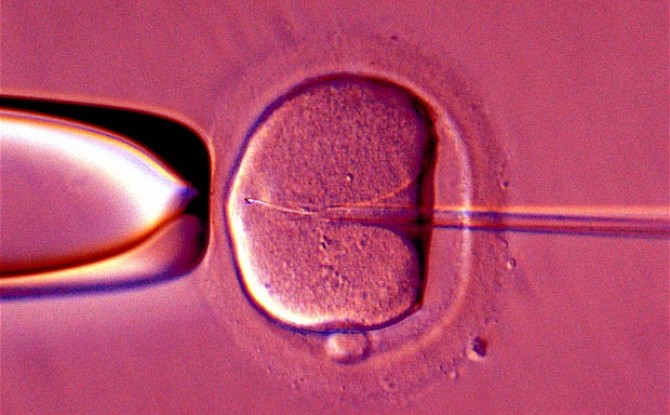
Jason Hanna and Joe Riggs, Texas Gay Fathers, Denied Legal Parenthood Of Twin Sons

by Michelangelo Signorile – Huffpost.com, June 18, 2014

It’s heartbreaking to think that a state has erased the parents of children and put a family in legal jeopardy, simply because of discrimination against gay and lesbian couples. But that’s what happened to a gay couple in Texas after what they described as the “magical” birth of their twin boys.

Jason Hanna and Joe Riggs are the proud fathers of Lucas and Ethan, who were born in April, after they’d connected with a surrogate mom, CharLynn.

Each of the men is a biological father to one of the babies. But, because Texas has a ban on gay marriage (it was ruled unconstitutional by a federal judge last February, but the decision was stayed pending appeal), and because a judge can use his or her own discretion in these cases, neither of the men is currently on the birth certificates of either of the boys, nor have they been able to co-adopt each other’s biological child.

Only the surrogate mother — who has no biological relationship to the boys, since embryos were transferred to her — is on the birth certificates. In essence, the men are not legally defined as the parents of their own children. And though they have DNA tests for proof, they’re worried, particularly if something were to happen to one of them while the other still has not been able to co-adopt the other’s biological child.

Click here to read the entire article.

The T.M.I. Pregnancy

New York Times


Becoming a mother was so simple when I became a mother. Pregnancy was treated as a natural experience. You peed in a cup, and then once a month the obstetrician pressed his stethoscope against your belly and you watched his face for a smile.

“We’re going to have a baby,” my son, Peter, calls. I think about being a grandma and the grand continuum. I think about the wondrous ways my boy’s life is going to change. I do not think about sonograms, DNA testing and preeclampsia. I do not think about the endless forbidding stream of fetal data.

My son is stuck at work, so I get to take my daughter-in-law for her first prenatal visit. The doctor squeezes gel on Erika’s belly and rubs it in with a paddle. A white watermelon seed pops up on the screen.

“Your baby is 7 weeks and 5 days old,” she says.

Wow, I think. Yes, but will it get into Harvard?

Erika’s blood is drawn to test for three birth defects. Taking a personal history, the doctor discovers the watermelon seed will be half Jewish.

“We’ll be needing 18 tests now,” she says.

We pretend not to be anxious waiting for the results. From that first visit on, every time I accompany Erika for an ultrasound, we leave guardedly happy. “Normal” becomes our favorite word. I’m not a Luddite. Prenatal science has helped a lot people and people-to-be. But just because a patient can know something, must she? There’s so much information available now. Pregnancy is treated like a nine-month illness cured by childbirth. Odds are in this baby’s favor, yet every sonogram adds something scary to the pot. What is one of the most joyous times of life has turned into something ominous and fraught, loaded with the potential to go wrong.

Three months before Erika’s due date, the tech turns to us with a caliper in her hands. “The baby has a short long bone,” she says. “Its long bone” — a.k.a. femur — “is two weeks behind schedule.”

We leave the office and head for lunch. Holding hands, we wait for the light to change. I look down at the white parallel lines on the crosswalk. I’m not a religious person. I own three menorahs and my biannual brisket is held in high regard. But I don’t believe in God. Yet when the light changes, I make a promise to something somewhere. I make a pledge that is the opposite of modern science: “If I only step on the white lines, the baby will be O.K.”

Click here to read the entire article.

Positively Dads – These HIV-positive gay men fathered children. Here’s how you can too

By E.J.Graff via Gays With Kids

Aslan always believed he would be a father—if not with a partner, then by teaming up with one of his straight, single female friends. But “at the age of 36, I became infected with the [HIV] virus,” he said. “I thought my whole world collapsed. Everything crashed with that. I believed that there would be no child.” He was gay and single, living in a cosmopolitan city in his southern European country, when a female friend asked him to pair up to make a baby. He had heard that it could be done safely, but when he told her his HIV status, her reaction, he said somewhat morosely, was “very naturally, not very brave.” Unwilling to face that rejection again, he spent years trying to bury his profound desire to parent.

Things were different for Brian Rosenberg and Ferd van Gameren, who were already in their forties by the time they began thinking about having kids. Their early years together focused on keeping Brian, who is HIV-positive, healthy and Ferd negative. But once protease inhibitors emerged and Brian’s health was stable, the couple decided to focus on enjoying life. They moved from Boston into a one-bedroom Chelsea co-op in New York City, started summering in Fire Island, and hopped around their friends’ parties having “a gay old time,” as Brian put it.

After several years, though, all that began to pale. “We started thinking that life had to be more meaningful for us than the next party, the next fabulous vacation.” They wanted a family, and all the responsibility, love, and exhaustion that went with it. They tried adoption first, but when one birthmother backed away, their hearts were broken–so they discussed surrogacy. Given his HIV status, Brian assumed that Ferd would be the biological dad–but Ferd wanted to raise Brian’s bio children. And so in 2009 Ferd went online and found the Special Program for Assisted Reproduction, or SPAR, dedicated to helping HIV-positive men father children safely. The program is run by the Bedford Research Foundation and its director Dr. Ann Kiessling.

Back in southern Europe, by 2011, Aslan was learning about the same option. He was seven months into a new relationship that seemed as if it would stick—and despite himself, he began to imagine having a family with this man. Coincidentally, an American friend forwarded him an article about Circle Surrogacy, which worked with HIV-positive gay men in the States. “And it gave me, like, a wow, big hope, a new window to plan my life again!” Aslan quickly contacted Circle Surrogacy, which connected him with Dr. Ann Kiessling. “She was very kind and explained all the procedures, that it’s completely safe. And this was the start.”

Click here to read the entire article.

Poll: Majority of Americans Support Adoption by Same-Sex Couples

The Advocate – June 2, 2014

Most Americans support marriage equality, but even more of them believe same-sex couples should be able to legally adopt children, according to a new poll.

The Gallup poll, released last month, shows a clear majority of respondents in support of adoption equality. This finding holds across all major demographics, although there are definite spans across party lines — 80% of Democrats, 61 percent of independents, and 51 percent of Republicans support adoption rights — and age groups, with 77 percent support among 18-29 year olds, and 52 percent among those 65 and older.

Gallup notes that support for equal adoption rights has been steadily increasing since 2008. When Gallup first started polling Americans on this question in 1992, the findings were a direct opposite, with 63 percent of respondents opposed to same-sex couples being allowed to legally adopt. Today, more than 16,000 American same-sex couples have adopted an estimated 22,000 children, according to the polling agency.

In its assessment, Gallup points out that public support for equal adoption, currently at 63 percent, has remained higher than public support for equal marriage, currently at 55 percent. That’s to be expected, says LGBT public policy expert Gary Gates, of the University of California Los Angeles School of Law’s Williams Institute.

Click here to read the entire article.

Known Donor Dad Perspective

As a known donor Dad, my daughters have 2 moms and 2 dads – how does this work?

My family can best be described as a forest. When my daughter created her “Family Tree” for a class project, there were so many branches that it covered an entire poster board. My heart soared. I am lucky enough to be called “papa” by three amazing kids. My son, 9 years old, is the biological child of my husband who we had with the help of a gestational surrogate. I adopted him and he lives with my husband and me. My daughters are 13 and 8 and they live with their mothers, who happen to live in our neighborhood in Manhattan.
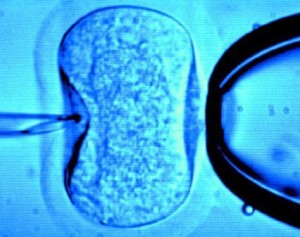
ivf, known donor, sperm donor, anonymous donorI call them my daughters because I am their biological father through sperm donation, but the truth is that I am not their parent. This is a critical distinction that any donor dad must make. I am not a co-parent with my daughters’ mothers. But that doesn’t mean that I do not have a meaningful and reciprocally fulfilling relationship with them, it just means that the major life decisions that relate to my girls are made by their mothers, the two amazing women who taught me how to be a dad.

To highlight the enormity of this journey for me, I need to give you some background. In the 70’s as a closeted teenager and in the 80’s as a closeted young man in my 20’s, if you had told that one day I would have three children, I would have felt relief and seen it as affirmation that I could change my orientation. I desperately didn’t want to be gay and after running from my true self for what seemed to me to be ages; I did what many young people who grew up in my era did: I tried to end my life. My parents walked me around the back yard of our house for hours attempting to allow the effects of the pills I had taken to wear off. I am thankful every day that they did.

That moment changed my life because, with a lot of help from a lot of people, I learned that I could be a happy gay person. Once that switch was flipped, life turned on. My family is the culmination of that awareness and of so much love. But that love had to start with me. I don’t think anyone who doesn’t truly love themselves could be a donor dad. It requires patience, responsibility and, most of all, faith. I had to have faith that my daughter’s moms would allow me to have a relationship with them. They also had to have faith that I would be a man of my word and surrender my parental rights to the non-biological mother. We all had to have faith that we would be able to conquer whatever parenting trials would come our way.

But that faith is constantly tested. When my first daughter was born, my husband and I would babysit for her about once every other week and, once she was old enough, we would have sleepovers roughly once a month. I remember one time right after the adoption hearing had taken place where I formally surrendered my parental rights getting a call from one of her mothers after we returned her from a sleepover night. She was asking about a small burn mark on my daughter’s leg. Neither my husband or I could remember anything that could have caused it. But then remembered one moment when we were all in our tiny NYC kitchen and I was holding her when I turned and brushed up against an open toaster oven door. I didn’t think it had touched her. She didn’t cry and I didn’t think anything of it at the time. But when I realized that I had done this, I was so scared that my husband and I wouldn’t be allowed to see her again. I had hurt my own child! I went through a very short lived freak out until we actually talked to her moms again and they told us of how she had fallen off the changing table, a couple of times, and that I shouldn’t worry.

It is moments like that one when you truly understand perspective. But the one person’s perspective that really was tested by my being a donor dad was my husband’s. He often considered himself the odd man out. While I was busy going to clinics and running out of events because “mom was ovulating,” he was often left alone and feeling out of touch with the whole process. If I could have done anything differently, I would have made sure that he was more involved and included him more in the process. The reality, now that the kids are older, is that all three of them refer to my husband as “daddy” and to me as “papa.” When asked, they are the first to tell you that they have “two mommies and two daddies.” This, to me, is one of the coolest things ever.

Because we are honest with all three kids about where they come from, they feel special. They understand that their mommies and daddies loved them so much that they worked together to make our family a reality. If I can offer any new perspective on being a donor dad, it is that anything is possible with honesty, careful preparation and love. You can have the family of your dreams, no matter what it looks like.

June 2, 2014 – by Anthony M. Brown

Thanks to Our family Coalition in San Francisco for asking me to write this piece!
From Coast to Coast, Changing Laws to Protect Our Families

From Mombian.com – May 27, 2014

A new law in Washington, D.C. is drawing lesbian couples from other jurisdictions to give birth there — and a bill making its way through the California legislature could simplify the paperwork and clarify parenting arrangements for same-sex couples in that state.

A new law in Washington, D.C. allows courts to grant second-parent adoptions to out-of-state lesbian couples if their child was born in D.C., even if the parents don’t reside there, reports the Washington Post. This law is leading to an increasing, though unspecified, number of lesbian couples from neighboring states coming to D.C. to deliver their babies. Next-door Virginia, for example, only grants adoptions to married couples, and does not recognize marriages of same-sex couples. Couples have also come from as far afield as North Carolina and Ohio in order to give their children the protection of two legal parents. [Update: Bill Singer, a lawyer in New Jersey who did the parentage order for my spouse and I when we were expecting our son, commented on Twitter that: “NJ has long had law allowing adoption for child born here. My clients from non-recog states call it the underground birth canal.”]

It’s a hassle, indeed, especially since children have a habit of sending our bodies into labor when we don’t expect it. Of course, second-parent adoption is in itself a hassle. We shouldn’t have to adopt children that we planned for with a partner. More states now allow both parents’ names to be on the birth certificate, which is great, and allows for protection from the moment of birth — but other states may not recognize the non-biological parent’s right to be there if they don’t recognize the parents’ relationship in the first place. Second-parent adoption is more secure — but is still a financial and emotional hassle, requiring fees and a home study.

Click here to read the entire article.

Australian Government to order fertility clinics to release donor information

Sydney Morning Herald – May 11, 2014 by Nicole Hasham

Fertility clinics will be forced to hand over information about anonymous sperm donors so children can learn about their genetic origins, in a move that has divided doctors and offspring advocates.

The state government will also consider bringing in laws to protect donor records, after an inquiry heard “alarming” evidence that doctors had destroyed information to prevent donors being outed.

Health Minister Jillian Skinner plans to establish a central, government-run register of sperm donor records, allowing offspring to apply for non-identifying information about their donor fathers. This could include medical history, ethnicity and physical characteristics such as eye and hair colour.

The register also raises the prospect that more donors and their offspring would make contact, by offering a linking service if both parties consent. Under a current, little-publicised voluntary system, just 21 offspring and 20 donors are registered.

Click here to read the entire article.

Study Sees Bigger Role for Placenta in Newborns’ Health

New York Times – May 21, 2104 by Denise Grady

The placenta, once thought sterile, actually harbors a world of bacteria that may influence the course of pregnancy and help shape an infant’s health and the bacterial makeup of its gut, a new study has found.

The research is part of a broader scientific effort to explore the microbiome, the trillions of microbes — bacteria, viruses and fungi — that colonize the human body, inside and out. Those organisms affect digestion, metabolism and an unknown array of biological processes, and may play a role in the development of obesity, diabetes and other illnesses.

During pregnancy, the authors of the new study suspect, the wrong mix of bacteria in the placenta may contribute to premature births, a devastating problem worldwide. Although the research is preliminary, it may help explain why periodontal disease and urinary infections in pregnant women are linked to an increased risk of premature birth. The findings also suggest a need for more studies on the effects of antibiotics taken during pregnancy.

The new study suggests that babies may acquire an important part of their normal gut bacteria from the placenta. If further research confirms the findings, that may be reassuring news for women who have had cesareans. Some researchers have suggested that babies born by cesarean miss out on helpful bacteria that they would normally be exposed to in the birth canal.

“I think women can be reassured that they have not doomed their infant’s microbiome for the rest of its life,” said Dr. Kjersti Aagaard, the first author of the new study, published on Wednesday in Science Translational Medicine. She added that studies were needed to determine the influence of cesareans on the microbiome.

Previous studies have looked at bacteria that inhabit the mouth, skin, vagina and intestines. But only recently has attention turned to the placenta, a one-pound organ that forms inside the uterus and acts as a life support system for the fetus. It provides oxygen and nutrients, removes wastes and secretes hormones.

“People are intrigued by the role of the placenta,” said Dr. Aagaard, an associate professor of obstetrics and gynecology at the Baylor College of Medicine and Texas Children’s Hospital in Houston. “There’s no other time in life that we acquire a totally new organ. And then we get rid of it.”

Click here to read the entire article.

Utah Supreme Court Grants Stay In Gay Adoption Rulings

By Carlos Santoscoy
Published: May 18, 2014

The Utah Supreme Court on Friday granted a stay in several lower court orders requiring the Department of Health to issue birth certificates in adoptions involving married gay couples.

According to Salt Lake City’s Fox 13, the stay was granted in response to a Utah attorney general’s office request for clarity in the cases.

“Enforcement of the district court orders mandating or authorizing Petitioner to issue birth certificates is stayed until the Court can address the petitions for extraordinary relief,” the court wrote.

Click here to read the entire article.

Does ‘Sperm Donor’ Mean ‘Dad’?

By BROOKS BARNESMAY 2, 2014 – New York Times

LOS ANGELES — He is a movie star who shot to fame on a motorcycle in “The Lost Boys.” She is a California massage therapist from a prominent East Coast family. Four years ago, with his sperm, her eggs and the wonder of in vitro fertilization, they produced a child.

From there, the tale gets very, very messy.

For the last two years, Jason Patric and Danielle Schreiber have been waging what has become one of the highest-profile custody fights in the country — one that scrambles a gender stereotype, raises the question of who should be considered a legal parent and challenges state laws that try to bring order to the Wild West of nonanonymous sperm donations.

Played out on cable news, dueling “Today” show appearances, YouTube videos and radio call-in talk shows, this rancorous dispute, which heads back into a California courtroom next Thursday, serves as cautionary tale for any man considering donating sperm to a friend and any woman considering accepting it from one, experts say.

“The resonance here is enormous because of the increasing number of families being formed today outside of traditional marriage,” said Naomi R. Cahn, a family law professor at George Washington University and the author of “Test Tube Families.” “Single heterosexual women, lesbian couples, men who donate sperm expecting to be part of a child’s life — they had better be paying attention.”

Is this a case about a desperate dad who is being maliciously prevented from seeing his son, as Mr. Patric insists? Or is it about a woman’s right to choose to be a single mother and have that choice protected from interference, as Ms. Schreiber’s lawyers assert? Is it both?

And exactly how did these two end up as the public faces of a complicated debate that exposes America’s increasingly fuzzy definition of what constitutes a family?

Click here to read the entire article.