Court Ruling Could Make Taiwan First Place in Asia to Legalize Gay Marriage

In a ruling that paves the way for Taiwan to become the first place in Asia to recognize same-sex marriage, the constitutional court on Wednesday struck down the Civil Code’s definition of marriage as being only between a man and a woman.

TAIPEI, Taiwan — The legislature now has two years either to amend the Civil Code or to enact laws addressing same-sex couples.

If the legislature fails to pass an amendment or legislation in the next two years, same-sex couples “shall be allowed to have their marriage registration effectuated at the authorities in charge of household registration,” the court wrote in a news release.gay family law

Cindy Su, of the Lobby Alliance for LGBT Human Rights, said she was “excited and proud” of the court’s ruling, but also eager to see legislation passed as soon as possible. “We hope that we don’t have to wait another two years before we can get married,” said Ms. Su, whose marriage to her partner in Canada was not recognized in Taiwan.

The court’s ruling came in response to two petitions to review the current law, one brought by Chi Chia-wei, a longtime gay rights campaigner. Mr. Chi favors amending the Civil Code to define marriage as a union of two spouses, arguing that a separate marriage law for gays and lesbians would be unacceptable.

May 24, 2017 by Chris Horton, New York Times

Click here to read the entire article.

Marital Trust Planning – Making the Most of Your Money

Marital Trust planning is essential for those couples who are concerned about protecting surviving family members, especially children, and avoiding estate taxation.

Marital Trust planning is the use of trusts to achieve the goals of asset preservation and family protection.  The term, “Marital Trust” is used in this article to discuss both marital trusts and non-marital trusts

What is a Marital Trust?  There are essentially three types of marital trusts.  QTIP (Qualified Terminal Interest Property) Trusts, Estate Trusts and General Power of Appointment Trusts.  Each has a specific targeted goal, but the reason why someone would consider a Marital Trust is to provide for their surviving spouse and children.marital trust

A QTIP Trust, in most cases, is funded upon the death of one spouse and directs payments of interest income, on at least an annual basis, to the surviving spouse.  The remainder in the trust then passes upon the death of the surviving spouse to the children of the original Grantor.  The benefit of this trust is that it allows someone with children from a previous marriage to ensure that those children are provided for, while also providing for a surviving spouse.  An Estate Trust essentially does the same thing, but requires the remainder to be passed through the surviving spouse’s estate, giving the surviving spouse greater discretion in the allocation of the original asset.  A General Power of Appointment Trust is appropriate if there are no children and gives the surviving spouse access to the full amount in the trust during their lifetime.

The most important element of a Marital Trust to remember is that it does not shield assets from estate taxation.  They simply postpone the taxation event until the death of the surviving spouse, as there is a unlimited marital exemption upon the death of the first spouse.   Assets in a marital trust pass subject to any applicable estate tax guidelines.  This is particularly important for QTIP Trusts as they may contain assets earmarked for the children of the Grantor, but are potentially diminished by estate taxation.  To shield assets from estate taxation, you must have a Non-Martial Trust.

What is a Non-Marital Trust?  Non-Marital Trusts are often referred to as “Credit Shelter Trusts” or “Bypass Trusts.” These trusts allow the Grantor to provide income to their surviving spouse, while ultimately passing assets to the Grantor’s children   

Bypass Trusts are irrevocable trusts that can be created during the lifetime of the Grantor or in the Grantor’s Last Will and Testament.  If they are created in a Grantor’s Will, they become irrevocable upon the death of the grantor.  The trust is funded with an amount equal to the annual exclusion applicable in the year of the Grantor’s death.  In 2017, the annual exclusion amount is $5.49 million dollars.  A surviving spouse will have access to interest income from the trust and also the trust principal, but only for the surviving spouse’s health, education, maintenance or support.  Upon the death of the surviving spouse, the trust remainder passes to the original Grantor’s children tax free.

One important note with Bypass Trusts is that the IRS has a three year look back period for tax free transfers.  That means that if the surviving spouse dies within three years of the original Grantor’s death, the assets will be subject to estate taxation.  Also, if a family residence is transferred into a Bypass Trust, it will receive the stepped-up value as of the date of the Grantor’s death.  However, if the value of the residence continues to increase, any gain attributed from the date of the Grantor’s death to the distribution to beneficiaries will be subject to capital gains tax.  A Bypass Trust cannot claim the $250,000.00 personal capital gains exemption.

Surviving spouses are often named as trustees, which makes compliance with tax requirement critical in both the drafting of Bypass Trusts and in their execution after the original Grantor’s death.  That’s why it is crucial to consult with an experienced estate planning attorney when considering Marital and Non-Marital Trusts.  Remember that a strong basic estate plan is also a must for any family.

For more information, email me at Anthony@timeforfamilies.com or visit www.timeforfamilies.com.

Tennessee ‘Natural Meaning’ Law Raises Fears in LGBT Community

Tennessee Governor Bill Haslam on Friday enacted a bill that critics say is an underhanded way of denying rights to same-sex couples by insisting on the “natural and ordinary meaning” of words in state statues.

(Reuters) – The legislation, which was signed by the Republican governor despite pressure from civil liberty and gay-rights groups, requires words in Tennessee law be interpreted with their “natural and ordinary meaning, without forced or subtle construction that would limit or extend the meaning of the language.” It did not explain, however, what that means.

Civil rights and lesbian, gay, bisexual and transgender (LGBT) advocates warned the law is meant to undermine the rights of same-sex couples in any statutes that include words like “husband,” “wife,” “mother” or “father.”Discrimination

Neither of the two sponsoring lawmakers, Republican state Senator John Stevens and Republican state Representative Andrew Farmer, could be reached to comment.

However, the Knoxville News Sentinel reported Stevens said he proposed the measure partly to compel courts to side more closely with the dissenting opinion in the U.S. Supreme Court’s landmark 2015 ruling in the case of Obergefell v. Hodges which legalized same-sex marriage.

Haslam said on Friday he believes the law will not change how courts interpret legal precedent.

“While I understand the concerns raised about this bill, the Obergefell decision is the law of the land, and this legislation does not change a principle relied upon by the courts for more than a century, mitigating the substantive impact of this legislation,” he said in a statement.

The Tennessee measure is one of more than 100 bills introduced in U.S. state legislatures this year that to curtail LGBT rights, said Cathryn Oakley, senior legislative counsel for the LGBT advocacy group Human Rights Campaign.


While public opinion polls and court rulings have shifted in favor of same-sex rights in recent years, there is ongoing pushback from the 2015 ruling, Oakley said.

Last month, a Kentucky family court judge made headlines by issuing an order stating he would not hear adoption cases involving same-sex couples due to personal objections. That echoed Kentucky county clerk Kim Davis’ 2015 refusal to issue same-sex marriage licenses because it violated her religious beliefs.

U.S. News and World report, May 5, 2017 – By Chris Kenning

Click here to read the entire article.

Governor Signs ‘Religious Freedom’ Law Allowing Adoption Agencies to Discriminate Against Gay Couples

‘This Bill Is Not About Discrimination, but Instead Protects the Ability of Religious Agencies to Place Vulnerable Children in a Permanent Home’ Governor Says, Falsely

Alabama’s newly-elevated governor has just signed into law legislation that allows adoption agencies to cite their “sincerely-held religious beliefs” as a reason to ban same-sex couples from adopting. Republican Kay Ivey took office last month when embattled governor Robert Bentley was forced to resign amid a sex and finance scandal.

“The need for adoption is so high. We need to have every avenue available,” State Senator Bill Hightower said of his bill allowing adoption agencies a religious license to discriminate.Discrimination

The Alabama Child Placing Agency Inclusion Act, also known as HB24, would even allow adoption agencies to cite its “sincerely held religious beliefs” and refuse to place children with blood relatives. As HRC noted last month, even a “qualified, loving LGBTQ grandparent, for example, could be deemed unsuitable under the proposed law.””I ultimately signed House Hill 24 because it ensures hundreds of children can continue to find ‘forever homes’ through religiously-affiliated adoption agencies. This bill is not about discrimination, but instead protects the ability of religious agencies to place vulnerable children in a permanent home,” Gov. Ivey said.

By David Badash, thenewcivilrightsmovement.com, May 3, 2017

Click here to read the entire article.

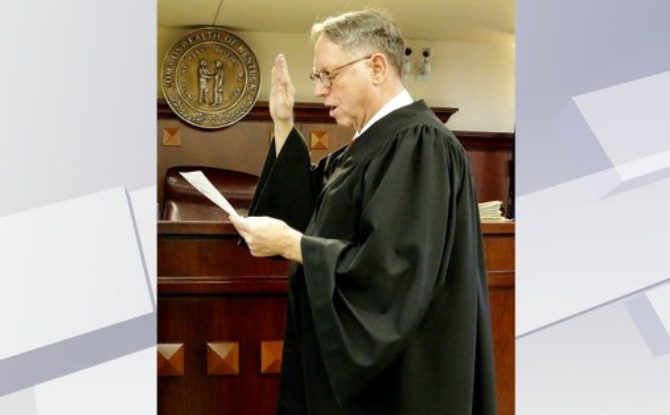
As ‘a matter of conscience,’ a Kentucky judge refuses to hear adoption cases involving gay parents

Two years after a Kentucky county clerk stirred national attention for refusing to issue marriage licenses to same-sex couples, a family court judge in the same state announced he will no longer hear adoption cases involving gay parents, calling his stance on the issue “a matter of conscience.”

Judge W. Mitchell Nance, who sits in Barren and Metcalfe counties in Kentucky, issued an order Thursday saying he believes that allowing a “practicing homosexual” to adopt would “under no circumstance” promote the best interest of the child, he wrote in the order obtained by The Washington Post.

The judge disqualified himself from any adoption cases involving gay couples, citing judicial ethics codes requiring that judges recuse themselves whenever they have a “personal bias or prejudice” concerning a case. Nance’s “conscientious objection” to the concept of gay parents adopting children constitutes such a bias, he argued.Discrimination

The announcement garnered support from some conservative groups, while also spurring intense criticism from some lawyers and judicial ethics experts who viewed the blanket statement as discriminatory, and a sign that Nance is not fit to fulfill his duties as a judge. Kentucky state law permits gay couples to adopt children, and the U.S. Supreme Court ruled in 2015 that all states must allow same-sex marriage.

That ruling came in four cases consolidated as Obergefell et al. v Hodges, one of which specifically involved a couple who wanted to adopt but was barred from doing so because Michigan banned same-sex marriage and adoption by unmarried couples.

Nance’s recusal drew some comparisons to the case of Rowan County Clerk Kim Davis, who was jailed after she refused in the face of multiple court orders to begin issuing marriage licenses to same-sex couples, saying she couldn’t issue the licenses because her name was on them, and it violated her religious beliefs. Eventually, deputies in her office began issuing licenses. Kentucky’s governor and General Assembly would later remove the name of clerks from the marriage licenses.

by Samantha Schmidt, May 1, 2017 – Washington Post

Click here to read the entire article.

In Gay Rights Case, Woman to Appeal for Parental Rights to Ex-Partner’s Son

A Manhattan woman who went to court to prove that she should be considered a legal parent to a child adopted by her former same-sex partner is planning to appeal after losing her case last week.

“I have to keep going,” said Kelly Gunn, 52, of the West Village area of Manhattan. “I’m going to do everything I can to protect him and protect my relationship as parent.”

Ms. Gunn went to court last September to prevent her former partner, Circe Hamilton, 45, from moving to her native London with Abush, the 7-year-old whom Ms. Hamilton had adopted from Ethiopia in 2011.

Ms. Gunn and Ms. Hamilton were a couple when they began planning for the adoption, but they separated in 2010 before Abush had been identified by the adoption agency. In court, Ms. Gunn argued that because the adoption plan had been created when they were together, and because she had provided support and care once the boy arrived, she merited the legal status of parent. Ms. Hamilton argued that their adoption plan had ended with their separation and said that the role Ms. Gunn had played in the boy’s life was akin to that of a godmother or a close friend.

Circe Hamilton

Ms. Gunn’s arguments were made possible because of a newly expanded definition of parenthood in New York. Bringing custody law up to date with the realities of same-sex and other nontraditional parenting arrangements, the State Court of Appeals ruled in August that a caretaker who is not related to, or the adoptive guardian of, a child could still seek custody and visitation rights.

The landmark ruling in that 2016 case, known as Brooke S. B., was written by Judge Sheila Abdus-Salaam, the first African-American woman on the court, who last week was found dead in the Hudson River.

Increasing numbers of children were being deprived of access to a loving de facto parent, Judge Abdus-Salaam wrote, simply because that parent did not appear on an adoption paper or have a biological tie. The ruling created a new legal test.

“Where a partner shows by clear and convincing evidence that the parties agreed to conceive a child and to raise the child together, the nonbiological, nonadoptive partner has standing to seek visitation and custody,” she wrote.

In one of the first applications of that ruling, Judge Frank P. Nervo concluded in his April 11 decision that Ms. Gunn had failed to prove that her role in Abush’s life rose to the level of parent. Citing her emails to Ms. Hamilton, he said that Ms. Gunn “herself acknowledged repeatedly that the plan to adopt a child with respondent died with their relationship.”

Nancy Chemtob, Ms. Gunn’s lawyer, has 20 days to seek a continued stay of the ruling before Ms. Hamilton can leave the country with Abush. “I believe that this decision doesn’t follow Brooke,” she said.

Bonnie Rabin, one of Ms. Hamilton’s lawyers, said the ruling should allay concerns that a trusted caretaker could suddenly claim parental rights under the state’s expanded definition of parentage. “That would be very scary to parents,” she said.

New York Times, by Sharon Ottoman, April 19, 2017

Click here to read the entire article.

7th Circuit Victory for Lesbian Worker Shows Why Judges Matter

On April 4, 2017, in a case called Hively v. Ivy Tech Community College, the Seventh Circuit Court of Appeals ruled that Title VII of the Civil Rights Act of 1964, which prohibits workplace discrimination based on sex, protects lesbian, gay, and bisexual employees. Reversing several of its earlier decisions, the Seventh Circuit became the first federal appeals court to conclude that “discrimination on the basis of sexual orientation is a form of sex discrimination.”

This landmark ruling advances one of the most important goals of the LGBT movement — obtaining nationwide anti-discrimination protection for LGBT workers. Along with the confirmation of Judge Neil Gorsuch to the U.S. Supreme Court, this ruling underscores just why the courts are so important to the future of our movement.    Discrimination
 
For years, LGBT advocates and allies have worked hard to pass state and federal anti-discrimination laws. In 2015, Sen. Jeff Merkley and Rep. David Cicilline introduced the Equality Act, a comprehensive federal bill that would prohibit sexual orientation and gender identity discrimination in employment, housing, and public accommodations. But faced with conservative majorities in many state legislatures and the U.S. Congress, our progress on the legislative front has been grueling and slow. In contrast, the federal courts have become increasingly receptive to claims by LGBT people brought under federal sex discrimination laws. 

In addition to the Seventh Circuit’s ruling in favor of a lesbian plaintiff in Hively, a number of federal courts of appeals have recognized that Title VII and Title IX, which prohibits sex discrimination in public schools, protect transgender people. Across the country, federal courts are hearing these sex discrimination claims and, increasingly, ruling in favor of LGBT plaintiffs. In these cases, one of the most common themes is that courts must apply our nation’s laws to reflect society’s growing recognition that LGBT people deserve equal dignity and respect and must be included on equal terms. In Hively, Judge Richard Posner, a prominent and highly respected conservative jurist, wrote a separate opinion to point out the importance of judges taking these societal changes into account: “We understand the words of Title VII differently not because we’re smarter than the statute’s framers and ratifiers but because we live in a different era, a different culture.”
 
In stark contrast, President Trump is seeking to pack the Supreme Court and the federal bench more broadly with judges who, in the chilling words of our newest Supreme Court Justice Neil Gorsuch, believe that courts should look “backward, not forward.” The Seventh Circuit decision in Hively illustrates the importance of having judges who, unlike strict originalists like Gorsuch, understand the need to take societal change into account. Of the 11 judges who heard the case, eight ruled in favor of the plaintiff, Kimberly Hively, who was denied full-time employment and eventually lost her job after she gave her girlfriend a goodbye kiss in the car on her way into work. Judge Diane Sykes, who authored an opinion on behalf of the three dissenting judges, took the majority to task for departing from what she considered to be the “original” meaning of Title VII. Citing former Supreme Court Justice Antonin Scalia, one of the most conservative and anti-LGBT judges in our nation’s history, Judge Diane Sykes wrote: “Is it even remotely plausible that in 1964, when Title VII was adopted, a reasonable person competent in the English language would have understood that a law banning employment discrimination ‘because of sex’ also banned discrimination because of sexual orientation? The answer is no, of course not.” 

April 10, 2017 – Advocate.com, by Shannon Minter and Chris Stoll

Click here to read the entire article.

What the Seventh Circuit Said About Sexual Orientation Discrimination

The full bench of the US Seventh Circuit Court of Appeals, based in Chicago, substantially advanced the cause of gay rights on April 4, finding that Title VII of the 1964 Civil Rights Act prohibits employment discrimination based on sexual orientation.

Title VII applies generally to private sector employers with 15 or more workers as well as to many federal, state, and local government operations, and, though the statute’s text does not mention sexual orientation, the court found that discrimination against gay, lesbian, and bisexual people is a form of prohibited sex discrimination.new york probate process

What is particularly amazing about the unprecedented decision in Kimberly Hively v. Ivy Tech Community College – the first such ruling by a federal appeals court – is that the Seventh Circuit is composed overwhelmingly of Republican appointees, many named as long ago as the Reagan administration.

The lead opinion was written by Chief Judge Diane Pamela Wood, appointed by Bill Clinton, but the eight-member majority of the 11-judge bench included more Republicans than Democrats. Many of the judges in the majority could be generally characterized as judicial conservatives.

Wood’s opinion was joined by Frank Easterbrook (a Reagan appointee), Ilana Rovner (George H. W. Bush), Ann Claire Williams (Clinton), and David F. Hamilton (the only Obama appointee on the circuit). Richard Posner (a Reagan appointee) wrote a concurring opinion, as did Joel Martin Flaum (Reagan), his joined by Kenneth Francis Ripple (Reagan).

The dissent by Diane S. Sykes (a George W. Bush appointee) was joined by Michael Stephen Kanne (Reagan), and William Joseph Bauer (Ford).

The circuit’s decision to grant en banc review clearly signaled a desire to reconsider the issue, which Rovner had called for doing in her opinion for the three-judge panel that originally heard the case. At that time, Rovner made a persuasive case that changes in the law since the Seventh Circuit previously ruled negatively on this question called out for reconsideration.

Observers who attended the November oral argument or listened to the recording of it generally agreed the circuit was likely to overrule its old precedents, the only mystery being who would write the opinion, what theories they would use, and who would dissent.

The lawsuit was filed by Kimberly Hively, a lesbian who worked as an adjunct professor at the college, located in South Bend, Indiana. Despite years of successful teaching, her attempts to win tenure were continually frustrated. Her contract was eventually not renewed under circumstances that led her to believe it was because she is a lesbian.

by Arthur Leonard – Gay City News

Click here to read the entire article.

As Mexican State Limits Surrogacy, Global System Is Further Strained

After years of longing and a mountain of expense, Michael Theologos became a father in December, when a surrogate mother gave birth to his son in a clinic in this tropical town. Mr. Theologos wept as he cut the umbilical cord.

VILLAHERMOSA, Mexico — Then the trouble began.

The next day, officials arrived at the hospital and took the baby, Alexandros, into custody. They said Mr. Theologos, a New York City resident, had broken a new law that bars surrogate mothers here in Tabasco State from bearing children for foreigners.

Mr. Theologos, 59, did not see Alexandros again for nearly six weeks.international surrogacy

“You receive your dream and then someone comes over and takes away everything,” said Mr. Theologos, an American citizen who paid $55,000 to an agency for the surrogacy. Speaking by telephone from Queens, he added, “It was the end of the world for me.”

Mr. Theologos and his son are among a dozen foreign families who have been tangled up in a legal battle over how to apply new surrogacy restrictions in Tabasco, which for years was the only state in Mexico that allowed foreigners to hire surrogates.

Dozens of other families whose babies are yet unborn will face the same quandary, officials and lawyers said.

The imbroglio highlights the legal complexities of commercial surrogacy and the hazards of outsourcing it to freewheeling frontier markets, experts said.

“It’s an area that’s incredibly hard to regulate,” said Sam Everingham, global director of Families Through Surrogacy, a nonprofit based in Sydney that organizes seminars and shares information on the internet.

The model in which would-be parents from wealthy countries hire surrogates in poorer — and less regulated — nations is “not sustainable,” he said.

Surrogacy has expanded around the globe over the past decade as adoption rules become more stringent. But several markets have boomed and then abruptly closed to foreigners or people who are not in heterosexual marriages, often catching parents in a messy transition from one law to the next.

surrogate lawyers, surrogate lawyer, surrogate attorney, legal surrogate, surrogate legalTabasco, where surrogacy has been legal since 1997, became a hub after India closed its doors, first to gay and then to foreign would-be parents, starting in 2013, and Thailand followed suit.

In Tabasco, the new restrictions closed a lucrative door for hundreds of women in a state where the oil industry has shed thousands of jobs, and the unemployment rate, at over 7 percent, is the highest in Mexico.

“There are no opportunities here,” said Mariana, 34, an unemployed saleswoman who bore twins for an Australian man last year. Like other surrogate mothers interviewed for this article, she did not want her full name used.

Sipping a soursop juice at a noisy cafe in the city center recently, she said that the pregnancy, for which she was paid about $10,000, was her “only chance to get ahead.”

The market here was never as large as India’s and Thailand’s had been. The government estimates that about 100 babies were born to surrogates in Tabasco each year from 2013 to 2016; academics and activists say it could have been as many as 500 a year.

by Victoria Burnett, New York Times – March 23, 2017

Click here to read the entire article.

Dozens of Anti-LGBT Bills Proposed This Year Target Kids and Families

Billy Mawhiney is a 38-year-old cooking instructor in Sioux Falls, South Dakota. He works with local kids, teaching classes at Plum’s Cooking Company, which he describes as a local version of Williams-Sonoma. 

Mawhiney and his husband, Kyle Margheim, have been together for ten years but married for five. Margheim also works with kids, teaching them to swim at a local club that contracts with the school district. 

Three years ago, the couple decided they were ready for children of their own. 

The process for becoming foster parents was rigorous. Mawhiney recalled “Two months of classes, FBI background check, fingerprinting, home visits, physicals, safety checks” and more. Discrimination

In the end, it was worth it: they became foster parents to two children, both under the age of 2. One of the kids currently lives with them, but the couple can’t give their name or age to a reporter due to the strict privacy laws protecting foster kids. 

And this July, that child could potentially be taken away from the home, and Mawhiney and Margheim’s lives as parents would change forever. 

That’s because South Dakota just passed the first anti-LGBT law of 2017, a bill that takes effect in July and allows adoption and foster agencies that receive state funding to turn away families like Mawhiney’s if the agency cites religious objections to LGBT people. 

In Mawhiney’s case, that means that a foster child might not get access to a loving pair of parents who have spent most of their careers working with kids. It also means they may never be able to permanently adopt the child currently in their care. 

“I’m a Christian and I believe in freedom of religion,” said Mawhiney. “But it should not be used to deny kids homes, to deny vulnerable children loving parents.” 

While South Dakota’s is the first passed, over 100 bills have been proposed this year that aim to curb the civil rights of LGBT Americans. Dozens of those target children and families primarily. 

Four states are considering bills that would allow adoption and foster care agencies to opt out of anything that has to do with LGBT people. Fifteen states have so-called “bathroom bills” on the table, which would prevent transgender kids and teens from being able to access gender-appropriate restrooms, locker rooms, and other sex-segregated facilities at school. 

The federal government had promised to protect transgender students last year, but the Trump administration pulled back from defending Title IX protections for transgender kids on February 22nd, leaving an opening for such legislation to pass without federal interference.

March 14, 2017 – by MAry Emily O’Hara – nbc news.com

Click here to read the entire article.