

Gay Estate Planning: What You Need To Know

Gay Estate Planning – With an estimated 8 million adults within the USA identifying as gay, lesbian, bisexual or transgender, it is imperative that the facts are clear and that there is help and assistance available when considering the issue of gay estate planning.

Since the Supreme Court’s Ruling to make marriage legal for everyone across the whole of America, there has been an impact on the legislation regarding gay estate planning, which is quickly turning into traditional estate planning. Knowing exactly where you stand legally is of the utmost importance to you and your loved ones in case of the unexpected and at this point in time, there are several beneficial legal changes for same sex couples that you can use when thinking about your end-of-life plans and the arrangements for the division of your assets after- (Click here for a list of necessary documents) be smart and follow these guidelines to help you in your gay estate planning:

Maximize Your Company Retirement Plans

When one spouse dies, the other is now legally entitled to be the sole primary beneficiary of any qualified retirement plan (federal law states that this may be a 401(k); defined-contribution plan; defined benefit plan or Keogh plan for self-employed people, but not an IRA). They may therefore roll over the remaining plan to their own without having to take the minimum or lump-sum distributions until the year that the surviving spouse would usually take them (age 70.5 years in most cases). You now need your spouse’s written permission in order to name anyone else as a beneficiary for ERISA qualified retirement plans. Prior to retirement, employer benefits previously only available to heterosexual couples are now available to all married couples, and same-sex couples looking at gay estate planning should ensure that they are receiving the spousal benefits they are entitled to. To be on the safe side, always name your spouse as your primary beneficiary on your company’s beneficiary designation forms.

Ensure Your Parental Rights

Although a lot of the law has changed as a consequence of the Obergefell marriage ruling, one area where there is still contention is child guardianship. Depending on the State you reside in, you may not be regarded as the legal parent of a child even if you were married to their biological or adoptive parent. Second parent or step parent adoption is highly recommended in these cases to ensure the emotional, legal and financial security of the child and the upholding of the parental rights of the surviving spouse. Anthony Brown at Time For Families specialises in gay estate planning and family law and can help with any questions or concerns you may have about the legality of your parental status.

Take Advantage of Portability

Forbes goes into detail about this legal quirk along with ‘gift splitting’ in this article that was written after the Supreme Court declared the same-sex marriage ban unconstitutional:

This is the ability of widows and widowers to add the unused estate tax exclusion (now $5.43 million) of the spouse who died most recently to their own. The concept was introduced by the 2010 tax law (although the term was invented by tax experts and does not appear in the legislation). Portability was made permanent by the 2012 tax law.

To take advantage of portability, the executor handling the estate of the spouse who died will need to transfer the unused exclusion to the survivor, who can then use it to make lifetime gifts or pass assets through his or her estate. The prerequisite is filing an estate tax return when the first spouse dies, even if no tax is owed. This return is due nine months after death with a six-month extension allowed. If the executor doesn’t file the return or misses the deadline, the spouse loses the right to portability. (See this post, “The Deadline Every Married Person (And Financial Advisor) Needs To Know About.”)

gay estate planning, family estate planning, estate planning NY

Use Your Gift-Splitting Rights

 Currently, you can give up to $14,000 each year to as many recipients as you would like without incurring gift tax. Spouses can combine this annual exclusion–a process called gift-splitting–to jointly give $28,000 to any person tax-free. Spouses can gift-split by giving $14,000 each, $28,000 from a joint account or $28,000 from one of their individual accounts. These restrictions apply whether you make outright gifts to individuals or put the funds into trusts for their benefit.

Any gift that’s more than the annual exclusion counts against the lifetime gift tax exclusion – the amount that each individual can give away during life without triggering gift tax. Once you have passed the limit, which is currently $5.43 million, gift tax of up to 40% applies. Couples can also gift-split with their applicable exclusion amount and together transfer up to $10.5 million through lifetime gifts.

It is essential for those considering gay estate planning to research as much as they can on the issue. However, the information available can often be overwhelming or confusing, or you may not know what action to take once you have made decisions on these matter. For a reputable and trustworthy attorney in New York who can help with family and estate issues, call Anthony M. Brown, head of Nontraditional Family and Estates division of Albert W. Chianese & Associations, at 212-953-6447 or email questions to Brown@awclawyer.com.

Contact Time For Families

Contact Form
* indicates required field

Surrogacy Ban In China Reversed?

Surrogacy Ban In China Reversed?

Last week Chinese authorities also decided to drop a plan to ban surrogacy. Now aspiring parents can seek the help of Chinese women to act as surrogate mothers to gestate and give birth to their children. If China had banned the use of surrogate mothers, only those Chinese wealthy enough to hire surrogates overseas, in countries such as the United States, would have been able to use the practice.

Surrogacy

The Standing Committee of the National People’s Congress, which is the main law-making body in China, decided last week to withdraw the draft legislation for banning use of surrogates. The move was surprising because China rarely reverses itself on a draft law after it has been publicized. Such a move could be seen as the government being indecisive, which could hurt its public image.

January 1 marks the official end of China’s one-child policy that for 36 years has forced couples to limit their offspring to slow the country’s population growth and now may plan to reverse their ban on surrogates.

“Some members of the Standing Committee argued the surrogacy cannot be totally forbidden,” Zhang Chunsheng, head of legal affairs at the National Health and Family Planning Commission, said at a news conference.

Even if there was a law banning it, “rich people would still be able to go abroad to countries where surrogacy is allowed,” Zhang said.

Surrogacy usually costs between $125,000 and $175,000 in countries such as the United States. The cost is somewhat less expensive in other countries, such as Thailand, India and Nepal, sources said.

Infertility rates rising

Some legislators argued that domestic surrogacy should be allowed because infertility rates are rising in China, and many aspiring parents need the option to have their own babies. A ban would only encourage the vast black market in the surrogacy business, which often results in exploitation of women, legislators said.

January 1, 2016 – VOANews.com by Saibal Dasgupta

Click here to read the entire article.

New Openly Gay Mayor, takes office in Salt Lake City

openly gayBiskupski, Salt Lake City’s New Openly Gay Mayor, takes office, pledges to build a more ‘inclusive’ city


Biskupski’s historic election, as the city’s first openly gay mayor, was met with warm reception on a brisk Monday afternoon. A crowd of about 500 welcomed her with a standing ovation after she took the oath of office on the steps of the Salt Lake City-County Building.

Biskupski’s fiancee, Becky Iverson, stood at the new mayor’s side as she was sworn in by Salt Lake County presiding Judge Shauna Graves-Robertson.

Following the ceremony, Biskupski said she’s committed to “building an inclusive and welcoming” Salt Lake City by improving air quality, welcoming businesses, creating opportunity for people from all walks of life, and rooting out crime and homelessness.

“The people of this city are why I ran my first race,” Biskupski said, referencing her unsuccessful bid for Salt Lake City Council in 1997. “And you are why I am standing here today. It is for you that I will work every day to build a city for everyone.”

Jackie Biskupski was sworn into office Monday, becoming Salt Lake City’s 35th mayor.

Biskupski was joined by members of the Salt Lake City Council, including Derek Kitchen and Andrew Johnston, who were also sworn into office for the first time Monday, and Charlie Luke, who begins a second term on the council.

Kitchen and Johnston replace former councilmen Luke Garrott and Kyle LaMalfa. Garrott ran an unsuccessful campaign for mayor, while LaMalfa did not seek re-election.

Former Mayor Ralph Becker watched from the crowd of onlookers as the new elected officials were sworn in. Becker served as mayor of Utah’s capital city for eight years before falling less than 1,200 votes short in his bid for a third term.

Click here to read the entire article.

By Katie McKeller, Deseret News, January 4, 2016

SALT LAKE CITY —

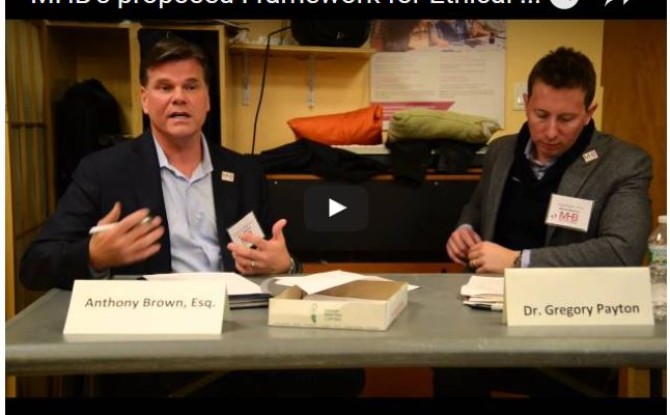
Ethical Surrogacy, a Proposed Framework

Ethical Surrogacy guidelines are imperative to a successful journey to parenthood.

At the Men Having Babies 2015 New York Ethical Surrogacy Conference we focused on teaching the public at large about surrogacy and providing tools to intended parents to ensure that their surrogacy journey is ethical and positive.

As part of our mission to promote ethical surrogacy practices that benefits all involved parties, Men Having Babies   is in the process of devising a framework for ethical surrogacy principles, protocols and best practices for intended parents. The latest version drafted by our Board and our Surrogates Advisory Board is available on menhavingbabies.org. The document is already available in English, French and Hebrew, and we are collaborating with several community organizations to translate this document to additional languages and collect feedback. Selected issues from this framework will also be brought up for discussion and public comments at our upcoming conferences.

Men Having Babies (“MHB”) is an independent nonprofit organization dedicated to providing gay biological fathers and fathers-to-be with educational and financial support. We offer the following framework of ethical guidelines and best practices as part of our goal to promote surrogacy practices that minimize the risks and maximize the benefits to all involved. The framework comprises of three levels: a Statement of Principles, Baseline Protocols for Providers, and Recommended Best Practices for intended parents.

What Garon & Jamie did when Adoption Fell Apart

WHAT GARON AND JAMIE DID WHEN THEIR ADOPTION FELL THROUGH

Husbands Garon Wade and Jamie Suriano had hoped to make their 3-year-old son Matteo a big brother this year. But after the birth mother chose to keep the baby, the couple had to learn how to accept the emotional costs that come with adoption.

Garon Wade grew up knowing he wanted to be a dad. What’s more, he knew he wanted to be an adoptive dad.

“Even before I recognized that I was gay, I always knew that I wanted to be a parent,” he said. “And I always wanted to adopt. I’m adopted, my sister is adopted, my father is adopted. So when it came to my family, adopting a child wasn’t a result of me being gay. That was a result me being adopted, too, and thinking what an amazing experience it is to give somebody a parent.”

Both men believed Matteo would be their only child, but after two years of raising one son they realized they wanted to grow their family.

“We originally thought when we adopted Matteo that we were only going to have one kid,” Suriano said. “Right around his second birthday, we started talking about having another and thought it would be good for him to have a brother or sister. You see how much fun they are and how much happiness you get out of having a kid.”

Wade and Suriano went back to the same agency they used for Matteo. They followed all the right steps — updated their home study, worked with their social worker and attorney. Finally, the call came through. They would be bringing home a little girl.

Matteo was so close to meeting his baby sister — until that second call came. The birth mother had decided to keep the baby.

“Once you get that call, once someone says you have a child, your heart just goes there,” Wade said. “When you get that second call, it’s such a disappointment. I can remember with Matteo saying, ‘OK, we’ll take this baby, we’ll take care of him the best we can.’ And a part of you wants to remain unattached because there’s the possibility that something could happen.

“That doesn’t work, though, with a child. It’s hard to go halfway.”

The couple lost this chance at a daughter, but both men have learned how to accept the risks of adoption.

Click here to read the entire article.

December 21, 2015 by Michael Lambert via gayswithkids.com

Gay Man In China Sues Government Over Denial of Right to Marry Partner

Gay Man In China Sues Government Over Denial of Right to Marry Partner

Gay Man In China Sues Government Over Denial of Right to Marry Partner

A gay man in the central Chinese province of Hunan has filed a lawsuit against the government for refusing his application to marry his male partner, in a move that has been hailed as a major test case for LGBT rights in China, his lawyer told RFA on Monday.

Sun Wenlin, 26, filed the complaint against the Furong district civil affairs bureau in Hunan’s provincial capital Changsha earlier this month, challenging the bureau’s refusal to allow the couple to register their marriage.

Sun is arguing that current Chinese marriage law refers to the union of “husband and wife,” but without specifying the gender of either party to the marriage.

The argument rests on the idea that a person can identify as a husband or a wife without reference to their gender.

The complaint was filed at the Furong District People’s Court, which has until Dec. 23 to decide if it will accept the case.

Sun told the Wall Street Journal’s China Real Time blog: “We just hope that we can legally become each other’s family in our own country someday in our lifetime.”

“Our most basic desires and rights have been denied, and this is very difficult to vindicate. I feel very angry,” he said.

A ‘sensitive’ case

Meanwhile, Sun’s lawyer Shi Fulong told RFA that the rights of lesbian, gay, bisexual and transgender (LGBT) people have yet to fully enter public awareness in China.

“We have filed this administrative complaint because the civil affairs bureau failed to carry out its duty to register marriages,” Shi said. “We are appealing to the court to order it to proceed.”

He said the gradual liberalization of gay marriage in Western countries and some U.S. states has paved the way for changing attitudes in China.

“Gay marriage is now legal in a lot of countries, which affects a lot of individual rights including property rights and inheritance, as well as matters relating to children,” Shi said.

“All of these things are inherently tied up with marriage, and homosexuality is also subject to social conventions and questions of cultural tradition,” he said.

Shi said he hopes the case won’t be regarded as “sensitive” by the authorities.

“In my view, there’s no such thing as a sensitive case, because from a lawyer’s point of view, all clients are equal,” he said.

“We won’t treat our clients differently because of their ethnicity, their sexual orientation, or other differences.”

Long way to go

A Guangzhou resident who runs a support group for the friends and relatives of LGBT people said there is still a long way to go for LGBT rights in China, but welcomed Sun’s lawsuit.

“This is the first case to do with gay marriage in this country … and really it’s quite epoch-making,” the man, who gave only a nickname A Qiang, said.

“For gay marriage to become legal, it will have to win broad public support, and at the moment only about 22 percent support it, or thereabouts,” he said.

“There is still a long way to go for gay marriage in China, but the good thing is that there has been huge change [globally] in the past decade or so, and the overall trend is towards legalizing gay marriage,” he said.

Click here to read the entire article.

12.21.2015 by Xin Lin for RFA.org

Gay parents sue after IRS denies tax deduction for in-vitro fertilization, surrogate

irsTBO.com by Elaine Silvestrini, December 14, 2015


Is being gay, in a long-term committed relationship, the same as being biologically infertile?

That’s the argument being made by a Stetson law professor in a lawsuit against the federal government.

Joseph F. Morrissey, who teaches constitutional and business law at Stetson, is seeking to overturn a ruling by the Internal Revenue Service that denied him and his partner a tax deduction. The deduction would have been for costs associated with their use of in-vitro fertilization and a surrogate who gave birth to their twin sons.


An IRS revenue agent who denied the claim said Morrissey’s sexual orientation was a “choice,” according to the lawsuit filed in U.S. District Court in Tampa.

An IRS spokesman said the agency would have no comment on the lawsuit and wouldn’t discuss, even in general, the tax deductions involved.

Morrissey has been in a “monogamous, loving and committed relationship with his partner for 15 years,” the lawsuit says. Morrissey and his lawyers declined to discuss the case.

The partner, whose name is not given, became a Pinellas County middle school mathematics teacher after the couple moved to Florida in 2004 when Morrissey took a job at Stetson, according to the lawsuit.

The pair are now engaged to be married, after the U.S. Supreme Court struck down laws against same-sex marriage.

They have been trying since 2010 to have children, according to the suit. They initially considered adopting a child, but at the time it was still illegal in Florida for gays to adopt.

As the lawsuit notes, the adoption ban was ruled unconstitutional in late 2010, and officially repealed by the Legislature earlier this year.

The couple’s twin sons — biologically Morrissey’s — were born last year after several previous attempts failed.

“In the end, bringing twin boys into the world took nearly four years, seven IVF procedures (including those scrubbed at the last minute for failed medical exams), three surrogates, three egg donors, two clinics and more than $100,000,” the lawsuit says.

When the babies were born, Morrisey’s partner quit his job to become a stay-at-home father.

As a general rule, medical expenses are deductible only after they exceed 10 percent of the filer’s adjusted, gross income, according to Kris Siolka, spokeswoman for the National Association of Tax Professionals.

Morrissey filed for $36,538 in medical deductions on his amended federal tax return for the 2011 tax year.

While the amendment to his return was being reviewed, Morrissey wrote the IRS in 2014 arguing that the agency had allowed heterosexual couples’ deductions for fertility treatments, including the use of an egg donor.

But the IRS rejected the deductions for the costs associated with the egg donor and surrogate, writing that the medical services must be provided to the taxpayer, his spouse or dependent.

In December 2014, the IRS denied Morrissey’s appeal, the lawsuit states.

Click here to read the entire article.

Same Sex Partners on Birth Certificates Halted

same sex partnersArkansas Supreme Court Halts Birth Certificates For Same Sex Partners


The Arkansas Supreme Court on Thursday temporarily blocked a lower court order that allowed same sex partners throughout the state to be listed as parents on the birth certificates of their children. It let stand the birth certificates obtained by three lesbian couples who had challenged the Arkansas Health Department Vital Statistics Bureau’s refusal to identify the three couples as the adoptive or biological parents of their respective children.

Same sex partners had a previous victory with Little Rock Circuit Judge

They won approval for their listing as parents in a narrow decision by Little Rock Circuit Judge Tim Fox. The same judge then issued another decision extending that recognition statewide. The state appealed the decision that allowed same-sex partners statewide to be listed, saying it conflicted with Arkansas statutes and left birth registrars in legal limbo.

The state Supreme Court agreed and said that “the best course of action is to preserve the status quo with regard to the statutory provisions while we consider the circuit court’s ruling.”

On Dec. 1, Judge Fox held that a state law restricting parentage identification to heterosexual couples was unconstitutional in light of the U.S. Supreme Court’s decision this year legalizing same-sex marriage nationwide.

“(The) decision affords the plaintiffs, as same sex partners, the same constitutional rights with respect to the issuance of birth certificates and amended birth certificates as opposite-sex couples,” Fox wrote at the time.

Click here to read the entire article.


Hufingtonpost.com, December 11, 2015 – by Steve Barnes

Same sex marriage is a constitutional right?

same sex marriage

Federal lawsuit challenges anti-gay North Carolina law allowing magistrates to opt out of same sex marriage

A North Carolina law allowing magistrates with religious objections to stop performing all marriages in order to avoid performing a same sex marriage is unconstitutional, according to a federal lawsuit filed today.

The suit, brought by two same-sex couples and an interracial couple, alleges that Senate Bill 2, passed earlier this year, violates the establishment clause of the First Amendment, and the equal protection and due process clauses of the 14th Amendment.

At least 32 court magistrates in North Carolina have stopped performing marriages under the law, including all four in McDowell County, forcing the state to bring in officials from other areas to serve residents.

“This law distorts the true meaning of religious freedom,” the Rev. Jasmine Beach-Ferrara, executive director of the Campaign for Southern Equality, said in a release announcing the lawsuit. “From the day it was proposed, it is clear that SB2 is about one thing and one thing only — finding a new way to discriminate against same sex marriage.”

The plaintiffs include Carol Ann Person and Thomas Person (above), who were denied the ability to marry in 1976 by magistrates who said it would violate their religious beliefs against interracial marriage. A federal judge later ordered the magistrates to comply with the U.S. Supreme Court’s ruling in Loving v. Virginia, but the lawsuit alleges that Senate Bill 2 could allow magistrates to opt out of performing interracial marriages.

Lawmaker approved SB 2, part of a wave of anti-LGBT “religious freedom” legislation across the country, by overriding the veto of Gov. Pat McRory in June. The lawsuit was filed in the same court that struck down North Carolina’s same-sex marriage ban in 2014.

Click here to read the entire article.


by John Wright at towleroad.com, December 9, 2015

Arkansas’ Cautionary Birth Certificate Tale

Birth Certificate

Arkansas’ Cautionary Birth Certificate Tale

It’s been a bumpy week for same-sex parents in Arkansas trying to both get on a child’s birth certificate —but there’s an important lesson in the case for same-sex parents in all states.

A week ago, a Pulaski County circuit judge ruled that the U.S. Supreme Court decision that legalized marriage for same-sex couples means that same-sex parents in Arkansas may have both their names put on the birth certificates of children born during their marriages. The state Department of Health, however, initially refused to do so, unsure if the ruling applied beyond the three plaintiffs, and slowed by Attorney General Leslie Rutledge’s advice not to issue amended birth certificates because she planned to appeal. The Department of Health, to their credit, seems to be issuing them anyway.

One important takeaway from all this, though, is found in Judge Tim Fox’s ruling, where he says, “Today’s decision affords the plaintiffs, as same-sex couples, the same constitutional rights with respect to the issuance of birth certificates and amended birth certificates as opposite-sex couples. That is the sum total of the legal effect of this decision.”

Those “same constitutional rights,” however, may be more limited than one might think. Fox notes that the plaintiffs list eight examples of how the lack of both same-sex parents on a birth certificate may impact their legal relationship to their children, including identification procedures for Social Security numbers and passports; denial of rights related to medical care, school-related activities, governmental- or employment-related benefits, survivor benefits, and inheritance; as well as disruption of the parent-child relationship and the award of child support in the event of parental divorce. But, he warns (my bold):

The court’s declaration today does not conclusively resolve any of those legal issues. It may create equitable and legal arguments for resolution of issues that involve only the two spouses of the same sex-marriage, such as child support or child custody. It does not in any manner resolve the multitude of legal issues that may arise involving third parties. Biological parents, mother or father, whose statutory and/or common law rights may not have been properly terminated, whether through an adoption proceeding or by the signature of surrogacy documents, are not bound by the listing of two names on a birth certificate. Other heirs claiming against a same-sex spouse estate, or attempting to disallow a minor child’s interest in the estate of one of the same-sex spouses, are not bound by an amended birth certificate. Insurance companies—life, health, or casualty—may decide in order to prevent potential duplication of claims, or liabilities not actuarially considered in premium calculations, to change their contract language to exclude birth certificates as indicia of acceptable legal relationship, and may require other documentation such as adoption decrees. In the future, government benefits, both state and federal, may key off of legal documentation other than a birth certificate. Today’s decision does not legally resolve any of those potential issues.

Click here to read the entire article.

by Mombian.com, December 8, 2015