
The Corrosive Politics That Threaten L.G.B.T. Americans

As families began planning funerals for the victims of Sunday’s rampage at a gay nightclub in Orlando, Fla., gay Americans mourned a loss that extended beyond the lives cut short.

Omar Mateen shattered the tenuous, hard-fought sense of personal safety that many gay, lesbian, bisexual and transgender Americans have begun to feel as the movement for equality has made significant gains in recent years. His bullets and the blood he left behind that early morning were a reminder that in many corners of the country, gay and transgender people are still regarded as sinners and second-class citizens who should be scorned.

While the precise motivation for the rampage remains unclear, it is evident that Mr. Mateen was driven by hatred toward gays and lesbians. Hate crimes don’t happen in a vacuum. They occur where bigotry is allowed to fester, where minorities are vilified and where people are scapegoated for political gain. Tragically, this is the state of American politics, driven too often by Republican politicians who see prejudice as something to exploit, not extinguish.LGBTQ

Since the 1990s, gay, bisexual and transgender Americans have made considerable progress in the fight for equality under the law. By living openly and proudly, they have changed society’s attitudes about sexual orientation and gender identity. That shift has prompted politicians who were once wary about embracing equal rights for L.G.B.T. Americans — including President Obama and Hillary Clinton, the presumptive Democratic presidential nominee — to become resolute allies. The 2015 Supreme Court ruling that legalized same-sex marriage was celebrated by many in the gay community as the crowning achievement of a decades-long quest for respect and dignity.

Yet, that fight remains far from over. Since the marriage ruling, several Republican-led state legislatures and Republican governors and federal lawmakers have redoubled their fight against legal protections for people on the basis of sexual orientation and gender identity. So far this year, more than 200 anti-L.G.B.T. bills have been introduced in 34 states.

Donald Trump, unlike some other prominent Republicans, called the Orlando massacre what it was: an attack on gay people. Mitch McConnell, the Senate majority leader, could not even offer that recognition to a community in pain.

Yet, Mr. Trump has vowed to choose Supreme Court justices who would overturn marriage equality, and he supports the deceptively named First Amendment Defense Act, an effort to approve discrimination against gay and transgender people nationwide under the guise of religious freedom. And Mr. Trump backtracked from his statement that transgender people should be able to use the restroom consistent with their gender identity after Senator Ted Cruz used his words to attack him during the nomination fight.

Click here to read the entire article.

by The Editorial Board – New York Times – June 15, 2016

Living Wills and Health Care Proxies

Living Wills and Health Care Proxies, sometime know as Medical Powers of Attorney, are vital aspect of an individual’s, couple’s or family’s estate plan. Many overlook these critical documents, but it may be at their own expense.

Why are these documents so important? – No estate plan is complete until it addresses unexpected medical crises which could leave someone alive, but in a compromised mental or physical condition.  Many people feel uncomfortable even thinking about these situations; however, they are exactly the reason why comprehensive estate planning is so important, including Living Wills and Health Care Proxies.

Without Living Wills and Health Care Proxies, a person may not be able to decide for themselves what medical decisions can be made about their condition or who can make them.guardianship, Gay Estate Planning, estate planning for same sex couples, estate planning law firms

What are Living Wills and Health Care Proxies – A Living Will is a witnessed and notarized document that states exactly what medical measures a person wants or does not want if a specifically outlined medical conditions arise.  It is important to note the Living Wills only apply to medical conditions which are terminal, with little or no hope of recovery.  If a doctor or hospital can get you better, they will use everything at their disposal to do so.  Living Wills address those situations where there is no hope for recovery, then you are empowered to decide what treatments a doctor or hospital to perform.

A Health Care Proxy, or Medical Power of Attorney, allows a person you designate to have access to medical records and make specified medical decisions for you. Comprehensive health Care Proxies will also allow the designated person to look into your medical file if needed to make the best decision.  This is accomplished by including a HIPAA (Health Insurance Portability and Accountability Act) waiver which authorizes hospital; and doctors to share your medical information with the proxy you have designated.

Other Considerations – It is also important to discuss with your Health Care proxy what your wishes are as defined in your Living Will.  You should never designate someone without first ensuring that they are capable of and comfortable with carrying out your end of life wishes.

If you do not have a Living Will and are unable to convey your wishes directly, a hospital has an obligation to keep you alive, whether that is your desire or not, unless your closest living legal relative (in most states) authorizes them otherwise.

The most noteworthy example of how not having a Living Will can become a nightmare was the Terri Schiavo case in Florida. Ms. Schaivo did not have a Living Will when she suffered a massive heart attack in 1995 and was declared by her doctors to be in a persistent vegetative state.  He husband petitioned the court to have her feeding tube removed and her parents opposed that petition.  In all, the Schiavo case involved 14 appeals and numerous motions, petitions, and hearings in the Florida courts; five suits in federal district court; extensive political intervention at the levels of the Florida state legislature, then-governor Jeb Bush, the U.S. Congress, and President George W. Bush; and four denials of certiorari from the Supreme Court of the United States. (procedural history courtesy of Wikipedia.)  All of this could have been prevented if she had a Living Will.

If you are incapacitated and cannot convey your wishes to a medical facility about your treatment, they will look to your Medical Power of Attorney. If you do not have one, the facility will look to your closest living legal relative for guidance.  This person may or may not be someone you wanting medical decisions for you.  The legal priority that must be followed in most states is a spouse, an adult child, a parent, a sibling, an adult niece or nephew, an aunt or uncle and finally, a first cousin.

Living Wills and Health Care Proxies are foundational elements of a person’s estate plan. These are also often the documents most critical to elderly individuals or those with preexisting medical conditions.

For more information about Living Wills and Health Care Proxies, or other healthcare documentation, contact Anthony M. Brown at Time for Families and speak to a specialist family lawyer to secure you and your family’s future.

Contact Time For Families

Contact Form
* indicates required field

FAMILIES OF CHOICE SERIES Anna and Kaya

Families of choice can provide increased connection, security and joy to the lives of LGBTQ people. Our in-depth look at families of choice across our communities continues this week with Anna DeShawn and Kaya Powell. Anna and Kaya, engaged to be married in 2017, are both active in a number of LGBTQ community organizations. In their first interview as a couple, Anna and Kaya share with Windy City Times their experiences of families of choice.

Interviewee names: Anna DeShawn, Kaya Powell

Ages: 32, 38 respectively

Relationship Status: Engaged

Neighborhood: Bronzeville

Activities :

—Anna: Owner and Operator of E3 Radio; www.e3radio.org

—Affinity Community Services Board Member; http://affinity95.org/acscontent

—Kaya: Project Curve Appeal; http://pinkcitycorp.com/pink-city-corp/project-curve-appeal.

—Kaya’s Creations, Co-Owner Drinks By A Diva

Windy City Times: What is your definition of family?

Anna DeShawn: Family to me are persons who care and love you for exactly who you are. Using the word unconditional is a figment of our imagination, there’s conditions on everybody’s love to an extent, but it’s people who you can absolutely depend on.

Kaya Powell: I concur, I feel like that is the same definition for me. It doesn’t have to be your blood family. A person who is there when times are rough as well as when times are good, I would call that person family.families of choice

WCT: By your definition of family, who is in that inner circle?

KP: For me, that number is really really small, only a handful. They’ve been there when I need them, in my corner, pushing me to do better for myself. That number only consists of one blood related person.

AD: It’s probably five or six people. I can trust them and if I need anything I know I can call them up and they’d be right here.

WCT: Kaya, could you speak to why your inner circle is mostly family of choice?

KP: I love my family, but I don’t share as much with them. I share more with outside individuals because I know they are non-judgmental, don’t say things that eventually get back to me. I know they will be there for me, more than my own family.

WCT: What are the needs family of choice fulfill in your life?

AD: For me, its 100-percent acceptance and no judgment. I have no doubt in my mind that my family of origin loves me, but at the same time they all have their own hangups about my sexuality. It doesn’t play out in every scenario, but there is a boundary that I know exists. As I get older, I don’t always feel like having a conversation, I just want to show up and have a good time and we all love each other for where we’re at. With my friends there’s nothing extra, other than just me showing up.

WCT: In your family of origin are you sometimes the gay spokesperson?

AD: Oh yeah, when I came out it was so funny, they meant well but I got two copies of Brokeback Mountain! [Hearty laughter] My sister gave me one and my aunt mailed one from Arizona, it was crazy but I know they were trying.

I equate it to being Black in a lot of ways; there’s a certain understanding we have as people of color. When you are a person who lives at the intersections of being Black, a woman and being queer, if people don’t know how to deal with you on your levels, then you tend to be the spokesperson on any of those three identities. With my family of choice we don’t need that, we all know what we are going through every day.

WCT: Kaya, can you speak to the needs you have that are met by family of choice?

KP: Family of choice accepts me for who I am, I don’t have to explain anything. It was an eye opener for my blood family when I came out, even though there were other stud females in my family. I was femme and they didn’t understand. I feel like I’m too old to have to explain what I like. I choose not to be around them because I don’t want the stares, or looks, or whispers. With family of choice I don’t have to deal with that, we accept each other as we are.

WCT: Is everyone of your family of choice LGBTQ-identified?

AD: Yes, pretty much. And all around the same age, and people of color. There’s some older folks because of Kaya, you know. [Both laugh.]

KP: I could say [there are] some infants! [Laughs continue]

WCT: How have you created family of choice as a couple?

KP: We were introduced by a mutual friend, Brandee, who has since become my family, and her wife Dionne is Anna’s buddy. We came together with a few other individuals around the same time. I find that interesting. We recently met someone who is a stud lesbian in the lifestyle and she has become our nephew.

AD: I know it’s rare for it to unfold that way with Brandee and Dionne. I work with Brandee on the radio and she’s my radio wife, we’ve been doing that since before Kaya and I. At a very basic level, it’s a true blessing everyone gets along. E3 Radio is my passion, so it would be difficult if it hadn’t worked out that way.

WCT: What attracted you to each other?

AD: She had her own life. I could never have someone who is just waiting at home for me, it causes animosity and jealousy. She had her own friends, and life. We were able to bring those together and it’s awesome. It’s been surprising, but that’s how I knew it was right.

KP: Yep!

LGBTQ Literature for Children and Teens Comes of Age

LGBTQ Literature for Children and Teens becomes relevant and contemporary.

LGBTQ literature is taking a new turn.  When David Levithan wrote the YA novel Boy Meets Boy (Knopf, 2003), he faced a precedent in which books with LGBTQ characters were issue-based: focused on the angst of coming out in a hostile world. “We were tired of the misery plot, and wanted to re-write it,” Levithan recalls. “I wanted to write a romantic comedy.”

Today, that “misery plot” is no longer the norm and 2016’s children’s books and YA novels depict a wider range of LGBTQ experiences and family dynamics. Increasingly, the central conflict has little to do with being gay.

Such is the case with Levithan’s upcoming YA novel You Know Me Well (St. Martin’s Griffin, June), which he co-wrote with Nina LaCour, about the burgeoning friendship between a boy and a girl – both comfortably out, and both navigating the uncertainty of imminent adulthood.LGBTQ literature

“Nina and I wrote the book because we really wanted to show the common ground between a lesbian character and a gay character,” Levithan says. “Part of that is navigating romantic relationships, which is hard no matter who you love.”

Levithan, who is also editorial director and publisher at Scholastic, notes the characterization of queer characters has become far more nuanced. “Authors are really delving into what it means to have this identity,” he says. For instance, Jane B. Mason’s Without Annette (Scholastic Press, Jun.) depicts the growing tension between two girlfriends as they maneuver through the politics and elitism of a new boarding school.

Without Annette is about navigating love,” says Levithan. “The fact that they’re girls attracted to girls – there’s obviously something specific to that, but it doesn’t define their love.”

Similarly, in Kody Keplinger’s Run (Scholastic Press, July), the main character’s bisexuality doesn’t define her. “Certainly a decade ago, if these characters existed, the whole story would be about that facet of their identity,” Levithan said.

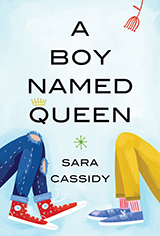
Characters are increasingly certain of who they are, so there’s less drama around the search for identity. This assuredness is evident even in some middle grade novels and picture books. Sara Cassidy’s middle grade book A Boy Named Queen (Groundwood, Aug.) is about a boy who flouts convention and sees no need specify his orientation throughout the book.

“The story for every child isn’t going to be about coming out as LGBTQ,” says Groundwood president and publisher Sheila Barry. “In [A Boy Named Queen], the kid is very confident in every aspect of his being.” Similarly, in the picture book Big Bob, Little Bob (Candlewick, Oct.), by James Howe and illustrated by Laura Ellen Anderson, Little Bob, who dresses in girls’ clothes and wears flowers in his hair, is perfectly comfortable with who he is and what he likes.

Family and Friends

While there’s still a place for stories about understanding sexual orientation or gender identity, those narratives now show a broader range of relationships within friendships and families.

Portuguese president vetoes Portuguese surrogacy law

Portugal’s center-right President Marcelo Rebelo de Sousa Tuesday vetoed a law authorizing surrogacy in some cases where a couple cannot conceive, quashing Portuguese surrogacy law adopted by parliament in May.


LISBON: In a statement, the president’s office said the Portuguese surrogacy law did “not conform to the conditions set out by the National Council for Ethics for the Life Sciences” which had demanded tighter rules on surrogacy.

Parliament had adopted the bill allowing a woman to carry a child for another person or couple in some cases where women cannot conceive, provided the surrogate mother is not paid.international surrogacy

The legislation, which had supporters from across the left-right divide, was adopted by a slim majority, despite opposition from Portugal’s powerful Catholic Church.

The veto does not necessarily spell the end of the road for the campaign to legalize surrogacy.

Under the constitution, parliament can still override a presidential veto to promulgate a law if an absolute majority of all MPs back it.

While quashing the surrogacy law de Sousa gave his seal of approval to legislation giving lesbian couples and single women to have in-vitro fertilization (IVF).

Portugal is not the only European country where surrogacy is prohibited.

France, Germany and Italy prohibit surrogacy, which critics have dubbed “wombs for rent”.

Agence France Presse – June 8, 2016

Click here to read the entire article.

Same-Sex Couple Details Adoption Hurdles

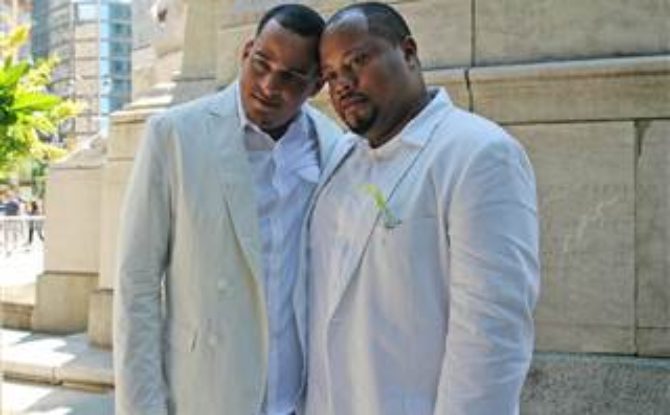
For the majority of their relationship, Alphonso Reyes, 34, and his husband Melvin, 41, have dreamed of becoming fathers. In fact, they started talking about parenting on their first date.


Some six years later, the conversation may be closer to a reality for the Bronx, New York residents. The process, however, has not been simple.

“There is just a lot of red tape regardless of if you are LGBT or not,” Reyes told NBCOUT. He did acknowledge there are additional hurdles for gay couples.

“A lot of agencies do not want to adopt to same-sex couples. The way we have experienced it was through a lot of feet dragging.”adoption

Over the past year, the couple has fostered two children. The first, a newborn baby girl, was an emergency placement and temporary. The agency they worked with placed the child with another foster parent after only two months.

The couple has been fostering their son, whose name they prefer not to share, since February. They are in what is called pre-adoptive status – where the birth parents’ rights have been revoked and the child is eligible for adoption.

“Right now, everything is still in court; we do not have a date,” Reyes explained. “From the day he came in our home, he started calling us Daddy and Papi … So, he will always be our son, officially adopted or still in foster care.”

Fostering a child may be the best route to becoming adoptive parents for couples like Alphonso and Melvin Reyes. According to AdoptUSKids, a Maryland-based organization that assists LGBTQ couples in the adoption process, there has been an increase in children adopted out of foster care for at least the past 10 years.

“In 2014, 52 percent of the children and youth adopted were adopted by their non-relative foster parents,” Kathleen Ledesma, national project director for AdoptUSKids, told NBCOUT via email.

“The ‘enterprise’ of child welfare adoption,” Ledesma added, “centers on the best interest of the child, and that includes consideration for the child’s attachments to his or her caregiver and minimizing the number of moves a child has while in foster care.”

There are currently 415,000 children and youth in foster care in the United States, according to Ledesma, and of that number, 108,000 are available for adoption.

While there is no reliable data at the national level regarding the number of same-sex couples being approved for adoption, Ledesma said LGBTQ families and individuals are at greater risk for dropping out of the approval process to foster or adopt. The reason for this may be the additional challenges these families face.

In 2008, AdoptUSKids worked with the Children’s Bureau to draft Report to Congress: Barriers and Success Factors in Adoption. The report was an effort to help lawmakers understand better the issues facing LGBTQ families in the adoption process.

NBCNews.com, June 7, 2016 by Mashaun D. Simon

Click here to read the entire article.

Gay couples are becoming reproductive refugees as more countries outlaw surrogacy

The options for becoming parents are narrowing for gay couples as both developed and developing nations increasingly outlaw surrogacy, many becoming reproductive refugees.

Gay couples who need surrogacy to start a family are now reproductive refugees as more and more countries outlaw surrogacy, according to advocacy group Families Through Surrogacy.

With surrogacy criminalized in many Western countries, would-be parents have typically turned to developing nations including Thailand, India and Nepal to find surrogates. But even these countries have, in recent years, closed their doors to international surrogacy. What’s more, countries that do still allow international surrogacy – such as Ukraine, Georgia and Israel – do not extend that offer to same-sex couples.

Sam Everingham, executive director of Australian advocacy group Families Through Surrogacy, told The Atlantic that outlawing reproductive rights for gay couples in their own countries sent them on ‘a constant chase’ across the globe, with more and more countries officially outlawing the practice as time goes on.

According to Doron Mamet, the head of Israeli surrogacy agency Tammuz, surrogacy has become such a political sticking point that it may not be available anywhere within the next ’10 to 15 years’. Interestingly, Mamet points out, while politicians and anti-surrogacy activists are eager to stamp out the practice, ‘The only group that wants it to continue are the people in need and the surrogates.’surrogacy refugees, international surrogacy, gay dads

Why outlaw surrogacy in developed countries?

In Australia, couples found to have practised commercial surrogacy in the country can go to jail for three years.

Australia’s federal government has recently ordered a review of the nation’s surrogacy laws, following high-profile cases of surrogacy gone wrong abroad. The government appears to be in favor of commercial surrogacy remaining illegal in the country, forcing gay parents to fork out huge sums for surrogates in the US, as cheaper options in developing countries dwindle.

UK gay couples find themselves with the same problem, as UK law also criminalizes commercial surrogacy.

In an interview with Gay Star News, the founder of gay parenting blog Gay Dads Australia, Rodney Chiang-Cruise, told of the frustration the gay community felt about criminalization of commercial surrogacy in Australia. He argued that legalizing the process within Australia would help make it ‘a fair, equitable, respectful process for all parties’. See more on that here.

While altruistic surrogacy is legal in Australia, figures from Families Through Surrogacy show that just 35 babies were born through altruistic surrogacy in Australia in 2013. Conversely, more than 400 babies were born to Australians through surrogacy abroad.

The cost of going through the surrogacy process in the US is around AUD $200,000.

GayStarNews.com by Laura Chubb, June 7, 2016

Click here to read the entire article.

Gay custody battles force law to define what a parent is

A spate of gay custody battles are forcing the law to reconsider what constitutes a parent, with one particular case in New York set to have major implications for many more LGBTI couples.

The New York Court of Appeals is to decide whether the ex-girlfriend of a child’s biological mother should have legal parenting rights – despite having never adopted the child in question, or been married to the biological mother in one a several gay custody battles that could define LGBT family law in New York and around the country.

Brooke Barone claims she acted as the child’s ‘Mamma B’ when her girlfriend Elizabeth Cleland gave birth after artificial insemination. But when the couple split up, Cleland reportedly denied Barone visitation rights to the child – which is what Barone is now fighting for in court. Cleland claims she does not feel safe leaving her child with Barone.

lesbian family law

drawing of a happy couple of lesbians and adopted child

Tangled gay custody battles

The argument against awarding parental rights outside of biology, marriage or adoption centers on the potential for opening up bogus parenting claims. These, lawmakers argue, could come from friends, nannies, or even abusive partners seeking to gain control and cause distress.

However, those in favor of broadening the definition of a parent point out heterosexual men have been recognized as parents without genetic or adoptive connections, in order to compel child support payments.

The legalization of same-sex marriage in the US has thrust the tangled legalities of same-sex families into the spotlight, with several similar cases currently being fought in other US states, including another typically gay-friendly state, Massachusetts. And in Canada, the premier of Ontario has pledged to change the law so that both parents in an LGBTI couple are immediately entered onto the birth certificate, hopefully avoiding gay custody battles. This is a huge change to the province’s current law, where a non-biological parent in a same-sex couple is forced to begin the lengthy and costly adoption process in order to be legally recognized.

Speaking to The Wall Street Journal, Columbia Law professor Suzanne Goldberg said that ‘It’s only an accident of law that leads one of those parents to be unrecognized [in these cases].’

New York decision to set precedent

Even when a partner has adopted the child, however, a biological parent looking to disavow their former partner of parentage has legal recourse – as a recent case involving a lesbian couple in Alabama showed. The Alabama courts were eventually obliged by the US Supreme Court to find in favor of the adoptive parent, however.

Click here to read the entire article.

GayStarNews.com – June 5, 2016 by Laura Chubb

Family Estate Planning

Family estate planning addresses the greatest concern of most families with younger children: ensuring their stability and security if something happens to a parent.

No one wants to think about a worst case scenario; however, that scenario will become much worse if there isn’t  family estate planning in place. The good news is that once it is completed, parents do not have to worry live in worry anymore.

There are many types of family estate planning and I will review several that may be helpful to your family. They include: basic estate planning, trust planning, guardianship planning and securing all parental rights to a child through adoption, if applicable.

Basic Estate Planning – In most states, a valid Last Will and Testament is the only legal way to name a guardian, other than the other biological or adoptive parent of a child, when one parent dies.  It is critical to have a Will in order to make this designation.  Most couples are concerned about something called a “simultaneous death event,” which is defined as a single event, or series of related events, that takes the lives of both parents.  A competent attorney will be able to prepare for this possibility in a Last Will and Testament, the cornerstone of a basic estate plan.estate planning , estate planning trust, glbt estate planning, lgbt estate planning, gay family law, wills, trusts

Basic estate plans should also include health care documentation known as Living Wills and Medical Powers of Attorney, or Healthcare Proxies. A Living Will states exactly what measures a person wants or does not want if certain specifically outlined medical conditions arise. It does not, however, authorize another person to make those decisions for the Principal of the Living Will.  A Medical Power of Attorney allows a designated person to have access to medical records and make specified medical decisions for the Principal.  For more information on basic estate planning, read my article here.

Trust Planning – A family estate planning trust is useful for parents who may not want to pass significant amounts of money to their minor children upon the parent’s deaths.  Trusts allow a parent to spread payments out over a longer period of time, appoint a trustee to manage those payments, provide for investment suggestions or advisors and include provisions to protect a beneficiary child if they have a substance abuse issue.

Trusts can also be useful tools to either bypass the probate process, which in many states can be long and complicated (a revocable trust), or to avoid estate taxation in the form of an irrevocable trust. For more information about how a family estate planning trust can help your family, read my article here.

Guardianship Planning – There are two general types of Guardianship Designations that are important parts of any estate plan.  The first is an adult Guardianship Designation, the second, a Guardianship designation for your children.  A child’s Guardianship Designation allows the parents of a minor to legally give another person the right to be designated by a court as the guardian of the child’s property and person.

Unless you are naming your child’s other biological or legal parent as their guardian, you must name a guardian in your Last Will and Testament. Once named, the designated guardians will still have to go to court to be legally designated the child’s guardian.  Without your nomination in a Will, that person would not be able to seek guardianship.

Securing Parental Rights Through Adoption – While most parents are secure in their parentage to the children living in their homes, many situations do not fit into that norm and basic protections become a vital part of family estate planning.  Same-sex couples must secure rights to the children born into their relationships through parentage order or second or step parent adoption.  Homes where children are living with step parents must pay particular attention to naming a guardian should both biological parents die.  The second or step parent adoption process in New York  is described in detail in this article.

When family estate planning becomes a priority for you, please consider me a resource. For more information on family estate planning, contact Anthony M. Brown at Time for Families and speak to a specialist family lawyer to secure your and your family’s future.

Contact Time For Families

Contact Form
* indicates required field

NBC is first major network to launch an LGBTQ Dedicated Website – NBCout

In what is the first major networks foray into the LGBTQ web market, NBC launched NBCout last week to highlight and feature the stories that inform and entertain our community.

There’s lots of content and interactive components.  Thanks NBC for getting the word out about the LGBTQ community with NBCout!

Here is the letter from the editor announcing the launch:

Welcome to NBC OUT, NBC’s newest digital destination, where we’ll showcase enterprise reporting, original video and other unique content about and of interest to the LGBTQ community.

If there’s one thing everyone in our community can agree on (and there may just be one thing), it is that we are an extraordinarily diverse group. Our acronym may only include a handful of letters, but the variety within each of them is vast. Keeping this in mind, the NBC OUT team is committed to highlighting content that spans the spectrum – from a profile piece about an intersex millennial to an article about cisgender, black gay men in history, and a multimedia report about a Thai immigrant who started a transgender modeling agency.

In order to fulfill our goal of providing quality journalism for our readers and viewers, while also ensuring our stories reflect our incredibly diverse community, we plan to not only leverage the vast news-gathering resources of NBC News, but to also bring in new voices and fresh perspectives from across the LGBTQ spectrum.

I truly believe it will take a village – or better yet, a community – for NBC OUT to reach its full potential. So if you have a story idea, would like to share your feedback with us or just want to follow our latest stories, connect with us on Twitter, Facebook and Instagram.

June 2, 2016

Click here to visit NBCout.