
Same-Sex Parents Still Face Obstacles Under New York’s Standing Rules

Prior to the tragic events of Sunday, June 13, 2016 in Orlando, Florida, one might have felt optimistic about the evolving societal acceptance of and respect for same-sex parents and the corresponding progressive state of family and matrimonial law.

We shared in the sense of uplift from the recent United States Supreme Court decisions in United States v. Windsor and, especially, in Obergefell. v. Hodges, decided a little over one year ago on June 26, 2015. Obergefell dealt in sweeping fashion with discriminatory and unconstitutional objections to marriage for same-sex couples. As set forth in Justice Anthony Kennedy’s dramatic and moving language, the need for same-sex parents, and the children of those relationships, to be granted the social dignity and the many societal benefits that go along with stepping into the light of mainstream acceptance by virtue of a nationwide right to marry is required by the equal protection mandates of the 14th Amendment of the U.S. Constitution.gay parents adoption
In concluding that its “analysis compels the conclusion that same-sex couples may exercise the right to marry,” 576 U.S. 12 (2015), the Supreme Court in Obergefell detailed not just the importance of being able to enter the institution of marriage, but the need for same-sex couples to do so on fully equal footing as other couples, through the front door, and stressed in its exhaustive analysis that the focus should not be on how these couples love, but that they love and wish for that love to be reflected in their social standing.

Choices about marriage shape an individual’s destiny. As the Supreme Judicial Court of Massachusetts has explained, because “it fulfils yearnings for security, safe haven, and connection that express our common humanity, civil marriage is an esteemed institution, and the decision whether and whom to marry is among life’s momentous acts of self-definition. Goodridge, 440 Mass., at 322, 798 N.E. 2d at 955″ cited at 576 U.S. 13 (2015).

As this court held in Lawrence, same sex couples have the same right as opposite-sex couples to enjoy intimate association. Lawrence invalidated laws that made same-sex intimacy a criminal act. And it acknowledged that “[w]hen sexuality finds overt expression in intimate conduct with another person, the conduct can be but one element in a personal bond that is more enduring. 539 U.S. at 567. But while Lawrence confirmed a dimension of freedom that allows individuals to engage in intimate association without criminal liability, it does not follow that freedom stops there. Outlaw to outcast may be a step forward, but it does not achieve the full promise of liberty.

576 U.S. at 14.

Further, Justice Kennedy singled out the importance of the right to marry to the children of these relationships.

Excluding same sex couples from marriage thus conflicts with a central premise of the right to marry. Without the recognition, stability, and predictability marriage offers, their children suffer the stigma of knowing their families to be somehow lesser. They also suffer the significant costs of being raised by unmarried parents, relegated through no fault of their own to a more difficult and uncertain family life. The marriage laws at issue here thus harm and humiliate the children of same-sex couples.

576 at U.S. 15.

In New York, the passage of the Marriage Equality Act in 2011 directed that all of the laws, benefits and obligations bestowed by the Domestic Relations Law with regard to marriage be read and implemented without regard to sexual orientation, and, if necessary to do that, in a gender neutral way.

Section 10-a. Parties to a marriage.

1. A marriage that is otherwise valid shall be valid regardless of whether the parties to the marriage are of the same or different sex.

2. No government treatment or legal status, effect, right, benefit, privilege, protection or responsibility relating to marriage, whether deriving from statute, administrative or court rule, public policy, common law or any other source of law, shall differ based on the parties to the marriage being or having been of the same sex rather than a different sex. When necessary to implement the rights and responsibilities of spouses under the law, all gender specific language or terms shall be construed in a gender-neutral manner in all such sources of law.

Yet, despite the passage of the Marriage Equality Act and the newfound nationwide ability to marry, the courts in New York are contending with circumstances in which same-sex families were formed and children brought into them by using strategies that pre-date the ability of same-sex couples to marry. This approach has potentially devastating consequences when those families and their respective rights are addressed in divorce and family court proceedings. These problems arise from, and the courts continue to wrestle with the vestiges of, a rule established by the New York Court of Appeals a generation ago in Alison D. v. Virginia M., 77 N.Y.2d 651 (1991), which set the stage for categorical discrimination against same-sex parents based upon their lack of a biological or adoptive relationship to a child.

The impact of Alison D. was eroded somewhat by the Court of Appeals decision in Debra H. v. Janice R., 14 N.Y.3d 576 (2010), which, through application of comity, recognized parental standing of a non-biological non-adoptive parent in 2010 based upon Vermont’s judicially created rules granting standing based upon the couple’s civil union in Vermont. However, without the right to marry or enter into a civil union in New York at the time, children of unmarried same-sex couples in New York were not afforded the same benefits and protections.

This discrimination is not so easily remedied by the directives of the Marriage Equality Act because many of the parents involved in these situation were not or are not married at the time that their children are born and because the conceptual framework for the denial of standing is based upon a biologically based terminology that is found throughout the family and matrimonial law. This terminology reflects a fixation with the biomechanics of conception, a fixation which runs deeper than mere gender assumptions. Instead of a focus on the “best interest” of children, which is the bedrock determination of all other matters related to their custody and welfare in New York matrimonial and family law, the New York Supreme, Family and Surrogate’s Courts continue to trip over the threshold issues of “standing” when it comes to same-sex parents because of references to “birth” parents or the heterosexual and gender assumptions implied by the use of the word “paternity.” For example, a “paternity” test directed in Family Court proceeding continues to only apply to men and only to establish the biological relationship of men to children obviously born to women. Perforce, this excludes same-sex couples.

By Meg Canby and Caroline Krauss Browne

law.com

Click here to read the entire article.

Co-Parenting – One More Option For Creating Your Family

Co-Parenting is fast becoming an alternative to adoption, surrogacy and IVF for many in the LGBT community who want to have a family on their terms.

Co-parenting is quickly becoming a viable option for gay and lesbian individuals who want to be parents. Co-parenting also requires an incredible amount of care and preparation to ensure that all parties, and particularly the children, are protected and acknowledged legally.

Co-Parenting Defined

In a co-parenting relationship, two individuals who are not romantically involved come together for the purpose of having a child and parenting that child with a mother and a father. The key to understanding co-parenting is in the intention of the mother and father.  Many enter into co-parenting relationships because they do not want to be single parents and acknowledge their desire for their children to have a maternal and a paternal influence.co-parenting

Protecting a Co-Parenting Relationship: The Co-Parenting Agreement

Before entering into a co-parenting relationship, it is crucial to understand the legalities of parenting, as well as the potential pitfalls that may accompany this nontraditional parenting form. First, by becoming a parent, the mother and the father have a fiduciary responsibility to that child, and if the co-parenting arrangement dissolves, to one another in a child support proceeding.  This means that if both parties are not contributing financially to the child’s upbringing, either parent may bring a support action in family court.

Spelling out these financial terms, as well as visitation schedules, educational and religious training is the purview of the co-parenting agreement. The mother and the father will both have separate legal representation in the drafting and execution of a co-parenting agreement and the process of creating a comprehensive agreement will be very helpful for the parties to both feel comfortable with one another and the terms of their individual parenting visions.

Where Can You Meet a Potential Co-Parent?

As this new method of parenting has become more and more popular, so has an internet support industry of which I am a part. Websites such as FamilyByDesign.com, of which I am a legal consultant, and Modamily.com offer information to potential co-parents, as well as a database of individuals who are interested in becoming co-parents to find other such individuals.  Many LGBT Centers around the country now have family divisions that include information and networking about co-parenting.

Special Considerations

One very important aspect of co-parenting lies in the reality that the primary parents may have committed relationships with people other than the other co-parent.   This may be due to their sexual orientation or relationship status when entering into the co-parenting relationship.  Some states now have the ability to name more than two legal parents for a child. But more often than not, these “third party” individuals do not have legal relationships with the children of their romantic partners.  Primary parents must create these rights for their romantic partners by executing medical authorizations and guardianship provisions for the children.

For more information about co-parenting, contact Anthony M. Brown at Time for Families and speak to a specialist family lawyer to secure your and your family’s future or email Anthony at anthony@timeforfamilies.com.

In win for gay couples, Maryland high court recognizes de facto parents rights

Maryland’s highest court has ruled that non-biological parents, de facto parents,  who live with and help raise children also have parental rights, overturning a 2008 decision that gay and lesbian advocates considered devastating to same-sex couples.

In a unanimous ruling issued Thursday, the Maryland Court of Appeals ruled that family-court judges can consider whether persons are de facto parents in custody and visitation cases. Advocates say Maryland was one of a few states that considered such parents strangers in the eyes of the law.

De facto parents can include the partner of a lesbian who undergoes artificial insemination, a gay man whose partner adopts a child from a country that does not allow same-sex couples to jointly adopt, or a straight man who raises a child with a woman for years without formal adoption.gay parents adoption

Until the 2008 court decision, such people generally had the ability to maintain some parental rights in Maryland even when their relationships with their partners crumbled.

Then the Court of Appeals ruled against a Baltimore County woman who sought custody or visitation rights with a girl who had been adopted by her ex-partner. The court said “third party” parents should not be treated differently from other third parties seeking custody. That meant they would need to show exceptional circumstances or that the legal parent was unfit in order to be awarded time with children they had helped raise.

This week’s ruling concerned a different case and reversed the precedent set by the court in 2008. Denying rights to third-party parents “is ‘clearly wrong’ and has been undermined by the passage of time,” Judge Sally Adkins wrote in the decision.

LGBT advocates hailed the ruling for correcting what they saw as a continuing injustice against the lesbian, gay, bisexual and transgender community, even after voters legalized same-sex marriage in 2012.

“Now Maryland joins the majority of other states in taking those parents and children out of limbo and putting them in solid legal footing,” said Jer Welter, a lawyer with FreeState Justice who represented plaintiff Michael Conover in the case ruled on this week.

Mr. Conover is a transgender man who had married a woman before undergoing his gender transition. Their wedding took place in the District, which legalized same-sex marriage before Maryland did. Courts treated him and his ex-wife as a same-sex couple for the purpose of the dispute.

Brittany Conover gave birth in 2010 to a child, Jaxon, who was fathered by a sperm donor selected with the input of Mr. Conover, then known as Michelle, according to court records. The couple separated the next year and divorced in 2013.

Ms. Conover stopped allowing her spouse to visit in 2012. She argued in a later custody battle that her former partner never adopted Jaxon and was not listed as a parent on the child’s birth certificate.

Lower courts agreed that Mr. Conover lacked parental rights. The Court of Appeals ruling returns the case to a Washington County judge with the concept of a de facto parent restored in law.

“I am elated that the state’s highest court has ruled that people like me should have our relationships with our children legally protected,” Mr. Conover said in a statement.

R. Martin Palmer Jr., an attorney for Ms. Conover, said the court usurped the role of lawmakers in defining a parent and may have created a situation in which stepfathers can take control of children from capable mothers.

By Fenit Nirappil / The Washington Post, July 9, 2016

Click here to read the entire article.

Judge: Lesbian has no parental rights because she didn’t marry partner

A woman whose same-sex relationship ended before same-sex marriage became legal doesn’t have parental rights to a child born to her partner in 2008, the Michigan appeals court said Wednesday.

The decision, which comes a year after the U.S. Supreme Court cleared the way for same-sex marriage across the country, will stand as a key precedent in similar disputes in Michigan involving children who were raised by gays and lesbians in relationships that ended.

adoption for gay couples

over a white background

Michelle Lake and Kerri Putnam were together for 13 years until 2014 but didn’t marry during that time. Lake said she deserves to enjoy the rights that would have been granted to her if they had been married.

Putnam gave birth to a boy, now 8, during their relationship, but she no longer allows Lake to see him.

“We simply do not believe it is appropriate for courts to retroactively impose the legal ramifications of marriage onto unmarried couples several years after their relationship has ended,” the appeals court said. “That, in our view, is beyond the role of the judiciary.”

The court said Lake has no parental rights under Michigan law because the boy wasn’t born during a marriage.

Associated Press – July 7, 2016

Click here to read the entire article.
Same-Sex Couples Can Now Adopt In Every State

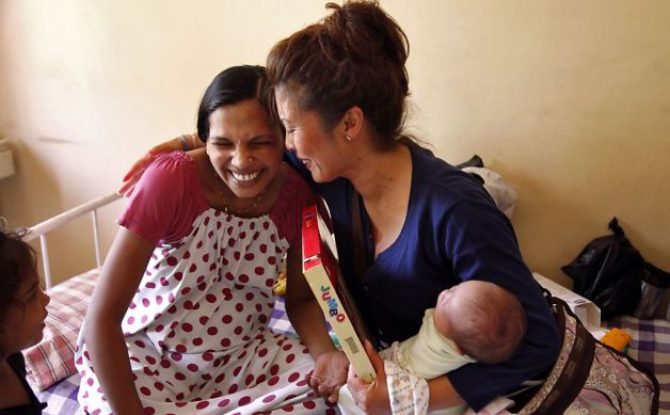
Yesterday, a federal judge ruled that Mississippi’s ban on same-sex couples adopting children is unconstitutional, making gay adoption legal in all 50 states.

U.S. District Judge Daniel Jordan issued a preliminary injunction against the ban, citing the Supreme Court’s decision legalizing same-sex marriage nationwide last summer. The injunction blocks Mississippi from enforcing its 16-year-old anti-gay adoption law.

The Supreme Court ruling “foreclosed litigation over laws interfering with the right to marry and rights and responsibilities intertwined with marriage,” Jordan wrote. “It also seems highly unlikely that the same court that held a state cannot ban gay marriage because it would deny benefits — expressly including the right to adopt — would then conclude that married gay couples can be denied that very same benefit.”

Mississippi HRC state director Rob Hill said this of the ruling:

Friday, July 1, 2016 via The Vital Voice

Click here to read the entire article.

New York Probate Process

The New York Probate Process controls the transfer of the assets of someone who dies in the state of New York with a Will.

What is the New York Probate Process? – Probate is the process by which the state of a decedent ensures that their Last Will and Testament was drafted and executed correctly, that the assets and debts of the decedent, the person who died, are identified, that the debts are paid and the assets are distributed according the decedent’s Will. The New York probate process governs the transfer of legal title of property from the estate of the person who has died to those named in that person’s Last Will and Testament.  The New York probate process is regulated by the Surrogate’s Court.  The Executor, a person or persons named in the Will to act as coordinator, or fiduciary, of the process, often works with a Probate attorney who handles the legal aspects of the process.

What happens in the New York Probate process? – The executor of a Will contacts a probate attorney to review the decedent’s Will, discuss the process draft and execute the probate petition.  The Surrogate’s Court clerk reviews the probate petition, a document filled out by the Probate attorney, to ensure that the proper parties and assets are listed.  Then the clerk checks the Will to make sure that it is compliant with New York law.  Prior to the submission of the petition to the court, certain relatives of the decedent are located and notified about their passing and given a copy of the Will for approval or challenge.

new york probate process

Why are relatives notified? – The process of notification and waiver ensures that anyone who would have received the decedent’s assets had they died without a Will is alerted and given a chance to dispute the Will if they have just grounds to do so.  The notification process operates on the premise that only those relatives most closely related to the decedent are contacted.  The state looks first to a legal spouse, then to children (both natural and adopted,) then to parents, then siblings, then aunts and uncles and finally to first cousins.  Notification is made to and a copy of the Will is sent only to the closest group of relatives.  If a married person dies, their spouse is the only person notified, and in most cases, is also the executor of the decedent’s estate.  If a legal spouse is dead but the decedent had 2 children, only those children would be notified and sent a copy of the Will for approval or challenge.  If there were no children in the scenario above, but there was a living parent, that parent would be asked to review the Will and sign a Waiver allowing it into probate.

Who can challenge a Will? – Because of the notification process and the uncertainty of exactly who will be alive upon someone’s death, a distant first cousin who may have had little or no relationship with the decedent will all of the sudden be asked to sign off on what may be a substantial estate, an estate that he or she would be the beneficiary of if there were no will.  The monetary incentive to dispute that Will then becomes clear.  However, if the Will is drafted by a competent attorney and is New York compliant in every way, the probability of a successful challenge is greatly diminished.  There are also techniques that a versed Nontraditional Estates attorney can employ to discourage a challenge from a distant family member.  Also, if someone drafts a “codicil,” or amendment, to a Will, anyone who was negatively affected by that codicil has standing to challenge a Will.  Finally, a beneficiary under a previous Will may challenge a subsequent Will, however, they are not required to be notified of the subsequent Will’s submission to probate.

How can a Will be challenged? – The New York probate process has specific procedures for a Will challenge. In most cases, a person who receives a notification of a probate proceeding and fails to consent to it, appears in court in what is called a citation hearing.  At that hearing, the judge makes sure that all parties were served correctly and then offers the challenging party the ability to hold what are called 1404 hearings.  1404 hearings allow a party to interview the witnesses to a Will execution, the attorney who drafted the Will and have access to the attorney’s notes prior to the death of the decedent.  If, after the 1404 hearings, the challenging party chooses, they may seek a trial to determine whether the decedent had capacity to execute a Will, whether there was fraud in the execution of the Will or whether there was coercion in the execution of the Will.  In most cases at the stage of the New York probate process, a case will settle in order to avoid excess costs and fees.

For more information about the New York probate process, contact Anthony M. Brown at Time for Families and speak to a specialist probate lawyer to answer your probate questions.

Contact Time For Families

Contact Form
* indicates required field

SCOTUS same-sex marriage ruling has allowed kids to have 2 legal parents, more stable homes and futures

When gay marriage became the law of the land last summer, Lin Quenzer and Barbara Baier were one of numerous gay couples in Nebraska eager to wed.

However, after 27 years together, a wedding cake and a marriage certificate weren’t their top priority. It was their son. They needed to wed to ensure their teenager would be legally bound to both parents for a lifetime and beyond — from every form that required a parental signature to each woman’s last will and testament.

After their summer wedding, the couple’s attorney immediately began drawing up adoption papers. A little over three months later, Robert Quenzer-Baier, then 15, was legally recognized as Quenzer’s son.

“He cried, we cried. We took pictures. It just meant the world to him. … He said ‘Nothing can take us apart now,’ ” recalled Quenzer, who is the Lincoln city ombudsman.

It was exactly a year ago today that the U.S. Supreme Court issued its historic same-sex marriage ruling, known as Obergefell v. Hodges. The ruling ended decades of debate and one of the biggest culture wars in America. It gave every gay couple in all 50 states the right to walk down the aisle.

But, as Quenzer’s adoption proceeding showed, the ruling had implications far beyond marriage. One of its greatest impacts was on the children of same-sex couples, many of whom were legally tied to only one parent because states such as Nebraska prohibited unmarried couples from adopting a child together.

Nebraska was one of the 13 states that did not allow gay marriage when the high court ruling came down. It had been legalized in the nation’s other states through a patchwork of court or legislative actions. In neighboring Iowa, for example, gay marriage had been legal since 2009 because of an Iowa Supreme Court decision.

On the day of the ruling, some Nebraska couples rushed to their local county clerk’s offices to secure marriage licenses. For a few days, gay marriage ceremonies were a novelty on the wedding circuit.

Some people continue to oppose such unions. But for many people — especially among the nation’s younger generation — same-sex marriages have become an accepted fact of life.

It is hard to know exactly how many same-sex couples married in the wake of the court ruling. States like Nebraska do not keep statistics for gay or straight marriages.

In Douglas County, workers in the County Clerk’s Office kept track of the number of same-sex unions for about the first six months. After that, they stopped.marriage equality

“It’s kind of amazing that, once it happened, it’s really just like any other couple,” said County Clerk Dan Esch. No one in his office even bats an eye these days.

However, Esch and his staff did go back and come up with a tally in anticipation of today’s anniversary. Over the past year, through June 13, the county had issued 173 same-sex marriage licenses — just a fraction of the nearly 4,000 marriage licenses issued overall in Douglas County during that time period.

Nationwide it is estimated there have been 123,000 same-sex marriages since the ruling, according to a Gallup survey.

Last year’s court decision hasn’t ended the nation’s culture wars, of course. But today’s battles are more about what’s happening in bathrooms and bakeries than in bedrooms and courthouses.

Laws have been introduced over the past year that would, among other things, compel transgender people to use the bathroom that conforms with their gender at birth or protect bakers from having to make a cake for a same-sex union.

“The fight to preserve religious liberty is the first critical battle of the post-Obergefell era,” according to a report filed this past week by the Family Leader, an Iowa organization that opposes same-sex marriage.

The gay community sees the baker and bathroom debates as “manufactured” fights so that anti-gay groups can remain relevant, now that the high court has settled the marriage debate. “It’s the last gasp of the dying beast. They’re grabbing for things,” said Donna Red Wing, executive director of One Iowa, an LGBT rights advocacy organization in Iowa.

As with same-sex marriage statistics, it is hard to know exactly how many children have been adopted by same-sex couples since the ruling. Adoptions are done by individual courts, which do not keep track.

However, several lawyers in Nebraska said they have worked with same-sex couples eager to adopt their son or daughter in the wake of the U.S. Supreme Court ruling.

“I’ve personally worked on eight to 10 step-parent adoptions, where the same-sex spouse has been able to adopt children who for all intents and purposes was that person’s child,” said Susan Sapp, a Lincoln attorney. “They were very relieved. Whether you agree or disagree with the marriage decision, there were existing families where children didn’t have legal stability.”

In states such as Nebraska, these families that were created with the help of sperm donors, single-parent adoption or other procreation routes were in legal limbo. The state did not allow non-married couples to adopt children. Given the state’s ban on same-sex marriages, that policy was essentially a ban on gay adoptions as well.

That meant that children of these unions did not have all the same protections afforded to other children. In the event of a parent’s death, the child was not legally viewed as an heir to the non-legal parent. And the non-legal parent had no inherent right to the child. In the event of a separation, one parent could deny — or attempt to deny — visitation to the other. Or one of the two parents could walk away without being responsible for child support.

There were few legal guarantees afforded to such families.

June 26, 2016

By Robynn Tysver / World-Herald staff writer – Omaha.com

Click here to read the entire article.
Italian High Court Makes Gay Adoption Easier, Not Automatic

Italy’s highest court has made it easier for gay adoption, gays to adopt a partner’s biological child but the decision does not give long-sought automatic recognition to the families of same-sex couples.

A Cassation Court ruling on Wednesday confirmed a lower-court decision permitting gay adoption, or the so-called “step-child” adoption in cases where the family bond is well-established. The gay rights group Famiglie Arcobaleno (Rainbow Families) called the decision a step forward but said it falls short of its goal of having immediate recognition at birth of both parents in same-sex unions.adoption

Italy earlier this year became the last holdout in Western Europe to legally recognize civil unions for gay and lesbian couples, but only after sacrificing a hotly contested provision to allow gay adoption.

Associated Press via ABCnews.com – June 22,2016

Click here to read the entire article.

The Corrosive Politics That Threaten L.G.B.T. Americans

As families began planning funerals for the victims of Sunday’s rampage at a gay nightclub in Orlando, Fla., gay Americans mourned a loss that extended beyond the lives cut short.

Omar Mateen shattered the tenuous, hard-fought sense of personal safety that many gay, lesbian, bisexual and transgender Americans have begun to feel as the movement for equality has made significant gains in recent years. His bullets and the blood he left behind that early morning were a reminder that in many corners of the country, gay and transgender people are still regarded as sinners and second-class citizens who should be scorned.

While the precise motivation for the rampage remains unclear, it is evident that Mr. Mateen was driven by hatred toward gays and lesbians. Hate crimes don’t happen in a vacuum. They occur where bigotry is allowed to fester, where minorities are vilified and where people are scapegoated for political gain. Tragically, this is the state of American politics, driven too often by Republican politicians who see prejudice as something to exploit, not extinguish.LGBTQ

Since the 1990s, gay, bisexual and transgender Americans have made considerable progress in the fight for equality under the law. By living openly and proudly, they have changed society’s attitudes about sexual orientation and gender identity. That shift has prompted politicians who were once wary about embracing equal rights for L.G.B.T. Americans — including President Obama and Hillary Clinton, the presumptive Democratic presidential nominee — to become resolute allies. The 2015 Supreme Court ruling that legalized same-sex marriage was celebrated by many in the gay community as the crowning achievement of a decades-long quest for respect and dignity.

Yet, that fight remains far from over. Since the marriage ruling, several Republican-led state legislatures and Republican governors and federal lawmakers have redoubled their fight against legal protections for people on the basis of sexual orientation and gender identity. So far this year, more than 200 anti-L.G.B.T. bills have been introduced in 34 states.

Donald Trump, unlike some other prominent Republicans, called the Orlando massacre what it was: an attack on gay people. Mitch McConnell, the Senate majority leader, could not even offer that recognition to a community in pain.

Yet, Mr. Trump has vowed to choose Supreme Court justices who would overturn marriage equality, and he supports the deceptively named First Amendment Defense Act, an effort to approve discrimination against gay and transgender people nationwide under the guise of religious freedom. And Mr. Trump backtracked from his statement that transgender people should be able to use the restroom consistent with their gender identity after Senator Ted Cruz used his words to attack him during the nomination fight.

Click here to read the entire article.

by The Editorial Board – New York Times – June 15, 2016

Gay couples are becoming reproductive refugees as more countries outlaw surrogacy

The options for becoming parents are narrowing for gay couples as both developed and developing nations increasingly outlaw surrogacy, many becoming reproductive refugees.

Gay couples who need surrogacy to start a family are now reproductive refugees as more and more countries outlaw surrogacy, according to advocacy group Families Through Surrogacy.

With surrogacy criminalized in many Western countries, would-be parents have typically turned to developing nations including Thailand, India and Nepal to find surrogates. But even these countries have, in recent years, closed their doors to international surrogacy. What’s more, countries that do still allow international surrogacy – such as Ukraine, Georgia and Israel – do not extend that offer to same-sex couples.

Sam Everingham, executive director of Australian advocacy group Families Through Surrogacy, told The Atlantic that outlawing reproductive rights for gay couples in their own countries sent them on ‘a constant chase’ across the globe, with more and more countries officially outlawing the practice as time goes on.

According to Doron Mamet, the head of Israeli surrogacy agency Tammuz, surrogacy has become such a political sticking point that it may not be available anywhere within the next ’10 to 15 years’. Interestingly, Mamet points out, while politicians and anti-surrogacy activists are eager to stamp out the practice, ‘The only group that wants it to continue are the people in need and the surrogates.’surrogacy refugees, international surrogacy, gay dads

Why outlaw surrogacy in developed countries?

In Australia, couples found to have practised commercial surrogacy in the country can go to jail for three years.

Australia’s federal government has recently ordered a review of the nation’s surrogacy laws, following high-profile cases of surrogacy gone wrong abroad. The government appears to be in favor of commercial surrogacy remaining illegal in the country, forcing gay parents to fork out huge sums for surrogates in the US, as cheaper options in developing countries dwindle.

UK gay couples find themselves with the same problem, as UK law also criminalizes commercial surrogacy.

In an interview with Gay Star News, the founder of gay parenting blog Gay Dads Australia, Rodney Chiang-Cruise, told of the frustration the gay community felt about criminalization of commercial surrogacy in Australia. He argued that legalizing the process within Australia would help make it ‘a fair, equitable, respectful process for all parties’. See more on that here.

While altruistic surrogacy is legal in Australia, figures from Families Through Surrogacy show that just 35 babies were born through altruistic surrogacy in Australia in 2013. Conversely, more than 400 babies were born to Australians through surrogacy abroad.

The cost of going through the surrogacy process in the US is around AUD $200,000.

GayStarNews.com by Laura Chubb, June 7, 2016

Click here to read the entire article.