
The Right Way to Legalize Surrogacy in New York State


New York State is on the brink of replacing an outdated and prohibitive law that criminalizes the practice of compensated surrogacy, one of only two states that does so.

Legislation to reverse the law has been introduced in both houses of the state Legislature, and Governor Cuomo has demonstrated support for it by including it in his Executive Budget.

As a law professor who focuses on gender equity, I’ve taken great interest in issues related to surrogacy in the United States and abroad. I’ve closely reviewed laws in multiple states as well as internationally and I support New York’s legalization of surrogacy.

When a woman chooses to support a couple or individual by serving as a gestational surrogate (where she is not genetically connected to the child because she did not contribute her egg), I believe she must have the autonomy to do so – provided she is protected by the law to ensure that any power imbalance between her, on the one hand, and the intended parents, surrogacy agencies and doctors, on the other hand, is mitigated.

The proposal the New York Legislature is considering and that Governor Cuomo is advancing, the Child-Parent Security Act, does protect surrogates in many ways. While the bill clarifies the parentage of all children born through third-party reproduction, here I focus only on how it legalizes and regulates gestational surrogacy arrangements.

Protections provided by the bill include: giving the surrogate the sole right to make decisions regarding her own health or that of the fetus or embryo she is carrying; giving the surrogate the sole right to terminate the pregnancy; and ensuring that the surrogate is represented by her own legal counsel. These types of commonsense protections are critical to creating a successful and effective program. If the New York Legislature passed the Child-Parent Security Act, New York’s law would be more protective of women who choose to be surrogates than laws in many other states.

Reexamining current law is long past due as technological advances and changes in acceptance of various family structures have made surrogacy much more commonplace. When lawmakers first implemented a ban on surrogacy in New York in 1992, they did so for several reasons that are less relevant today.

For example, when the restrictive New York law was enacted, there were ethical concerns about what was then nascent medical treatment — in vitro fertilization (IVF). Today, IVF is commonly-accepted as treatment for infertility and is also used in the gestational surrogacy process.

Despite the ban, today New Yorkers do work with surrogates to build families. They are just required to employ surrogates living in other states. This results in legal challenges, risks, and costs for the intended parents, including confusion regarding what laws are applicable to the situation.

GothamGazzette.com, February 21, 2019 by Sital Kalantry

Click here to read the entire article.
Lingering flaws – Gendered Holdouts Nixed in NYS Marriage Equality Amendment

State Senate Republicans, after five years of resistance, support legislative fixes to lingering flaws in law

gay estate planning, family estate planning, estate planning NY

Roughly eight years after the passage of marriage equality in New York, the newly progressive State Senate finally overcame Republican obstruction to fix some lingering flaws in that law. 

The updated law, which unanimously sailed through the upper chamber and awaits another easy passage in the State Assembly, wipes out gendered language within the Estates, Powers, and Trusts Law (EPTL) and the Surrogate’s Court Procedure Act (SCPA) in order to reflect the intentions of the Marriage Equality Act. 

Spearheaded by out gay Manhattan State Senator Brad Hoylman, the lingering flaws included provisions to remove “paternal” and “maternal” from the EPTL and SCPA and replace those with the phrases “of one parental side” and “the other parental side.” 

Another section of the EPTL was changed to say “spouses, husbands, or wives,” while the SCPA made similar adjustments by swapping out “the father or mother” with “parents” or “either parent.”

“Marriage equality is the law of the land, and all provisions of the law ought to reflect that,” Holyman told Gay City News in a written statement. “I’m proud to see the Democratic Conference acting to advance the rights of LGBTQ New Yorkers after Senate Republicans blocked this bill for five years.”

The law’s passage was a long time coming for Hoylman. But after six IDC members were dethroned during the September primaries and eight new Democrats snagged Republican seats, the blue wave opened up doors to pass a series of bills that were previously blocked by conservatives to fix these lingering flaws.

by Matt Tracy, GAyCityNews.com, February 15, 2019

Click here to read the entire article.

Kansas bill seeks to define same-sex marriage as ‘parody’


Kansas state representatives introduced legislation Wednesday that would define same-sex marriage as “parody marriage” and would prohibit the state from recognizing same-sex marriages or transgender people.

The bill seeks to establish an “elevated marriage” for straight couples, according to the Wichita Eagle.

The legislation would also allow controversial gay “conversion therapy” which seeks to change a gay person’s sexual orientation. Critics of conversion therapy say it is often inhumane and does not work.

Two bills were introduced, one that says same-sex marriages “erode community standards of decency.” It argues that civil rights for gay people are different than civil rights for black people because it claims that there are “no ex-blacks but there are thousands of ex-gays.” 

The measures would also prohibit public schools and libraries from hosting or endorsing “drag queen storytime.”

The legislation has very little chance of becoming law, according to the Eagle. The state’s Democratic governor is supportive of gay marriage and is likely to veto the bill if it passes the state legislature.

In an interview with the Eagle, the bill’s sponsor state Rep. Randy Garber (R) admitted that the language in the legislation is “kind of harsh.”

“Their marriage probably doesn’t affect me — their union or whatever you want to call it,” he said. “But in my opinion, they’re trying to force their beliefs on society.”

BY RACHEL FRAZIN – 02/14/19 – TheHill.com

Click here to read the entire article.


ABA Adopts Resolution Taking a Stand for LGBT Parents

The American Bar Association, ABA, the nation’s top voluntary bar association for lawyers, has adopted a resolution taking a stand for LGBT parents in the aftermath of states enacting laws enabling anti-LGBT discrimination in adoption.

ABA resolution

According to the LGBT Bar Association, Resolution 113 was adopted at the ABA midyear meeting in Las Vegas, Nev. The 14-page resolution says although the U.S. Supreme Court ruled in 2015 same-sex couples have the right to marry, they still face discrimination in adoption in forms of anti-LGBT state laws and policies.

Among the laws cited the resolution are recently adopted state laws allowing taxpayer-funded adoption agencies to refuse placement into LGBT homes over religious objections. Those laws exist in North Dakota, Virginia, Michigan, Mississippi, South Dakota, Alabama, Texas, Oklahoma, Kansas and South Carolina.

The resolution also cites continued litigation in which the rights of LGBT parents are in jeopardy. Among those cases is Pavan v. Smith, in which Arkansas refused to place the names of lesbian parents on their child birth certificates. The U.S. Supreme Court affirmed that policy violated its decision on same-sex marriage (although U.S. Associate Justice Neil Gorsuch penned a lengthy dissent containing the ruling didn’t apply to birth certificates.)

The ABA resolution adopts the resolution in the wake of the Trump administration granting a waiver to South Carolina allowing religious-based adoption agencies in the state, including Miracle Hill Ministries, to continue receive funding from the Department of Health & Human Services even if they refuse to place children in LGBT homes or with other families contrary to their beliefs.

ABA resolution

“Any discriminatory law which restricts an LGBT individual’s right to parent not only disregards these precedents, but also contradicts longstanding research,” the resolution says. “Decades of medical, psychological, sociological, and developmental research overwhelmingly conclude that sexual orientation has no bearing on an individual’s ability to be a fit parent. This resolution therefore reaffirms the equal parenting rights of LGBT individuals.”

According to a study from the Williams Institute at the University of California, Los Angeles, LGBT families are significantly more likely than their non-LGBT counterparts to have adopted or foster children. One in five same-sex couples, or 21.4 percent, are raising adopted children, compared to just 3 percent of different-sex couples, and 2.9 percent of same-sex couples have foster children compared to 0.4 percent of different-sex couples

The resolution states adoption of the resolution sends the message ABA “stands with LGBT individuals and their families against the increased threat to their ability to raise children.”

“This ABA policy position would enable further advocacy in this area by providing authority for other organizations, legislatures, and courts to consult when confronted by LGBT parenting issues,” the resolution says. “The policy would also allow the ABA to directly advocate on behalf of LGBT families and make clear its stance that laws which permit discrimination against LGBT individuals are unconstitutional.”

by Chris Johnson, pride source.com, January 29, 2019

Click here to read the entire article.
Jussie Smollett, Star of ‘Empire,’ Attacked in What Police Call a Possible Hate Crime

Jussie Smollett, one of the stars of “Empire,” in 2016. The Chicago police said he took himself to Northwestern Hospital after the attack and was described as in “good condition.”

Jussie Smollett, one of the stars of the Fox television show “Empire,” was attacked in Chicago early Tuesday morning by two people who yelled racial and homophobic slurs and wrapped a rope around his neck, according to the police, who said they were investigating the incident as “a possible hate crime.”

Smollett, who is black and publicly came out as gay in 2015, was walking on a downtown street when two people approached him and yelled the slurs, according to a statement from the Chicago Police Department. The attackers then began hitting Smollett in the face and poured an “unknown chemical substance” on him.

One of the attackers also wrapped a rope around Smollett’s neck before the duo fled.

“Given the severity of the allegations, we are taking this investigation very seriously and treating it as a possible hate crime,” the police statement said.

The Chicago Sun-Times, citing a police spokesman, said that Smollett went to an apartment after the attack, and his manager called the police. When officers arrived, a “thin, light rope” was still around Smollett’s neck, said the spokesman.

Officers suggested Smollett go to the hospital for lacerations on his face and neck. His manager took him there, and he was later released.

In a follow-up interview later in the morning, The Sun-Times reported, Smollett told the police that the attackers yelled “this is MAGA country,” a reference to President Trump’s campaign slogan.

‘I Have to Stay Alive’: Gay Brazilian Lawmaker Gives Up Seat Amid Threats

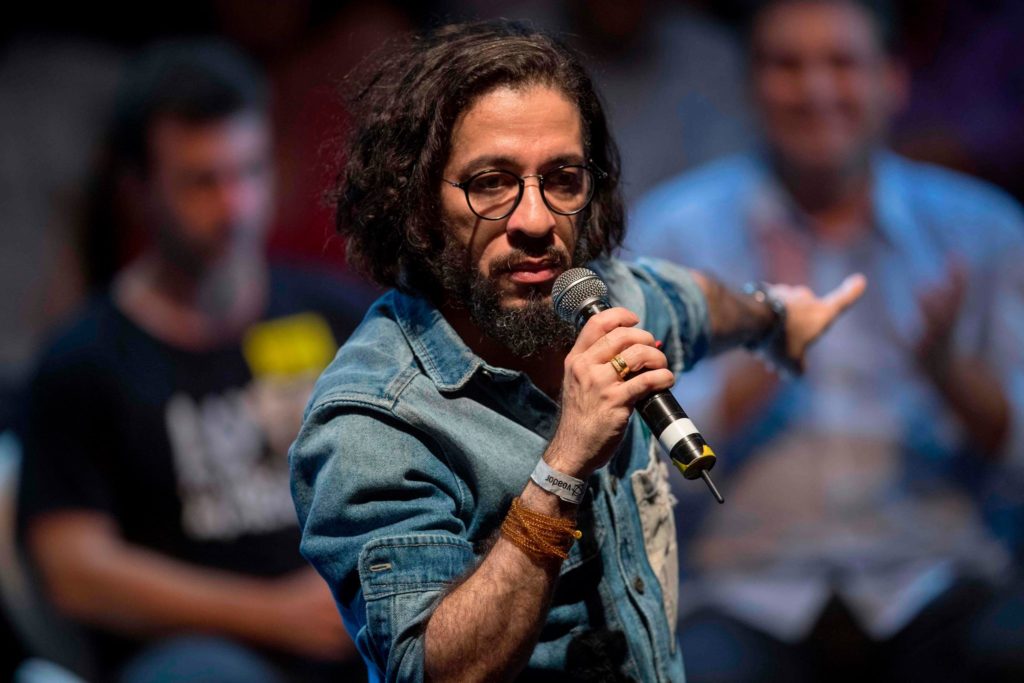
An openly gay federal Brazilian lawmaker who has frequently clashed with the country’s new far-right president said on Thursday that he was giving up his seat because of death threats.

The lawmaker, Jean Wyllys, a fierce advocate for gay rights who was due to be sworn in for a third term in February, said in an interview with the newspaper Folha de S. Paulo that “this environment isn’t safe for me” after the assassination of a political ally last March and violence that followed the election of the president, Jair Bolsonaro, in October.

“For the future of this cause,” Mr. Wyllys said, “I have to stay alive. I don’t want to be a martyr.” He added that he was currently on vacation abroad and did not plan to return to Brazil.

Mr. Wyllys called Mr. Bolsonaro, a former colleague of his in the lower house of Congress, “a president who always vilified me, who always openly insulted me, who was always homophobic with me.”

In 2016, Mr. Wyllys responded by spitting at Mr. Bolsonaro during the hearing to impeach President Dilma Rousseff. Mr. Bolsonaro, before reinventing himself as a fighter of political corruption and rampant violence, was best known for delivering verbal attacks on women, black people and gay people from the congressional floor. 

Shortly after Mr. Wyllys’ interview was published, Mr. Bolsonaro, who was in Davos, Switzerland, for the World Economic Forum, tweeted “Great day!” and a thumbs-up emoticon. Supporters weighed in, many with homophobic comments.

Mr. Wyllys has been the target of death threats for years, but he said those threats had become more severe after Marielle Franco, a human rights advocate who was his friend and political ally, was assassinated.

NYTimes.com, January 25, 2019 by Shasta Darlington

Click here to read the entire article.

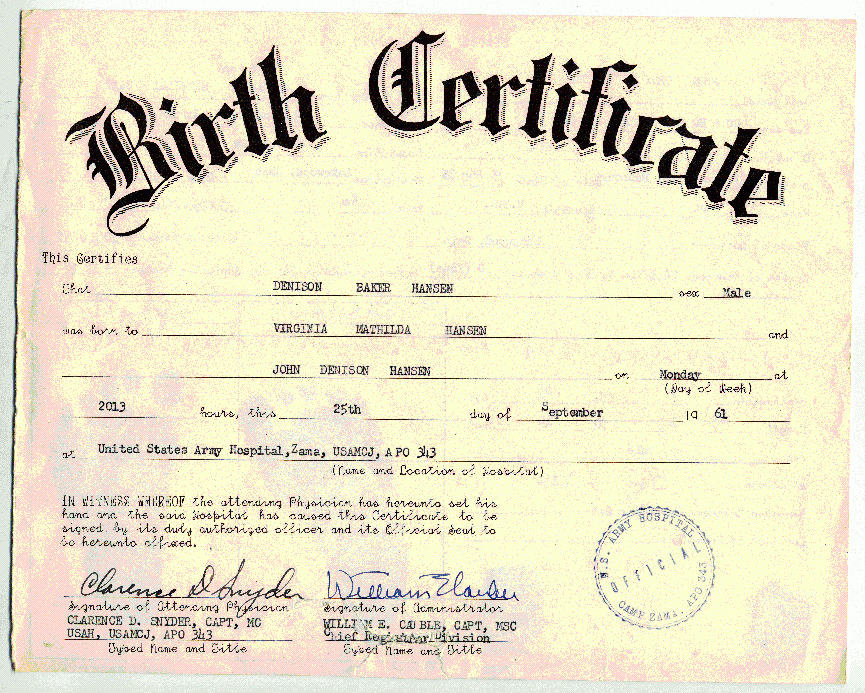
Non-gender specific birth certificates to be used for same-sex couples in Ireland

The current options of ‘Mother’ or Father’ pose problems for same-sex couples

birth certificate

Same-sex couples who are parents in Ireland will be able to list themselves as ‘parent’ on their child’s birth certificate.

This amendment to the law is designed to accommodate to same-sex couples, allowing both partners to register on their child’s birth certificate.

Under the current system, birth certificates only include the categories ‘Mother’ and ‘Father’.

Birth certificates for donor-assisted children born to same-sex couples currently only allow one mother to be listed.

‘Introduced as soon as possible’

Social Protection Minister Regina Doherty said that allowing to the option of ‘parent’ would resolve such issues, saying implementing the bill would be prioritized.

‘While the changes proposed will affect a relatively small number of people, they touch on matters that are very sensitive and of great importance to those families affected,’ Doherty said.

‘I have met with and spoken to many affected by this issue and I am now very pleased to be able to bring these changes forward as a priority to ensure that they can be introduced as soon as possible.’

The case had been raised in the Dáil (the Lower House of the Irish parliament) last year, according to TheJournal.ie.

Politician Richard Boyd Barrett said that a pregnant woman had contacted him with concerns about her wife not being able to register on their child’s birth certificate.

The completed bill will go before the Houses of the Oireachtas in the spring.

GayStarNews.com by Calum Stuart, January 12, 2019

Click here to read the entire article.

LGBT refugees more vulnerable in Trump’s America

Since Donald Trump became president, I have never seen so much hate being meted out against immigrants, let alone LGBT refugees and asylum seekers like me. 

lgbt refugees

I am from the Democratic Republic of Congo and fled my homeland to escape homophobia. I made my way to South Africa, but experienced additional mistreatment because of my race and gender identity. This mistreatment included a police officer who broke my wrist. I came to the U.S. on Nov. 20, 2014. I was working on fighting housing and employment discrimination. Some of the people who I met were very friendly and welcoming.

After Trump’s election in 2016, internalized hatred of LGBT immigrants and refugees became a reality. I lost my job simply because I am a gay immigrant. I could see the different treatment of LGBT Americans, I have been forced out of housing, harassed at school, treated like a social outcast everywhere I go. I filed a discrimination case pending with California’s Department of Fair Employment and Housing on the basis of immigration status that was ultimately dismissed because I believe the very people who were discriminating against me contacted the DFEH and probably told them that I am a black tranny immigrant who has no rights in Trump’s America. I have been a target of police surveillance for months. It has been a living hell in a safe haven. 

Most of my harassers happen to be mostly gay men or transgender women. I think it is because my gender transcends the male and female gender binary. Homonationalism — the abandonment of intersectional activism that leaves the door open to racism, xenophobia, capitalism and the promotion of one’s own interests — is real and I see it everyday. The last time that I went to socialize in a gay-friendly environment I was verbally attacked at a bar in the Castro simply because I was talking to a handsome gay American man. I tried to defend myself and then those gay men threatened to call the police on me and then took me by the throat and escorted me outside. I was walking past the same area the next day and I saw them laughing at me and saying that I am not allowed to socialize in that area again. 

The reason why I am writing this is because we as LGBT people shouldn’t be fighting against each other or hating each other because that is what our homophobic enemies want from us. They want to divide us in order to conquer us. 

In my experience, most LGBT Americans who I have met treated me like an outsider, an outcast, an enemy, an alien who must go back to where I came from. I don’t know where this intense hatred is coming from. We say we support human rights and equality, and those rights are not only American. They are universal and of course LGBT people are universal. Some are tolerated in their countries but some are persecuted. This is why we are seeking asylum because simply living openly in our countries means death and the communities of our countries in Canada, America or Western Europe come with their homophobia attached to them, so there is no place for us among them. 

WashingtonBlade.com, by Junior Nsamia Mayema – January 11, 2019

Click here to read the entire article.

The Justice Department OK’d My Firing in the Name of Religious Liberty


Michael J. Stern, who nearly lost his job as a federal prosecutor due to antigay bias, wonders what additional damage Trump’s “religious liberty” moves will bring.

During his tenure as Donald Trump’s attorney general, Jeff Sessions announced the formation of a Religious Liberty Task Force. This task force, powered by the federal government’s Department of Justice, is supposed to ensure religious liberty for all. But I know the real intent behind its creation. You see, I have been on the receiving end of DOJ’s efforts to spread religious liberty. It nearly cost me my career and pulled me into a rabbit hole of depression from which I was unsure I’d escape.   

After finishing law school in the mid-1980s, I moved back to my hometown in Michigan and was hired by a state prosecutor’s office just outside of Detroit.  I loved the work. I was prosecuting murder, rape, and child abuse cases, and I felt a sense of accomplishment in making my community safer. I was working 70-hour weeks, and I quickly rose through the ranks to the elite handful of attorneys who handled only felony trials. I had a track record of success with difficult cases, and the elected prosecutor had confidence in my work, so he often assigned me to high-profile cases that got a lot of media attention. Soon I was recruited by the U.S. Attorney’s Office in Detroit. 

I felt a beaming sense of pride when the Department of Justice offered me a job as a federal prosecutor. When I joined the U.S. Attorney’s Office, a month before the decade rolled into 1990, I was 29, the youngest federal prosecutor in an office of more than 100 attorneys. Even in gray Detroit, I saw only blue skies ahead of me. 

Like all other newly hired federal prosecutors, until my security clearance was completed, I was allowed to work but not access classified information. A few months into the job, two FBI agents walked into my office unannounced. After introducing themselves, they informed me that they had been assigned to investigate my application for a security clearance. I could tell from the looks on their faces that something was wrong. 

One of the agents asked me if I led an “alternative lifestyle.” I knew what he meant. In that moment of panic, I weighed my options. I responded with my default setting: I told the truth. “I do not lead an ‘alternative lifestyle,’ but if you’re asking me if I’m gay, the answer to that question is yes.” 

The brief discussion that ensued was not pretty. What I remember most from the discussion were the phrases “moral standards,” “subject to blackmail,” and “possible discharge.” I assured the FBI agents that I was not subject to blackmail.  My close family and friends knew that I was gay, and if I had to, I would be willing to come out more publicly to foreclose any possibility that being gay would subject me to blackmail. But that did not work. Although the agents were polite and professional, they made clear that a gay man did not meet the DOJ’s moral standards. When I asked if my job was in jeopardy, they answered yes. 

By Michael Stern, Advocate.com, January 7, 2019

Click here to read the entire article.

New York’s surrogacy laws may get a major update to be more inclusive of queer families – Child Parent Security Act

A broad coalition of organizations has come together to support the passage of the Child Parent Security Act this year.

The Child Parent Security Act would change New York law, allowing for better protections for those using modern reproductive strategies such as in vitro fertilization.

The law would legalize the right to use paid surrogates in the state. At current, New York only allows unpaid surrogacy while also declaring invalid any contracts between surrogates and parents. This puts both parents and surrogates at risk

“New York is known as a place where every type of family is welcome. Unfortunately, our state’s progressive ideals fall short when it comes to supporting LGBTQ people and so many others who want to become parents,” said Family Equality Council CEO Rev. Stan J. Sloan.

“New York’s outdated laws lag far behind most other states in easing the burden for families who rely on assisted reproductive technology to become parents. Fifty years after Stonewall, it’s time to protect all New York families.”

Calling themselves the Protecting Modern Families Coalition, the group is advocating on behalf of families who rely on medical advances to have families. The push to support the passage of the Child Parent Security Act is their first formal act.

The Family Equality Council formed the council. It is made up of eleven groups, including LGBTQ advocacy groups such as the Human Rights Campaign and Lambda Legal, plus other organizations like the American Society for Reproductive Medicine and the Union Theological Seminary. 

New York banned the use of paid surrogates in 1992, a reaction to New Jersey’s “Baby M.” case where a surrogate mother, Mary Beth Whitehead, had a change of heart and asserted her parental rights. The court ruled that the surrogacy contract Whitehead entered into with William and Elizabeth Stern was invalid. 

In the years since that case, both medical advances and societal change have driven a new look at surrogacy. The New York Department of Health’s Task Force on Life and the Laws recommended that the law be changed in December of 2017.