Religious adoption agency can’t exclude gay parents, judge rules

In a ruling hailed as “historic,” a federal judge sided with the city of Philadelphia and same-sex foster and adoptive parents.

A federal judge on Friday ruled against a religious organization that refused to place foster children with gay families on religious grounds.Family law

Judge Petrese B. Tucker of the U.S. District Court for the Eastern District of Pennsylvania ruled that the city of Philadelphia can require the foster and adoption agencies with which it contracts to abide by the city’s nondiscrimination policies. The decision marks the first time a federal court has ruled that such agencies may not turn away same-sex couples who don’t meet the agencies’ religious criteria.

The plaintiffs in the case — Catholic Social Services and three foster families with whom the agency works — were quick to file an appeal.

The dispute began in early March when the commissioner of Philadelphia’s Department of Human Services (DHS) discovered that two of the 30 foster care agencies with which it has contracts — Catholic Social Services and Bethany Christian Services — had policies that deny their publicly funded services to same-sex couples.

Following this discovery, DHS stopped working with the two organizations, noting that their policies regarding LGBTQ families violated the nondiscrimination clause included in the contract they entered into with DHS.

NBCNews.com, July 19, 2018 by Julie Moreau

Click here to read the entire article.

Did Republicans Vote to Make It Legal to Ban Gays and Lesbians from Adopting?

In a party line vote, the Republicans in the majority in the House Appropriations Committee approved an amendment to a funding bill that would allow federally-funded adoption agencies to discriminate against LGBTQ families.

The news came at a moment when LGBTQ activists were still reeling from a 2 July Supreme Court decision siding with republicans and a Colorado baker sued for violating the state’s anti-discrimination law by refusing, on religious grounds, to bake a wedding cake for a same-sex couple. In their narrow ruling, the justices upheld the law itself but found that the Colorado Civil Rights Commission did not act with sufficient neutrality with respect to the baker’s religious beliefs.

The vote on gay adoption (which also turned on the issue of religious objections to same-sex relationships) did, in fact, take place during consideration of a funding bill for the Departments of Labor, Health and Human Services, and Education by the House Appropriations Committee on 11 July 2018.

Among the amendments proposed to the bill was one offered by Rep. Robert Aderholt (R-Alabama) forbidding the federal government, and state and local governments that receive federal funding for child welfare services programs, to act against individual providers who decline to supply services to anyone — including promoting adoption, recruiting adoptive parents, assisting adoptions, and supporting adoptive families — for religious or moral reasons. 

The committee approved Aderholt’s amendment by a vote of 29 for and 23 against, with all 22 Democrats and only one Republican (Rep. Scott Taylor of Virginia) opposed. The full bill still has to pass both the House and Senate and be signed by the president before it can become law.

July 14, 2018, Snopes.com

Click here to read the entire article.

The Anthony Kennedy Retirement  – a Death Knell for LGBT Rights in the Court?

The Anthony Kennedy retirement was a shock to many, as was his pro-LGBT legacy.  Whether the Kennedy legacy will live on with a new Supreme Court remains to be seen.

Supreme Court Senior Associate Justice Anthony Kennedy was responsible for the first pro-LGBT Supreme Court decision in 1996, when Colorado, by voter ballot, amended its state Constitution to prohibit the state from protecting gay people from discrimination.  This decision, Romer v. Evans, started a conversation among the Justices that would continue on through the marriage cases and beyond the Anthony Kennedy retirement.Anthony Kennedy retirement

Anthony Kennedy laid that ground work for marriage equality by decriminalizing sodomy in the Lawrence v. Texas case, decided in 2003.  I had the privilege of working at Lambda Legal, the attorneys for Petitioner Lawrence, while preparing for that case.  Sodomy was a crime only for gay people in Texas and a conviction of the crime of sodomy was used as an excuse for employment discrimination, removal of children and much more.  This landmark ruling laid the foundation upon which much of our current LGBT jurisprudence rests.

Kennedy authored the Windsor case in 2013 and the Obergefell case in 2015, both of which solidified marriage equality and the federal recognition thereof.  But he also joined the majority siding against LGBT issues in several cases, most recently in the Masterpiece cake shop case.

In order to predict the future of a post-Kennedy Supreme Court’s treatment of LGBT rights, we need to dispense with a few misconceptions.  First, the Republican senate will not hold themselves to the same standard they held President Obama in his attempt to fill the Scalia vacancy.  If they did, they would wait until after the 2018 midterm elections to allow a new, possibly democratic, senate the right to vote on President Trump’s next pick.  Do not hold your breath, but do call Susan Collins and Lisa Murkowski!

Second, the Anthony Kennedy retirement will not move current right-leaning Justices to the left in order to preserve the very delicate balance between the conservative and progressive wings of the court.  Roberts, Thomas, Alito and Gorsuch have made their opinions clear on previous LGBT matters before them and another conservative voice on the court will tip the balance against progressive protection of LGBT rights for generations to come.

Finally, there are real and relevant conflict of interest issues which may directly affect criminal and civil prosecutions directed at the very president that would be nominating Supreme Court Justice who would be hearing them.  If there were ever a “litmus test” issue, it is not abortion or LGBT rights, it is the potential ability of a sitting president to be indicted or prosecuted.

Anthony Kennedy retirementWhat is most troubling about Anthony Kennedy’s legacy is what he did not do.  Kennedy was a wordsmith, much to the chagrin of many in the legal community.  He never clearly defined what level of legal scrutiny gay people deserved in equal protection cases.  The equal protection clause of the 14th Amendment to the US Constitution provides for different levels of protection depending on which category the discriminated class falls into.  The legal scrutiny that a class receives often determines whether the discrimination is permissible or not.  The key indicators of whether a case deserves heightened scrutiny were, perhaps purposefully, left out of Kennedy’s written decisions regarding LGBT litigants.  He shied away from describing gay people as a “subject classification.”  

Kennedy did not discuss whether a “compelling state interest” existed to justify the discrimination, another word indicator of common equal protection analysis.  My fear is that the absence of a clear direction for equal protection scrutiny will now be left in the hands of a decidedly more conservative court.  Make no mistake; they will not speak around the issue as Kennedy was accused of doing.

The Anthony Kennedy retirement will, and should, cause LGBT individuals, couples and families to reevaluate their own legal affairs.  The good news is that the most important issues, such as estate planning, second and step adoption protections and anti-discrimination policies are state based.  This cuts both ways if you live in a state which does not provide adequate protections for LGBT Americans. 

While it is unlikely that the Supreme Court would overturn their 2016 decision in V.L. v. E.L., a case which required states to recognize the second parent adoptions of other states, of particular interest to gay couples moving to less LGBT friendly states, a newly conservative court may take the opportunity to allow a state to deny recognition of a pre or post-birth order for a gay male couple establishing parentage after surrogacy from another state.  While this fact pattern has not yet arisen, it is foolish to deny that anti-LGBT organizations will be looking for ways to chip away at the protections we have fought so dearly for.

If the Anthony Kennedy retirement can teach us anything, it is that being proactive in the creation and protection of our families is no longer optional, it is imperative.  Create your estate plan if you do not have one.  If you have been putting off your second parent adoption, don’t!  Give to Lambda Legal, the ACLU, NCLR and GLAD.  If the senate allows Trump to nominate and appoint a new Justice to the Supreme Court, we, as LGBT Americans, will be living with that choice for the next generation.  That is the sad and simple reality. 

By Anthony M. Brown, June 29, 2018

For more information, please email anthony@timeforfamilies.com.

With Supreme Court Justice Kennedy Gone, Abortion and LGBT Rights Are Next

The swing vote is leaving him. Trump’s right-wing replacement will be there for decades. Democrats have no power to stop it.

The judicial apocalypse is here, and there’s nothing Democrats can do to stop it.  Justice Anthony Kennedy, the swing voter in most of the Supreme Court’s close cases of the last decade, is retiring at age 81.

President Donald Trump will choose his successor.

With the Senate filibuster of Supreme Court nominees eliminated last year by Republican Senate Leader Mitch McConnell, anyone Trump nominates will be rubber-stamped.  That has been the pattern so far, with 39 judges confirmed so far, often in an expedited process, with not a single Republican vote opposing any of them.

Moreover, Trump’s judicial nominees thus far have been chosen by the far-right Federalist Society, which has put forward extreme ideologues in the mode of Justice Clarence Thomas, whose ideas were once considered on the fringe but are now increasingly within the mainstream. 

While Justice Neil Gorsuch replaced another conservative, the late Justice Antonin Scalia, whoever replaces Justice Kennedy will likely be a conservative firebrand replacing a moderate.  The shift will transform the Court for decades to come.

by Jay Michaelson, DailyBeast.com, June 27, 2018

Click here to read the entire article.

Arizona Appeals Court Applies Masterpiece Cakeshop Ruling to Reject a License to Discriminate

In the first lower court ruling applying Masterpiece Cakeshop, the Arizona Court of Appeals rejected the argument that business owners have a license to discriminate against same-sex couples in Brush & NIB Studio v City of Phoenix.

This case was brought by the Alliance Defending Freedom.wedding cake

This shows that the Supreme Court’s decision in Masterpiece Cakeshop did not change the long-standing rule that businesses that are open to to the public must be open to all.

Discrimination has no place under our Constitution. Business can’t hang up signs saying “your kind not served here.”

Posted by Eric Lesh on Medium.com – June 7, 2017

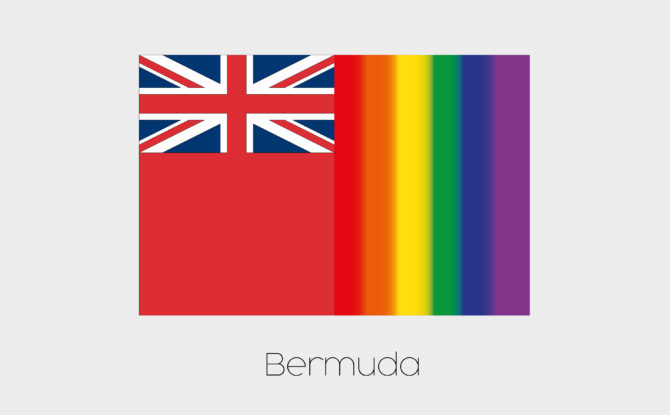
Bermuda Court rules in favour of same-sex marriage

Gay couples won the right to marry yesterday for the second time in little more than a year in Bermuda, but the Government said it would appeal the Supreme Court decision to reverse the ban on same-sex marriage.

Chief Justice Ian Kawaley upheld a constitutional challenge against the Domestic Partnership Act, delivering a judgment that declared invalid the parts of the legislation which revoked marriage equality.marital trust

His ruling was greeted with a round of applause from a packed public gallery and joyful celebrations outside the courtroom.

Several hours later, Walton Brown, the Minister of Home Affairs, announced the judgment would be appealed “subject to any legal advice that we receive”.

Mr Justice Kawaley’s ruling does not take immediate effect because he agreed to an application by Solicitor-General Melvin Douglas, representing the Attorney-General, for a six-week stay to allow the Government to decide whether to appeal.

During that period, gay couples will only be able to apply to enter into domestic partnerships.

Mr Brown said: “We are pleased that the Chief Justice has stayed the decision until an appeal can be submitted.”

by Sam Strangeways Owain Johnston-Barnes – The royal Gazette – June 7, 2018

Click here to read the entire article.

The Masterpiece Cake Shop Decision – A Narrowly Decided Cautionary Tale

The Masterpiece Cake Shop Decision demonstrated the Supreme Court of the United States threading the religious needle.   

In Masterpiece Cake Shop, while making it a point to explain that no determinations were actually being made on whether people with religious convictions can openly discriminate against gay people, or, more alarmingly, whether gay people deserve protections against such discrimination at all, the Supreme Court went out of their way to emphasize the importance of respect for religion.

 

gay rightsDon’t get me wrong, I have great respect for most religious belief.  My family holds hands and says what we are thankful for before every meal. We acknowledge the need for divine intervention with friends and family who are dealing with health issues.  We have ingrained just such a respect in our son to be tolerant of others, even those who would mock and deride our family just because it has two dads.


However, most Americans do not take the time to parse Supreme Court decisions to get to what the Justices are actually saying and, with the Masterpiece Cake Shop Decision, the message most people will hear is that religious beliefs now trump the dignity and equality of the LGBTQ community.


I feel the need to explain what I interpreted as the main message of The Masterpiece Cake Shop decision. In the majority decision, Justice Kennedy, the author of almost every positive gay rights decision out of the high court, gave short shrift to a complete analysis of the freedom of speech and free exercise of religion claims which strike to the heart of this decision. He did, however, along with the majority of the court, focus on the treatment that the baker received from the Colorado Civil Rights Commission.

 

masterpiece cake shop decisionJustice Kennedy held that, “When the Colorado Civil Rights Commission considered the case, it did not do so with the religious neutrality that the Constitution requires.  In other words, because of the Commission’s original treatment of the baker’s claim, no matter whether the result of their analysis was correct, the process was tainted from the start and therefore the holdings of all subsequent courts agreeing that the baker violated the rights of the petitioning gay couple, who, as Justice Ginsburg stated in her dissent,  “simply requested a wedding cake: They mentioned no message or anything else distinguishing the cake they wanted to buy from any other wedding cake Phillips (the Respondent) would have sold.”  But because the process was tainted with anti-religious bias, the underlying discrimination was no longer relevant.  


Because the Colorado Civil Rights Commission “showed hostility” toward the baker and his beliefs, that in and of itself, “cast doubt on the fairness and impartiality of the Commission’s adjudication of the … claim.”  Even if the Commission was right in their determination that impermissible discrimination existed, they weren’t adequately respectful to religion.  Thus the message that religion is more important than discrimination may be misinterpreted.


I have been searching for a meaning behind this seemingly incorrect finding.  Many of the greatest LGBT legal minds have attempted to make the distinctions in this decision that would stave off its potential future anti-gay wake of behavior and court reaction to that behavior.  This quote is a bit long but captures the proverbial threaded needle. Mary Bonauto, the civil rights director of GLAD and who argued the Obergefell marriage case before the Supreme Court in 2015 said:

“… this limited ruling provides no basis for this Bakeshop or other entities covered by anti-discrimination laws to refuse goods and services in the name of free speech or religion.

The Court was mindful of how far adrift we could go if every individual could apply his or her religious beliefs to every commercial transaction.  The Court contrasted permission for a clergy person to refuse to marry a couple as an exercise of religious belief, on the one hand, with the unacceptable “community-wide stigma” that would befall gay people if there was a general constitutional right to refuse to provide goods and services.”

I fear that this distinction will not be made by those who are less invested in understanding how these cases actually affect the lives of LGBTQ individuals, couples and families. My concern is for the families out there who now are questioning the legal certainty of their families, or whether their families will receive equal treatment in courts of less gay friendly jurisdictions.  We are, after all, a portable nation and our families are everywhere. 


While this decision does not actually give license to shop owners to deny gay people services, it is important to note that employment discrimination based on sexual orientation is still legal in 28 states.


At the risk of sounding like a lawyer, full disclosure – I am a lawyer, this case should serve as a wake up call that nothing can be taken for granted.  If you have put off doing your estate planning, do it now.  If you are a religious person, please pray that Justices Kennedy, Breyer and Ginsburg live long and healthy lives because these decisions can turn on a dime once right wing conservatives attain an indisputable majority on the court.  If you have questioned about whether you should get a second or step parent adoption, do it now. If you have legal questions about your immigration status, or that of your partner or spouse, find out about it now.


While my sincere hope is that more cases like this, with better fact patterns, will ultimately force the court to answer the questions that we all thought would be addressed in the Masterpiece cake Shop decision, namely whether religious “free speech” trumps anti-discrimination protection for LGBTQ people, until that time, we cannot sit idly by while others find solace and fortitude in their own anti-gay beliefs, whether religiously held or not.  


Anthony M. Brown, Time For Families – June 5, 2018


For more information, please email anthony@timeforfamilies.com.

My Family’s Story

My husband Gary and I were able to share our family’s story with Robin and Jaimie of the hit podcast, If These Ovaries Could Talk.

 We spoke about being a known donor, having our son with a known egg donor and gestational carrier, as well as our commitment to inviting others to get to know us through honest question and answer.  Anthony Brown

This podcast is really important.  Not only are Jaimie and Robin helping others to have their families, they are demysifying the process and helping others to know that our families are just like theirs.

Go to www.ovariestalk.com for information and you can download their podcast on all podcast platforms.

Click here to listen to our episode, “They Met at the Disco.”

Supreme Court Sides With Baker Who Turned Away Gay Couple

The Supreme Court sided with a Colorado baker on Monday in a closely watched case pitting gay rights against claims of religious freedom.

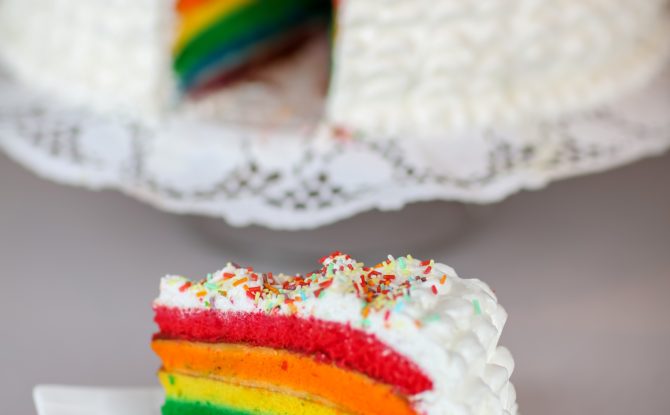
Justice Anthony M. Kennedy, writing for the majority in the 7-2 decision, relied on narrow grounds, saying a state commission had violated the Constitution’s protection of religious freedom in ruling against the baker, Jack Phillips, who had refused to create a custom wedding cake for a gay couple.gay cake

“The neutral and respectful consideration to which Phillips was entitled was compromised here,” Justice Kennedy wrote. “The Civil Rights Commission’s treatment of his case has some elements of a clear and impermissible hostility toward the sincere religious beliefs that motivated his objection.”

The decision, which turned on the commission’s asserted hostility to religion, left open the possibility that other cases raising similar issues could be decided differently.

“The outcome of cases like this in other circumstances must await further elaboration in the courts,” Justice Kennedy wrote, “all in the context of recognizing that these disputes must be resolved with tolerance, without undue disrespect to sincere religious beliefs, and without subjecting gay persons to indignities when they seek goods and services in an open market.”

The case, Masterpiece Cakeshop v. Colorado Civil Rights Commission, No. 16-111, arose from a brief encounter in 2012, when David Mullins and Charlie Craig visited Mr. Phillips’s bakery, Masterpiece Cakeshop, in Lakewood, Colo. The two men were going to be married in Massachusetts, and they were looking for a wedding cake for a reception in Colorado.

Mr. Phillips turned them down, saying he would not use his talents to convey a message of support for same-sex marriage at odds with his religious faith. Mr. Mullins and Mr. Craig said they were humiliated by Mr. Phillips’s refusal to serve them, and they filed a complaint with Colorado’s civil rights commission, saying that Mr. Phillips had violated a state law barring discrimination based on sexual orientation.

New York Times, by Adam Liptak, June 4, 2018

Click here to read the entire article.

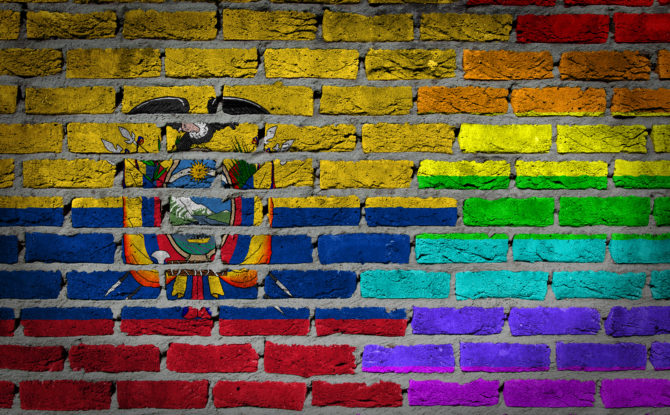
Gay family recognised by state in Ecuador in historic decision

A seven-year-old girl will be registered with both surnames of her two mothers in Ecuador, in a move hailed by campaigners as step forward for the recognition of LGBT families in the country.

The Constitutional Court in Ecuador ordered the Civil Registry office to register Satya Amani Bicknell Rothon, the daughter of couple Helen Bicknell and Nicola Rothon.

The case had been ongoing since September 2012.Ecuador

At a press conference after the decision, Bicknell said: “We knew we were going to win but we did not know when.

“This is the result of a collective effort,” she added.


One of the lawyer’s involved in the case, Jose Luis Guerra, said failing to register the child’s name was in violation of her rights, TeleSUR English reported.

Guerra added the move was significant in recognising the diversity of families in Ecuador.

Ecuador’s Constitutional Tribunal repealed the law that criminalised same-sex sexual relations between consenting adults in 1997.

In 2015, Ecuador passed an amendment to its Civil Code which legalised same-sex civil unions.

Yolanda Herrera, an Ecuadorian lawyer with a focus on LGBT rights, told TeleSUR English that there are still issues around adoption and surrogacy despite the recognition of civil unions.

by Lydia Smith, PinkNew.co.uk, May 31, 2018

Click here to read the entire article.